
Job Log: The Chimney That Leaked for Years
The roof was fine. The chimney was the whole problem.
The Straight Answer
This entry covers a chimney reseal: a home in our service area where every hard rain put water on the ceiling near the fireplace, blamed for years on “the roof.” The roof was fine. The chimney flashing had failed — the number-one leak source we see. We cleaned the joint, set new sealant and corrected the flashing, and the photos below show the failed state and the finished work. A reseal costs a fraction of the water damage it prevents.
Roof problem? Text a photo to (859) 310-1209 — free diagnosis, straight answer.
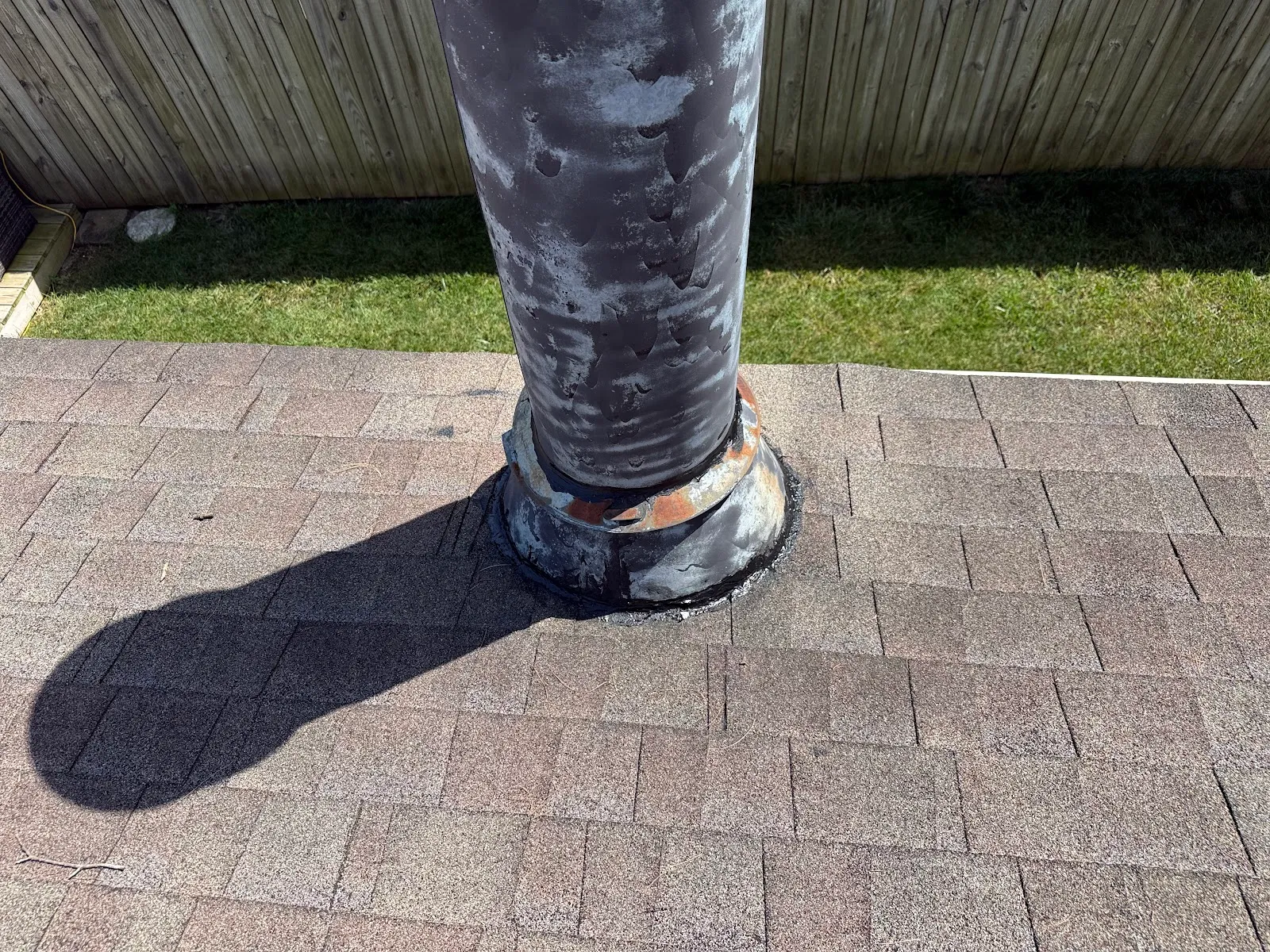
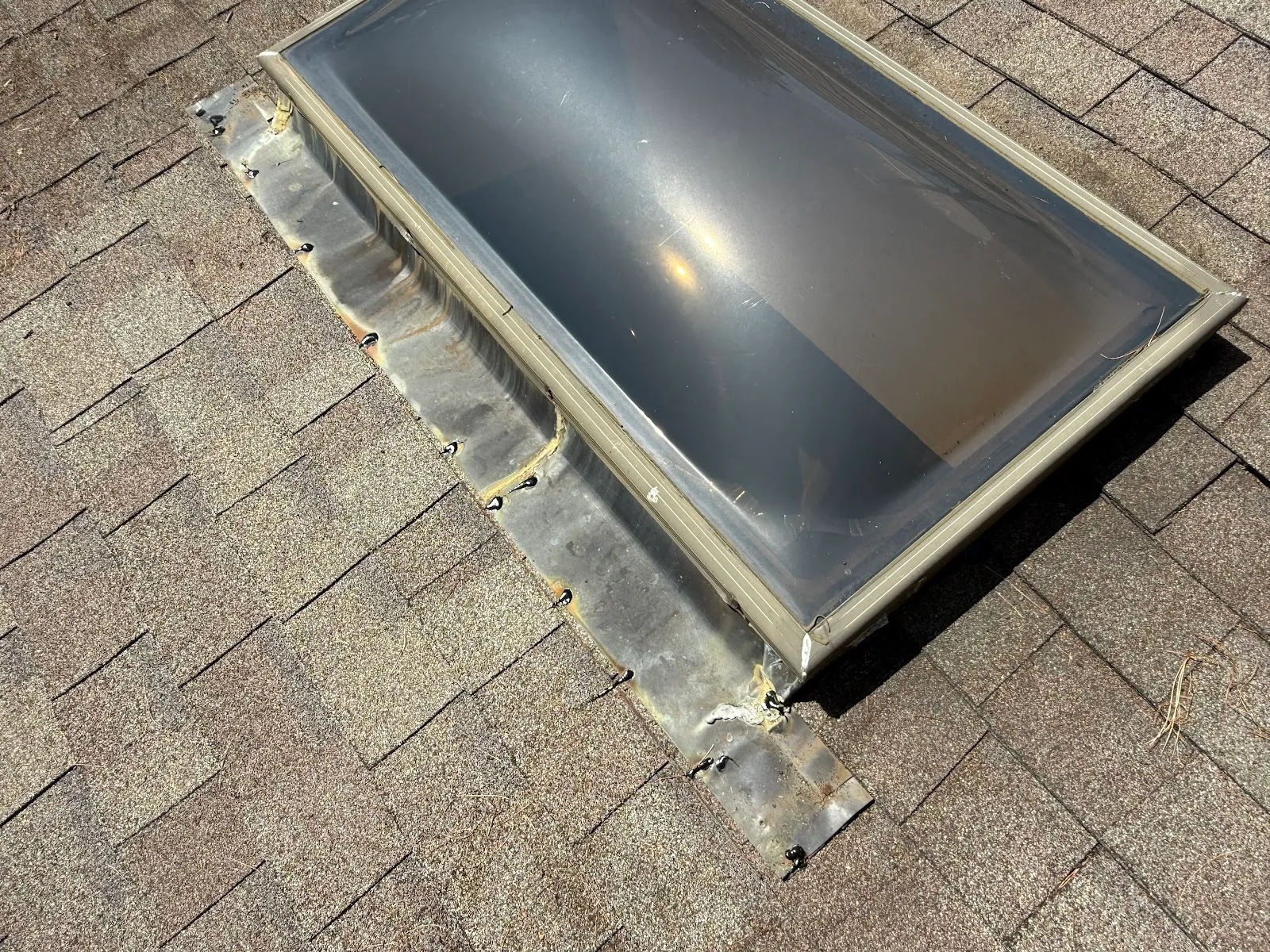
Why chimneys are our number-one leak source
A chimney is a masonry tower punched through a shingle field — two materials that move differently with heat and cold, joined by metal flashing and sealant that weather faster than either one. Mortar wicks water. Crowns crack. Counterflashing pulls out of its joint a little more each freeze. So when an owner reports a ceiling stain near a fireplace, the chimney is our first suspect before any shingle. This job was the classic case: years of leaks, at least one prior caulk-smear attempt, and shingles that had nothing to do with any of it.
What we found
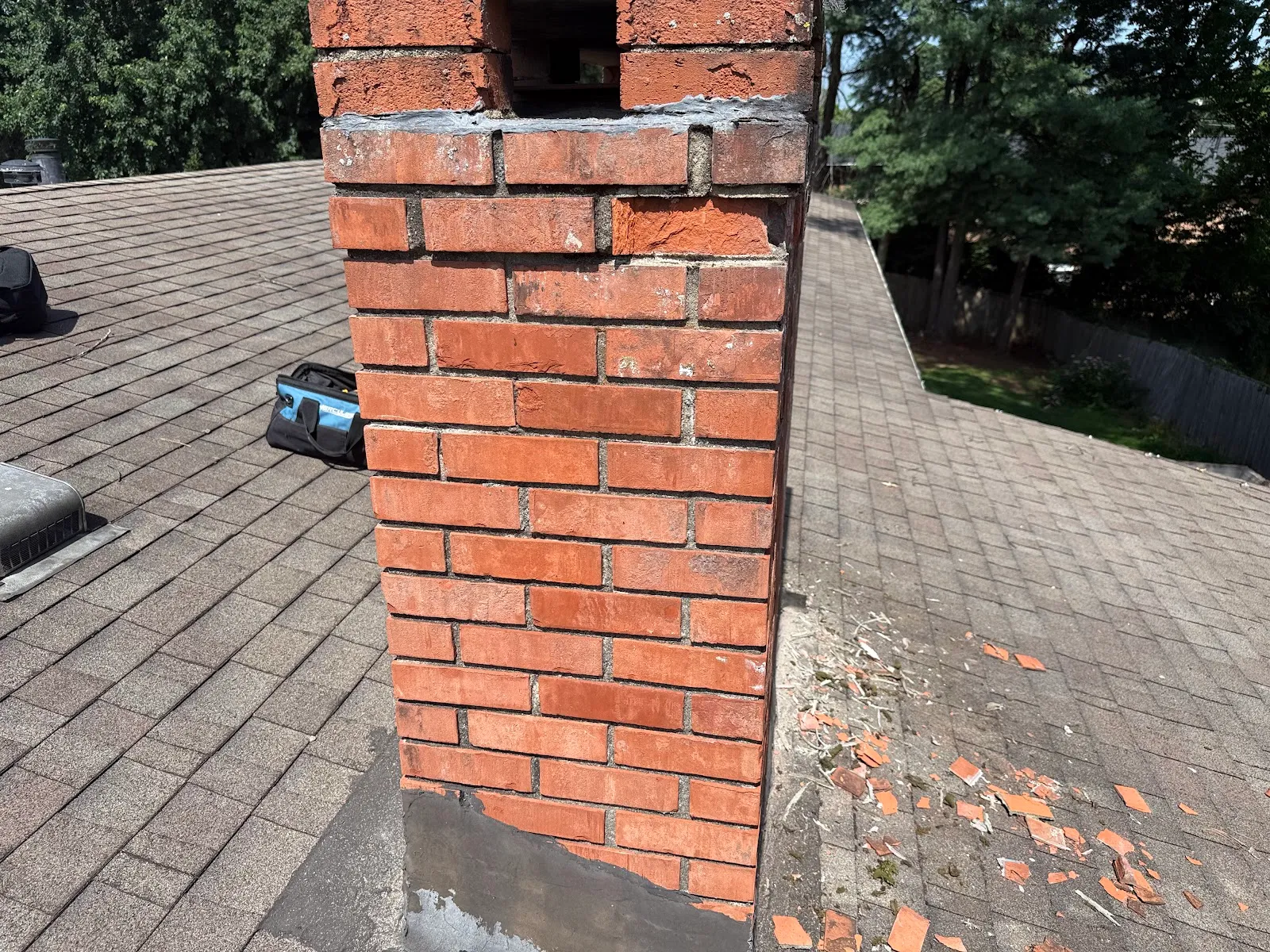
From the roof the story read fast. The counterflashing had separated from the mortar joint, old sealant had hardened and split, and a previous repair had smeared caulk over the top of the failed metal — which sheds water for a season or two and then channels it behind the flashing instead. Water was tracking down the chimney face, under the step flashing, and riding the framing to the ceiling below. That travel is why chimney leaks get misdiagnosed: the stain shows up feet away from the entry point. The photos below show the split sealant and the gap at the joint.
What we did
A reseal done right is preparation more than product. We pulled the failed material and cleaned the joint back to sound mortar — new sealant over crumbling old sealant is a rerun, not a repair. Counterflashing was reset properly into the joint, step flashing checked and corrected where the old work had it wrong, and fresh sealant tooled into clean, sound surfaces. Then a water check before we called it done. The full trade breakdown of this kind of work lives on our chimney flashing repair page; this entry is what it looks like on a real chimney.
The repair-first point
Here is why this entry matters beyond one chimney. Nobody needed to sell this owner a roof — the shingles were sound. The fix was a flashing reseal: a few hundred dollars of work in the typical case, against ceilings, insulation, and framing that soak up damage every rain it goes unfixed. Water damage compounds quietly; a reseal is the cheap interruption. This is the core of how we operate — we would rather fix the actual problem than upsell past it. If a contractor looks at a stained ceiling and opens with a full replacement quote, ask them to show you the failed flashing first.
What it looks like now
The photos below end the sequence: counterflashing seated in its joint, clean tooled sealant lines, step flashing lapped the way water expects, and — the photo that matters most — a dry ceiling through the rains that followed. The owner had lived with that leak long enough to keep towels near the fireplace. That is the part of this trade that does not photograph: the habit of checking the ceiling after every storm, retired. If your own chimney puts a stain on the ceiling when the rain blows hard, that habit is optional. Send us a picture.
Common Questions
How do I know if my leak is the chimney and not the roof?
Pattern is the clue. Chimney leaks tend to show near the fireplace or chimney chase, worse in wind-driven rain, sometimes skipping gentle showers entirely. But water travels, so stains can surface feet away. Do not get on the roof to check — text photos of the stain and your chimney from the ground to (859) 310-1209 and we will read the pattern with you.
Is caulking over the old flashing ever a real fix?
It is the most common failed repair we tear out. Sealant over dirty, failed material sticks poorly and can trap water behind the flashing, making the leak sneakier. A real reseal cleans back to sound surfaces and resets the metal in its mortar joint. The material cost difference is small; the difference in how long it holds is the whole job.
How long does a chimney reseal take?
Typically a day or less on a straightforward chimney, weather permitting — most of that time is preparation, which is where the quality lives. Steep pitches, tall chimneys, or masonry repairs that surface once we are up close can extend it. We confirm scope and the workmanship term in your written estimate before we start.
Read the trade details on chimney flashing repair, or if water is coming in right now, start at roof leak repair.
Central Roof Repair · Beattyville, KY · Repair-first roofing & exterior work across the Lexington-to-Gorge corridor · Owner Marcos Gil is also a licensed Kentucky REALTOR® (marcosgilrealty.com) and publishes Invest in the Gorge — those interests are disclosed in writing wherever they touch your project.
Text a photo of your chimney
Last updated: August 14, 2026