24-Hour Emergency Roof Response
Water coming in right now? Stop reading. Call (859) 310-1209.
The Straight Answer
Emergency roof repair starts the moment you call: if water is coming in, a tree is on the roof, or a storm has opened the house to the sky, call or text (859) 310-1209 now — 24 hours. While we are en route: move what water can ruin, catch the drip, and stay off the roof and away from anything sagging. We stabilize first — emergency tarping and dry-in — then diagnose and schedule the permanent repair in daylight. That order protects both the house and your wallet.
Roof problem? Text a photo to (859) 310-1209 — free diagnosis, straight answer.
What counts as a roof emergency
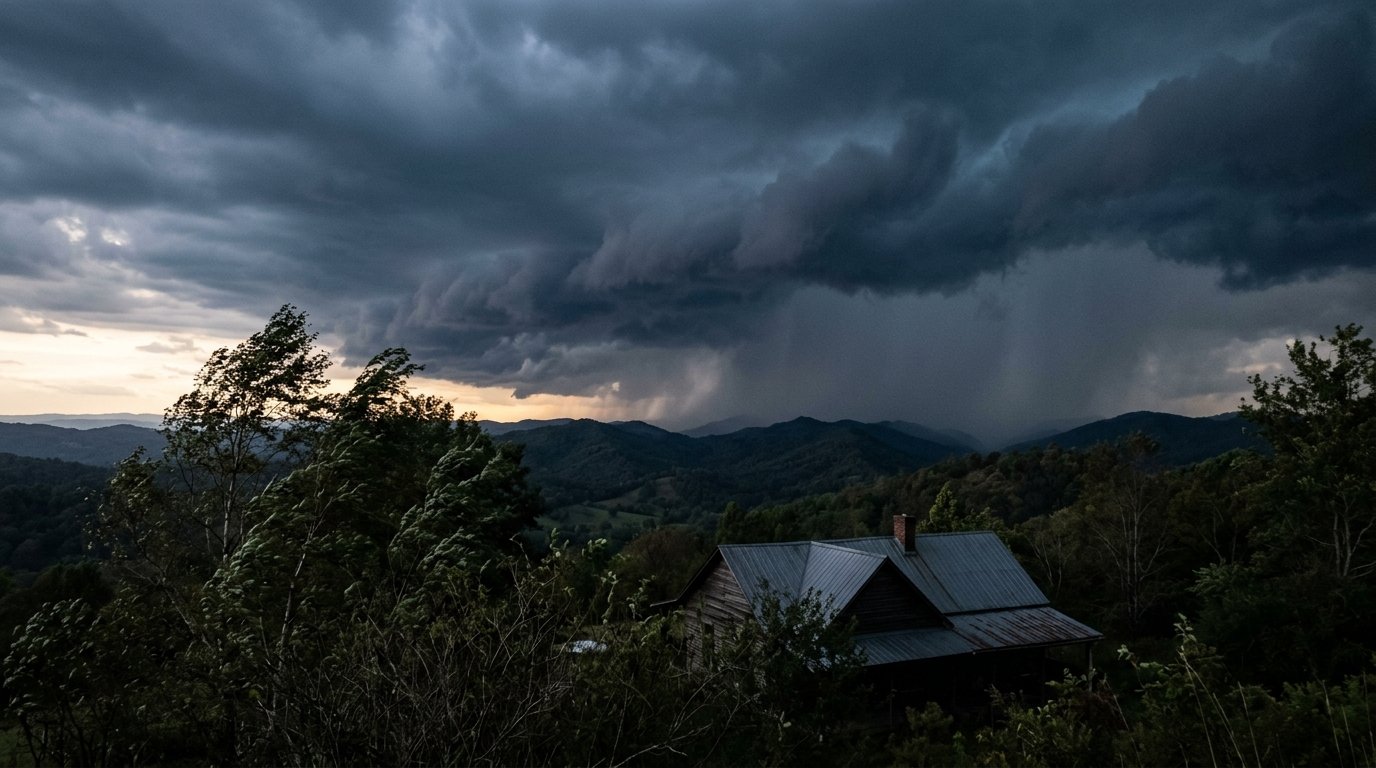
Three things, mainly. Active water intrusion — dripping ceilings, water running down a wall, a spreading stain during rain. Impact damage — a tree or big limb on the roof, whether or not you can see a hole from the ground. And storm openings — shingles or metal panels gone, decking exposed, anything letting sky show. A ceiling bulging with trapped water counts double. If you are unsure whether yours qualifies, text a photo to (859) 310-1209 and we will tell you straight; a stain that has been there unchanged for a month is urgent, but it can wait for morning. Active water cannot.
What to do right now — safely
First, people over property: if a tree hit the house or a ceiling is sagging, keep everyone out of that room. Then move what water ruins — electronics, furniture, photos, anything on the floor below the leak. Catch the water: bucket under the drip, towels for the spread; if a ceiling is bellied with water and actively dripping, a small puncture at the low point with a bucket ready can relieve it, but skip that if the sag is large or near a light fixture. If water is near wiring, kill that circuit at the breaker. And say it plainly: do NOT get on the roof. Not in rain, not in wind, not on wet shingles at night. No roof is worth a fall.
What we do when we arrive
Stabilize first, diagnose second, repair third. We find where water is actually entering — often not where it shows inside — and get the opening covered and shedding water: professional tarping, anchored to hold in wind, or temporary dry-in patching where that is the better call. Our emergency roof tarp page covers that work in detail. We photograph everything as we go, because tonight’s photos are tomorrow’s documentation. Then, with the house dry, we assess the real damage and give you a written scope for the permanent repair — decided in daylight, not at midnight under pressure.
Why tarp-then-repair beats rushing the fix
Nobody diagnoses well in the dark in a storm, and permanent materials do not install well on wet decking in wind. Rushing a “real repair” at night is how you buy the same fix twice. A proper tarp costs a fraction of a repair, stops the ongoing damage immediately, and buys time to find all the damage — including what only shows once things dry out — and to fix it once, correctly. It also gives you room to make an unhurried decision about scope and cost. Beware anyone selling you a full roof off a flashlight inspection at 11 p.m.
Storms, insurance, and your photos
If a storm did this, documentation started the moment it happened. Photograph the interior damage, the water path, and anything visible from the ground — safely, feet on grass. We add our own timestamped photos from the roof during stabilization and the follow-up inspection, and that packet is yours for any insurance conversation. To be clear about our role: we document, repair, and explain what we found — we are roofers, not insurance adjusters, and your policy questions belong with your agent or adjuster. Your deductible is yours to pay; anyone offering to waive it is offering you a problem. More on the process at storm damage repair. The Kentucky Department of Insurance (insurance.ky.gov) also publishes consumer guidance on storm claims — worth a read before an adjuster calls back.
Common Questions
Do you really answer at 3 a.m.?
Call and find out — (859) 310-1209 is the direct line, and emergency response is part of the job in a corridor where storms do not keep business hours. Reality stated honestly: in a widespread storm event we triage, working active-water and occupied-home calls first. If you reach voicemail during a big event, leave the address and what is happening; texts with photos help us sequence.
How much does an emergency tarp cost?
Less than the water damage it stops — that is the honest anchor. The number depends on roof size, pitch, access, and weather at the time of the work, so we quote it before we climb, not after. See emergency roof tarping for how the work is done. There is no fee just for the phone call or the look.
A tree is on my roof but nothing is leaking yet. Is that an emergency?
Treat it as one. Limbs load a structure in ways you cannot judge from the yard, and punctures under a limb often leak on the next rain, not this one. Stay out of rooms under the strike, photograph it from the ground, and call. Getting it assessed and covered before the next weather is the cheap version of this story.
See how we cover an opening at emergency roof tarping, and what comes after at storm damage repair.
Central Roof Repair · Beattyville, KY · Repair-first roofing & exterior work across the Lexington-to-Gorge corridor · Owner Marcos Gil is also a licensed Kentucky REALTOR® (marcosgilrealty.com) and publishes Invest in the Gorge — those interests are disclosed in writing wherever they touch your project.
Call (859) 310-1209 now
Last updated: August 14, 2026