Roof Moss, Debris & Tree-Cover Cleaning
The forest is patient. Your shingles are not.
The Straight Answer
Roof moss and debris cleaning is real maintenance here: under Gorge-area canopy, moss and debris aren’t cosmetic. Moss lifts shingle edges and holds water against the mat through every freeze; debris dams valleys and gutters and pushes water sideways under the roof. Safe cleaning means gentle methods — brushing, appropriate treatments, hand-clearing — and never a pressure washer on shingles, which strips the granules that are the roof’s armor. Under heavy trees this is a recurring rhythm, not a one-time job.
Roof problem? Text a photo to (859) 310-1209 — free diagnosis, straight answer.
What moss actually does to a shingle
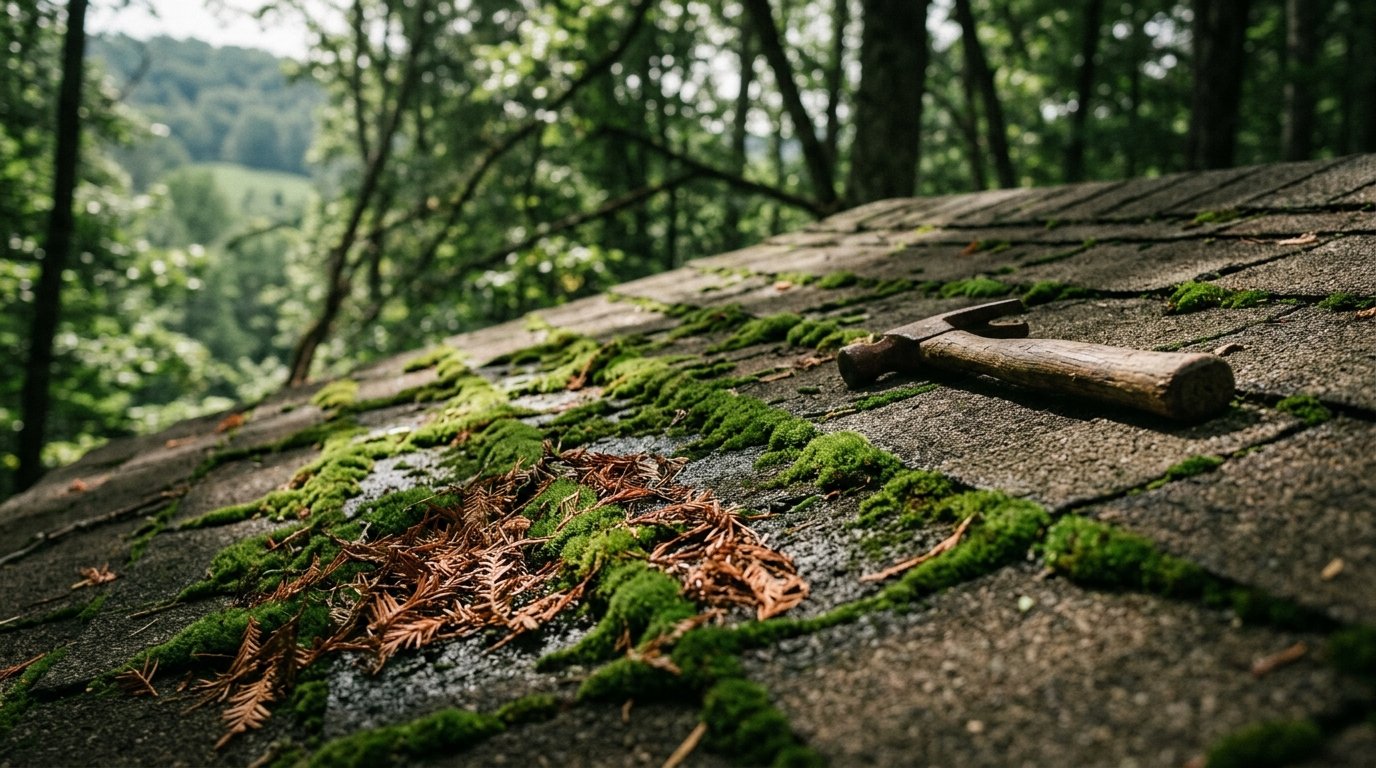
Moss isn’t a stain; it’s a plant with a root-like grip, and it does mechanical damage. It colonizes the damp shade line, works under shingle edges and lifts them, and holds a wet sponge against the shingle mat long after rain quits. Every freeze, that held water expands — the same freeze-thaw pry-bar from our lifespan guide, applied continuously all winter. Lifted edges then let wind and water in. Left alone under Gorge canopy, moss meaningfully shortens a shingle roof’s life; caught early, it’s a manageable maintenance item. North slopes and tree-shaded planes go first — check yours from the yard.
Debris is a drainage problem wearing a leaf costume
Needles and leaves kill roofs through water management. Debris mats in valleys dam the exact channels that move the most water; wet piles behind chimneys hold moisture against flashing; and loaded gutters back water up under the shingle edge, feeding fascia rot and winter ice dams. A debris layer also composts into soil — we find seedlings growing on neglected cabin roofs, which is charming right up until the roots find a seam. The fix is unglamorous: valleys, chimney crickets, and gutters cleared on a schedule that matches your canopy, which under heavy Gorge cover means the twice-a-fall rhythm in our maintenance calendar.
Safe cleaning — and the pressure-washer mistake
The granules on a shingle are its armor against sun and weather; a pressure washer strips them in one pass, aging the roof years in an afternoon and voiding many warranties. It also drives water under shingles and, on a wet slope, drives feet out from under people. Safe practice is gentler and slower: soft brushing downslope (never up, which lifts edges), appropriate moss treatments applied and left to work rather than blasted, hand and blower debris clearing, and zinc or similar strips at ridges to suppress regrowth. Walking a mossy roof is genuinely slick work — this is a call-us category, not a Saturday project. Shingle manufacturers such as Owens Corning (owenscorning.com) publish their shingle specs for a reason — granules are engineered armor, and they don’t grow back.
A recurring rhythm, not a rescue
One deep cleaning of a neglected roof is a rescue; keeping a canopy roof healthy is a rhythm — moss treatment as needed, valleys and gutters cleared on the calendar, a photo check of the shaded slopes each visit so nothing surprises you. That cadence is exactly what our maintenance plan packages for Gorge-area homes and cabins, with photo reports after each visit for owners who live away. Cleaning ranges get quoted per roof — slope, moss coverage, and access swing them too widely for a menu price; costs checked Aug 2026, actuals depend on the roof. Send slope photos to the photo diagnosis and we’ll tell you whether you need a rescue or just a rhythm.
Common Questions
Will bleach or a “roof cleaner” from the hardware store work?
Diluted cleaning solutions have a place, applied gently and rinsed low-pressure — but the label matters, runoff kills plantings below, and over-strong mixes damage shingles and corrode gutters and flashing. The bigger risk is the delivery method: people apply chemicals from the roof itself and slip. If you DIY anything, work from a secured ladder at the edge, and skip the pressure washer entirely.
Do zinc strips actually prevent moss?
They help, honestly, but they’re suppression rather than cure. Rain washing over zinc or copper at the ridge discourages new growth for some distance downslope — worthwhile on a freshly cleaned roof under moderate shade. Under deep canopy with constant moisture, strips slow moss; they don’t exempt you from the cleaning rhythm. We install them as part of cleaning work when the roof’s a good candidate.
Should I just cut down the trees shading my roof?
Usually not, and around the Gorge the trees are half the reason you bought the place. Reasonable middle ground: trim limbs back off the roofline to stop contact scrubbing and reduce direct drop into valleys, then accept the maintenance rhythm the remaining canopy demands. A tree actually threatening the structure is a different conversation — send photos and we’ll give a straight opinion.
See what canopy does over a roof’s life in how long roofs last here, hand the rhythm to the maintenance plan, or see everything else we fix on our roof repair page.
Central Roof Repair · Beattyville, KY · Repair-first roofing & exterior work across the Lexington-to-Gorge corridor · Owner Marcos Gil is also a licensed Kentucky REALTOR® (marcosgilrealty.com) and publishes Invest in the Gorge — those interests are disclosed in writing wherever they touch your project.
Text a photo of the mossy slope
Last updated: August 14, 2026