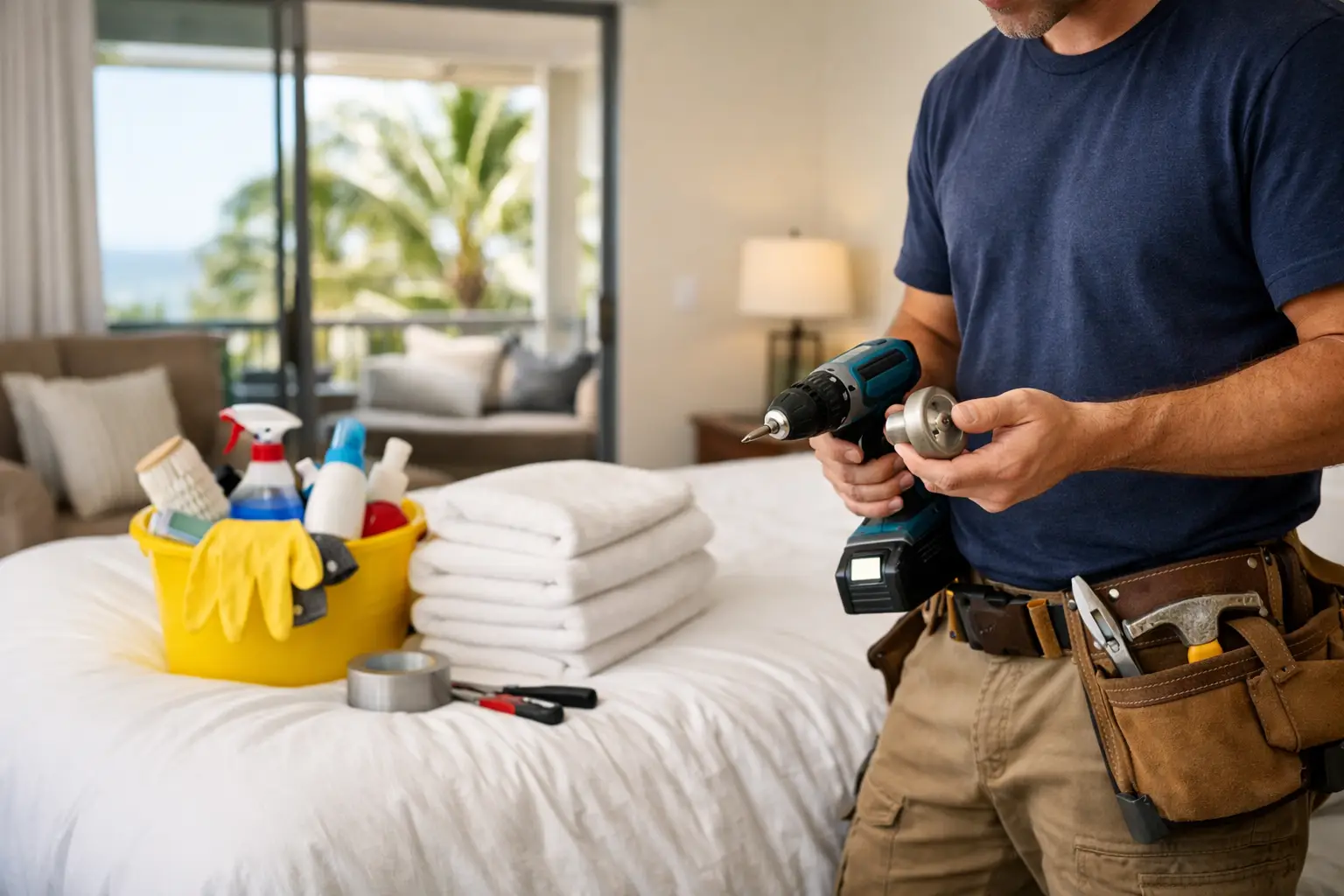
A guest checks out at 10:00 a.m. The next one is coming through the door at 4:00 p.m. Somewhere between stripped beds, a cleaning crew, and a fresh set of towels, somebody finds water under the kitchen sink, a loose porch rail, or a bedroom window that will not lock. Vacation rental turnover repairs are what keep a small problem from becoming a canceled reservation, a refund request, or a one-star review.
For Red River Gorge cabin owners, turnovers are not just housekeeping days. They are inspection days. Cabins take a beating from wet weather, heavy guest use, gravel roads, falling limbs, wildlife, and long stretches when the owner is hours away. The fix is not to panic over every scuff or call for a full replacement whenever something breaks. It is to spot the problems that matter, make the right repair fast, and document what was done.
What counts as a turnover repair?
A turnover repair is any work needed between guests to restore a rental to a safe, functional, guest-ready condition. Some are simple: tightening a loose cabinet pull, replacing a missing smoke detector battery, or adjusting a sticking interior door. Others need a skilled hand right away, especially when water, electricity, exterior access, or structural wood is involved.
The repairs that deserve the fastest response are the ones guests will notice immediately or that can get worse by the hour. A dripping toilet can damage a bathroom floor. A roof leak can soak insulation and stain the ceiling before the next check-in. A broken handrail, loose deck board, or failed exterior light is not just an inconvenience. It is a safety concern.
For remote owners, the hard part is often not knowing what is really happening. A text saying, “There is a leak,” does not tell you whether a supply line is dripping under a sink, rain is coming through flashing, or condensation is running from an HVAC line. Clear photos and an honest diagnosis matter. They prevent the expensive mistake of repairing the wrong thing.
Build turnover repairs into the inspection routine
Cleaning crews see more than most people realize. They notice damp spots, damaged trim, odd smells, missing items, and doors that no longer latch. Give your cleaner a straightforward reporting process: photos first, a short description of the location, and a call for anything involving water, power, safety, pests, or exterior damage.
A quick walk-through should cover the areas that cost the most when they fail. Check beneath sinks, around toilets, near the water heater, and below windows. Look up at ceilings for fresh rings or stains. Open and lock doors and windows. Test exterior lights, porch rails, deck boards, and steps. If your cabin has a fireplace or wood stove, inspect the hearth area and make sure no guest has left ash, debris, or heat damage where it does not belong.
Outside, look at the roofline and gutters whenever possible. Valleys full of leaves are how cabin roofs die. Water backs up, finds a weak spot around flashing or shingles, and starts working on the wood beneath. A turnover crew may not need to climb a roof, but they can flag overflowing gutters, wind-blown metal, missing shingles, limb damage, or water running where it should not.
Sort repairs by urgency, not annoyance
Not every issue needs a same-day emergency dispatch. A scratched wall can wait for a slower maintenance day. A missing blind slat may be annoying, but it probably will not stop a check-in. Water intrusion, exposed wiring, a gas smell, broken locks, damaged stairs, and roof damage are different. Those deserve immediate action.
A useful way to make the call is to ask three questions. Can this hurt a guest? Can it damage the property before tomorrow? Will it prevent the next guest from using the home as advertised? If the answer is yes to any of them, treat it as a priority repair.
There is still a trade-off. Sending someone out after every minor report can burn through your maintenance budget. Ignoring small warning signs can turn cheap work into major carpentry, flooring, or roof repairs. The answer is a trusted local repair partner who can give you a straight answer about what needs attention now, what can wait, and what should be watched.
The repairs that protect rental income
Water is the big one. It is quiet at first, then expensive. A loose supply valve, failed toilet seal, cracked caulk line, leaking dishwasher connection, or roof penetration can all put water where it does not belong. By the time a guest smells mildew or sees a ceiling stain, the leak may have been working for weeks.
Roof and gutter issues are especially common around the Gorge. Cabin roofs deal with hard rain, wind, branches, pine needles, and shade that keeps materials damp. Flashing around chimneys, vents, skylights, and roof transitions is often where trouble begins. The best repair is usually targeted: find the entry point, repair the flashing or damaged roofing, dry in the area if needed, and check for wet wood or rot. A repair-first approach protects your budget when a full roof replacement is not warranted.
Decks and porches are another turnover trouble spot. Guests drag luggage, move chairs, lean on railings, and use outdoor spaces in all kinds of weather. Watch for soft boards, raised fasteners, loose rails, rotting posts, and steps that shift underfoot. The wood the weather gets to first is usually the wood that needs attention first.
Then there are the guest-facing details: torn screens, broken locks, sagging gates, loose toilet seats, damaged blinds, sticking doors, and failed exterior fixtures. These may not be major construction problems, but they shape the guest’s first impression. A cabin that feels neglected can produce a poor review even if the beds are clean and the view is perfect.
Why photo documentation matters for remote owners
If you live in Louisville, Lexington, Cincinnati, or out of state, you should not have to guess whether a repair was completed correctly. Before-and-after photos give you a record of the problem, the repair area, and the finished result. They also help you make better decisions over time.
For example, a photo of a small roof leak around pipe flashing tells a different story than a photo of widespread shingle damage or rotten roof decking. One may call for a focused repair. The other may need a larger conversation. Either way, you get facts instead of vague reassurance.
Documentation also helps when cleaners, guests, property managers, and owners are all involved. If a guest reports a damaged door after checkout, photos establish its condition before the next arrival. If a storm tears loose guttering, photos show why it needed prompt work. That kind of accountability keeps confusion from becoming conflict.
Prevent the emergency call before it starts
The best turnover repair program includes maintenance between emergencies. Gutters need cleaning before they overflow. Caulk and flashing need attention before rain gets behind them. Deck boards need repair before somebody steps through a soft spot. Cabins that sit vacant between bookings need periodic checks, especially after storms or freezing weather.
Seasonal work is not glamorous, but it protects bookings. Before winter, inspect exposed pipes, hose connections, drafty doors, roof penetrations, and gutters. After heavy wind or rain, check the roof, siding, screens, decks, and drainage paths. If water is running toward the foundation or pooling beside the cabin, deal with it before it creates a bigger moisture problem.
It also helps to keep a short property file with paint colors, fixture sizes, lock codes, utility shutoffs, appliance information, and a list of recurring trouble spots. A local repair crew can move faster when they know where the water shutoff is, which porch light is hard to reach, or where the roof has leaked before.
Choose a repair partner who understands the deadline
Turnover work is different from a general home repair call. The clock is real. You need someone who understands that a Friday leak before a sold-out weekend cannot sit until next week. You also need someone who will not turn every loose shingle or small rot repair into a high-pressure replacement pitch.
Central Property Services works with cabin and short-term rental owners across the Red River Gorge area on the roof leaks, gutter failures, carpentry repairs, drainage problems, siding patches, and weather damage that threaten a guest-ready property. The goal is simple: assess the actual issue, protect the building, make the repair that makes sense, and provide photos so you know where your money went.
A turnover will always uncover something eventually. That is part of owning a rental. The owners who protect their revenue are not the ones who never have repair needs. They are the ones who respond early, fix the source instead of the symptom, and keep a reliable local set of eyes on the property.
Leave a Reply