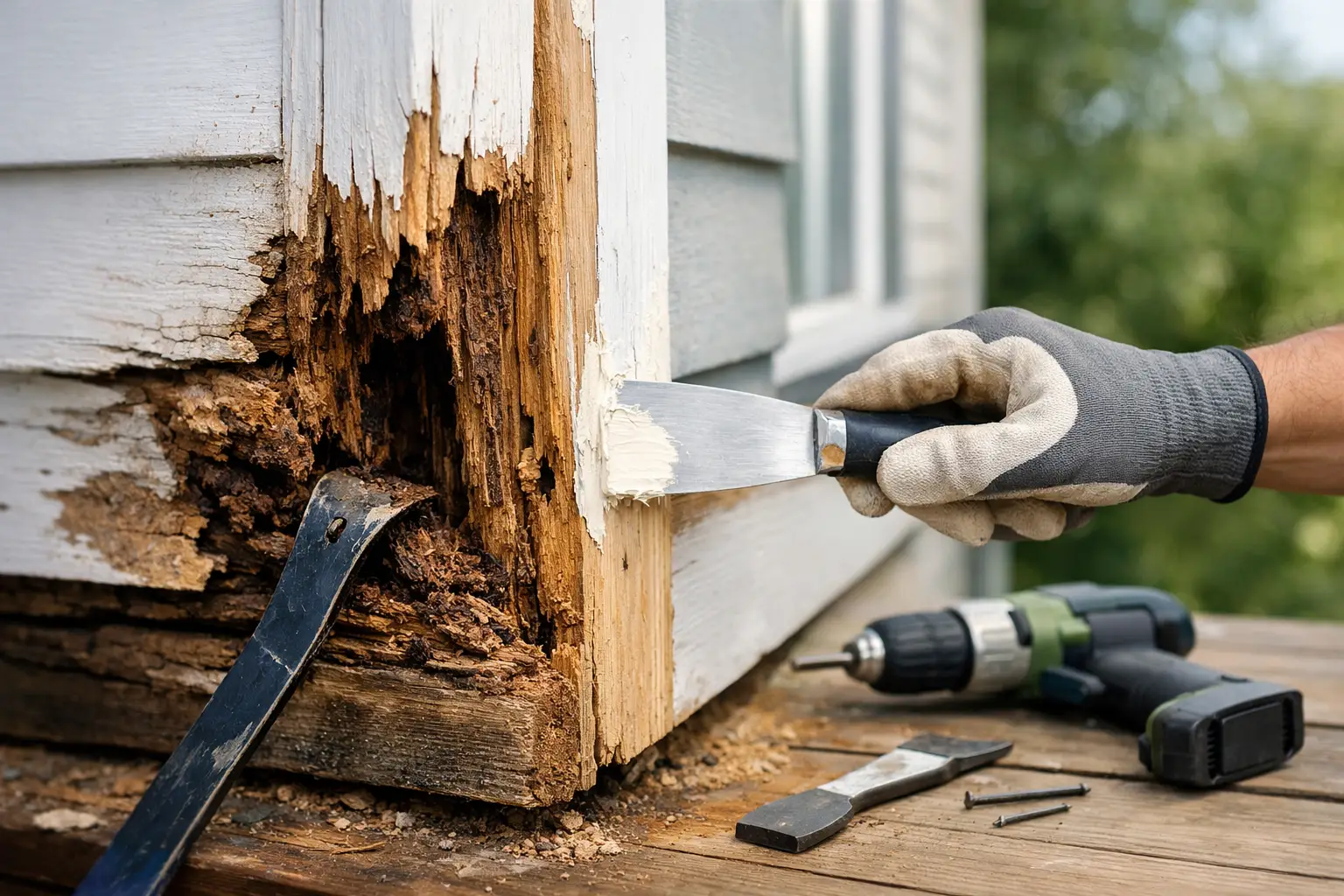
A soft spot beside a cabin door, a peeling fascia board, or trim that gives under a screwdriver is rarely just a cosmetic problem. It is usually evidence that water has been getting where it should not. Wood rot repair works best when it starts at the source of that moisture, not when somebody paints over the stain and hopes it holds through another wet Kentucky season.
For homes, cabins, rentals, and commercial buildings around the Red River Gorge, rot often starts in the wood the weather gets to first: roof edges, chimney trim, window sills, deck posts, siding corners, and exterior doors. A small roof leak or gutter overflow can quietly soak the same area for months. By the time the damage is visible, the repair may involve more than one board.
What Causes Wood Rot in the First Place?
Wood does not rot simply because it gets wet once. Rot takes hold when wood stays damp long enough for fungi to grow, usually because water keeps returning or the material never has a chance to dry. In this part of Kentucky, hard rain, wind-driven storms, shaded hollows, wet leaves, and humid summers create exactly those conditions.
The usual culprits are straightforward: a leaking roof valley, failed flashing at a chimney, clogged or undersized gutters, loose siding, cracked caulk around a window, or a deck post sitting where water collects. Cabins can be especially vulnerable because nobody may be there to notice a minor leak right away. Valleys full of leaves are how cabin roofs die, and the rot can travel from the roof edge into the fascia, soffit, wall framing, and interior ceiling.
The key question is not just, “Can this wood be replaced?” It is, “Why did it get wet?” Replacing a rotted board without correcting the water path is a temporary patch. The new board will be doing the same job in the same bad conditions.
When Wood Rot Repair Is Still a Repair
Not every rotted board means a major rebuild. If the damaged area is limited to exterior trim, a section of fascia, a window sill, a few pieces of siding, or the outer edge of a deck, targeted repair is often the sensible move. The affected material can be removed, the area behind it inspected, and sound replacement wood installed after the moisture problem is corrected.
Good repair work starts with probing beyond the visible damage. Rot can look small on the face of a board but extend behind the paint line or under flashing. A contractor should check whether nearby framing remains firm and dry, whether fasteners still hold, and whether water has entered the wall or roof assembly.
There are cases where an epoxy filler has a place. Small, shallow areas of decay in otherwise solid, stable wood may be cleaned out, treated, filled, shaped, and sealed. That is not the right answer for structural members, badly softened fascia, deck framing, or wood that is still being exposed to water. Filler is not lumber, and it cannot solve an active leak.
Signs the Damage May Be Deeper
Visible rot deserves prompt attention when you also see sagging gutters, a soft roof edge, stained drywall, loose siding, peeling paint that returns quickly, insect activity, or a musty smell indoors. Doors and windows that suddenly stick can also signal movement or swelling around wet framing.
For decks and porches, do not assume a surface board is the only concern. Rot at posts, beams, joist ends, stair stringers, or connections to the house affects safety. If a railing moves, a post is soft at the base, or the deck feels bouncy, keep people off the questionable area until it can be inspected.
The Right Order for Wood Rot Repair
The best wood rot repair follows a simple order: stop the water, remove failed material, rebuild with sound materials, and protect the repair. Skipping the first step is where money gets wasted.
A roof-edge repair, for example, may require cleaning packed gutters, fixing a drip-edge problem, replacing a short run of fascia, repairing soffit, and resealing or replacing the roof detail above it. If the issue started with a chimney leak, the flashing and surrounding roofing need attention before new trim goes on. If a window has been leaking, the sill, flashing, siding integration, and caulk joint all need to be evaluated together.
The materials should fit the location. Properly primed and painted exterior lumber can perform well when it is installed correctly and kept out of standing water. In high-exposure locations, rot-resistant products or composite trim may make sense. There is a trade-off: composites can reduce future rot, but they cost more and still need correct flashing and drainage. No material wins against a constant leak.
Once the repair is complete, the exposed edges, joints, and fastener penetrations need to be sealed and finished correctly. Paint is part of the protective system, but it is the last layer, not the repair itself.
Where Property Owners Miss Rot Most Often
Rot hides where people do not routinely look. That is why a property can appear fine from the driveway while damage is growing behind a gutter or along the back roofline.
Check the lower ends of trim boards, especially where they meet roof shingles, concrete, decks, or soil. Look under gutters for dark streaks and softened fascia. Walk around windows and doors after a hard rain. On cabins, inspect roof valleys, chimneys, porch connections, and any wall shaded by trees. Inside, check attic framing near roof penetrations and look for discoloration on ceilings and exterior walls.
Remote owners have an extra challenge: a small failure can sit through several storms before anyone sees it. A guest may report a drip, a sticky door, or a stain but cannot tell you whether the roof, gutter, window, or plumbing is responsible. Fast local inspection matters because guessing from a photo can lead to the wrong repair.
That is why Central Property Services documents repair work with before-and-after photos. For an owner in Lexington, Louisville, or out of state, clear photos show what failed, what was removed, what was repaired, and whether the water source was addressed. It is practical proof, not a vague promise that somebody “took care of it.”
Repair Now or Plan for Later?
Some rot calls for immediate action. Active leaks, soft structural wood, compromised deck components, deteriorated roof edges, and openings that let water or pests into the building should move to the front of the list. A same-day tarp or temporary weatherproofing measure can prevent a bad situation from getting worse while permanent repairs are scheduled.
Other items can be planned, but they should not be ignored. A small soft section of decorative trim with no active moisture may be a reasonable maintenance repair. The danger is treating a known issue as permanent background noise. One more season of rain can turn a trim replacement into sheathing, framing, insulation, and interior drywall work.
For rental cabins, timing matters beyond the repair bill. Water damage can block a booking, create a guest complaint, or force an emergency visit on a weekend. It is usually cheaper to handle a suspect gutter, flashing detail, or soft board between turnovers than after a ceiling starts dripping over a guest bed.
Keeping New Rot From Coming Back
Prevention is mostly unglamorous maintenance done before the weather forces the issue. Keep gutters and downspouts clear, make sure water drains away from the building, trim back vegetation that traps moisture, and inspect roof penetrations and exposed trim at least once a year. After windstorms, check for lifted shingles, bent metal, loose flashing, and branches that may have damaged the roof edge.
Do not wait for paint to peel or wood to crumble in your hand. If you find a soft spot, a recurring stain, or a gutter that is pulling away, get a straight assessment of the moisture source and the extent of the damage. Wood rot is patient, but it is not harmless. Catching it while it is still one repair can protect the structure, the rental calendar, and the value of the property you worked hard to own.
Leave a Reply