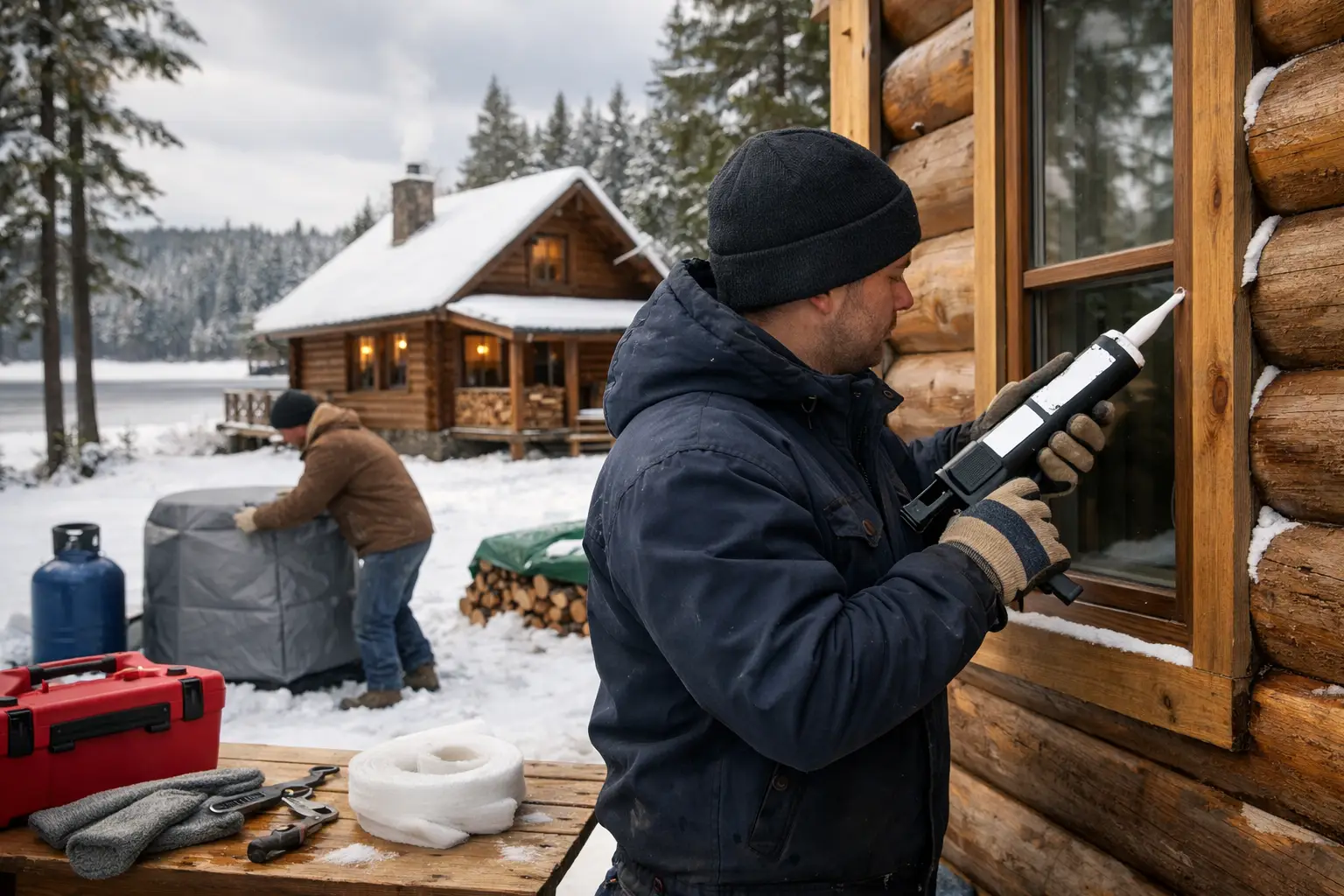
A cabin can look fine when you lock the door in November and still be taking on water by Christmas. One clogged valley, a loose pipe boot, or a frozen line can turn a quiet off-season into a ceiling stain, rotten framing, or a canceled rental stay. Cabin winterization services Kentucky owners use should focus on the places weather gets in first, not a quick walk-around and a promise that everything looks good.
For cabins around Beattyville, Slade, Stanton, Campton, and the Red River Gorge, winter prep is property protection. Our hillsides hold moisture, leaves pile up fast, and a hard freeze can expose weak plumbing and drainage that went unnoticed all fall. If you live hours away, you also need proof the work was done. Before-and-after photos matter when the cabin is empty and the weather turns bad overnight.
What Cabin Winterization Services in Kentucky Should Cover
Winterization is not one service. It is a practical inspection and repair process built around stopping water, managing runoff, protecting vulnerable wood, and reducing freeze risk. The right scope depends on your cabin’s age, roof style, water system, elevation, and whether guests will use it through the winter.
A rental cabin with regular bookings needs a different plan than a place that will sit vacant until spring. An occupied cabin may need exposed pipes insulated, heat settings checked, and a clear plan for emergency access. A vacant seasonal cabin may need water shut off and lines drained, depending on its plumbing layout. Draining a system without understanding the cabin can create problems too, so this is not a one-size-fits-all checklist.
The exterior starts at the roofline. Valleys full of leaves are how cabin roofs die. Wet debris holds water against shingles and metal, blocks the path to gutters, and creates a dam where water can work under flashing. A winter visit should identify damaged shingles, loose metal fasteners, open flashing, failing pipe boots, exposed nail heads, and soft spots around chimneys or skylights.
Gutters deserve the same attention. A gutter packed with leaves does not just overflow. It sends water behind fascia boards, down siding, and against the foundation. In freezing weather, that trapped water can pry loose hangers and worsen rot that was already starting. The wood the weather gets to first is often the wood nobody can see from the driveway.
Start With the Roof, Gutters, and Drainage
Roof repair comes before cosmetic work because a small active leak can damage insulation, decking, drywall, and electrical components long before it becomes visible inside. A repair-first inspection looks for the actual entry point. That may be flashing beside a chimney, a cracked vent boot, a nail that backed out, or a seam issue on a metal roof. It does not automatically mean you need a full replacement.
Cabin owners should also pay attention to where roof water goes after it leaves the gutter. Downspouts that dump beside a pier foundation or crawlspace can keep the ground wet all winter. That moisture attracts problems: soft soil, standing water, mildew smells, damp insulation, and wood rot. On steep Gorge lots, runoff control may mean extending downspouts, correcting a splash path, clearing a ditch, or repairing a damaged section of gutter rather than replacing everything.
A solid exterior winterization visit commonly includes these four checks:
- Roof valleys, flashing, penetrations, and visible problem areas are inspected for active or likely leaks.
- Gutters and downspouts are cleared and repaired so water has a path away from the structure.
- Siding, trim, decks, and exposed wood are checked for gaps, rot, and water entry points.
- Drainage around the cabin is reviewed for overflow, washout, and water collecting near the foundation or crawlspace.
If a storm has already caused damage, do not wait for a full repair plan before protecting the building. A tarp-up or emergency dry-in can buy time and keep a small opening from becoming interior damage. That is especially important for remote owners who cannot get to the property before the next rain.
Protect Plumbing Without Guesswork
Frozen pipes are not always caused by extreme cold. More often, they happen where cold air reaches an unprotected line: an open crawlspace vent, a gap around a utility penetration, a bathroom wall with poor insulation, or a pipe run under the cabin. The solution depends on whether the cabin stays heated and occupied.
For a cabin that will remain in use, check exposed pipes, hose bibs, crawlspace access, and areas where plumbing runs near exterior walls. Keep the heat at a safe, consistent setting, not just high enough to feel comfortable during a weekend visit. Smart thermostats and temperature alerts can help remote owners, but they are not a substitute for correcting an exposed pipe or a heat source that is not working.
For a cabin sitting vacant, shutting off the main water supply and properly winterizing the lines can lower the risk of a major break. This work needs to be done carefully. Water left in a low point, fixture, or unprotected section can still freeze. If you have a well, a tankless water heater, a complicated filter system, or a cabin with several additions, the process deserves a closer look before anyone starts opening valves.
Also think about power outages. Rural cabins can lose electricity during ice, wind, or fallen trees. A heated cabin without power is just a cabin cooling down. Remote temperature monitoring, a trusted local contact, and a plan for checking the property after a major weather event can make the difference between a small repair and a flooded interior.
Remote Owners Need Documentation, Not Vague Updates
If your primary home is in Lexington, Louisville, Cincinnati, or farther away, “we took care of it” is not enough. You need to see the roof valley that was cleared, the flashing that was resealed, the gutter section that was resecured, and the damage that was found before it spread.
Photo documentation gives you a record for your own files, your property manager, or an insurance conversation if storm damage is involved. It also helps you make a better decision when a repair is recommended. You can see whether a small patch solves the issue or whether there is enough wear to plan for larger work later.
That honest distinction matters. Some cabins need immediate repairs. Others need cleaning, minor sealing, and a watch list for spring. A contractor who pushes replacement before diagnosing the source of the problem is not protecting your budget. Central Property Services takes a repair-first approach because the right repair, done promptly, often prevents the expensive work from becoming necessary.
Timing Matters More Than Most Owners Think
The best time to schedule winterization is after heavy leaf drop and before sustained freezing weather. In eastern Kentucky, that window can move around from year to year. Waiting until the first hard freeze is risky because contractors are already responding to burst pipes, storm leaks, and emergency tarp calls.
Still, late is better than never. If you are seeing overflowing gutters, a damp crawlspace, a water spot, missing shingles, loose metal, or an unexplained jump in humidity inside the cabin, get it checked. Those are not spring problems. They are water problems that will keep working while the property sits empty.
For short-term rental owners, schedule winter checks around lower occupancy when possible. Make sure someone can access mechanical spaces and that there is a clear contact for guest-related emergencies. A guest who reports a drip, a cold bathroom, or a ceiling stain is giving you an early warning. Treat it that way.
A Winter-Ready Cabin Is Easier to Own
No cabin is maintenance-free, especially in the Gorge. Trees shed leaves, storms lift flashing, drainage shifts, and wood ages. The goal is not to spend money on work you do not need. The goal is to catch the small, specific problems while they are still small.
Before the next cold rain settles into the hollows, take a hard look at your roofline, gutters, drainage, and plumbing plan. A documented inspection and targeted repairs give you something better than hope when you are away from the property: a cabin that is ready for winter weather.
Leave a Reply