Fascia & Soffit Repair
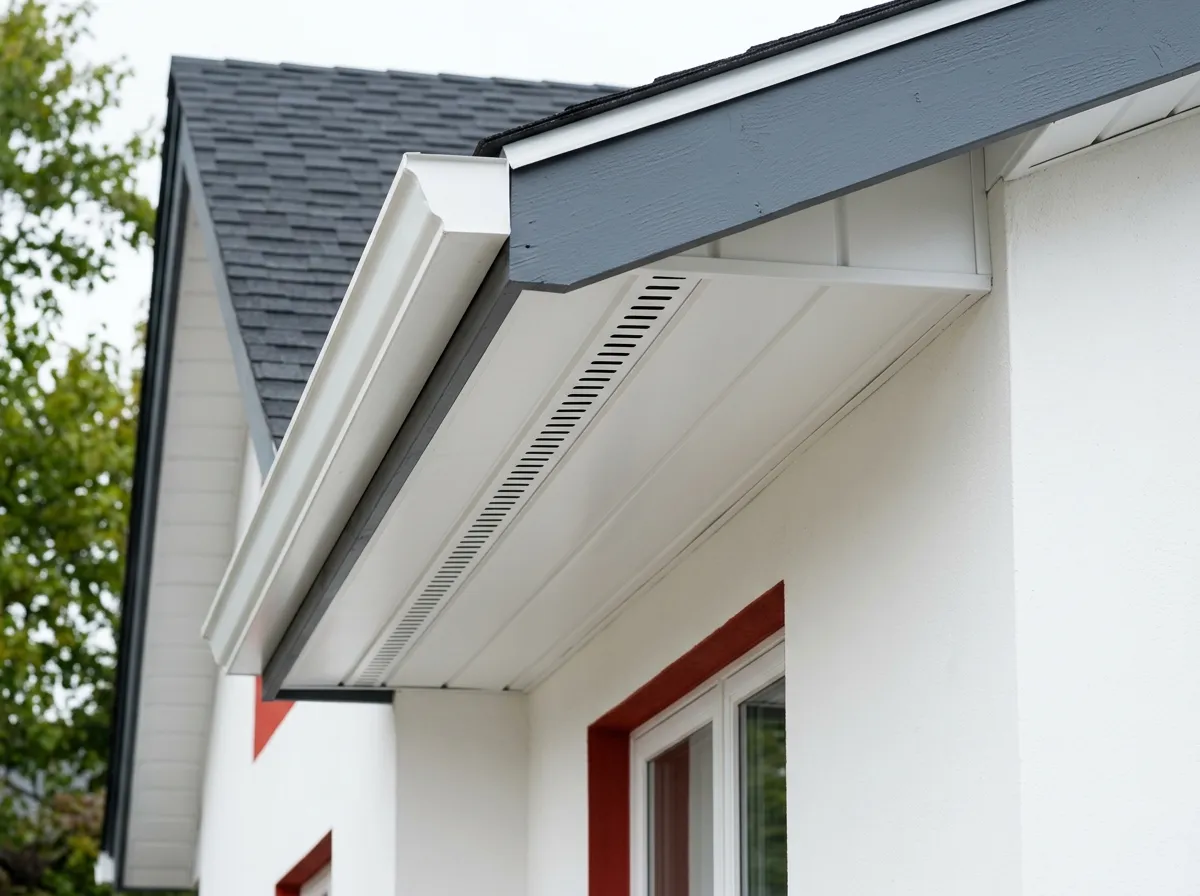
What is soffit, and what is fascia? The soffit is the finished underside of the roof overhang; the fascia is the board along the roof edge the gutters hang from. Fascia rots behind failing gutters, soffits rot where attic moisture or roof leaks reach the overhang, and we fix both at the water source.
Roof worry? Text a photo to (859) 310-1209 for a free straight answer · or call now
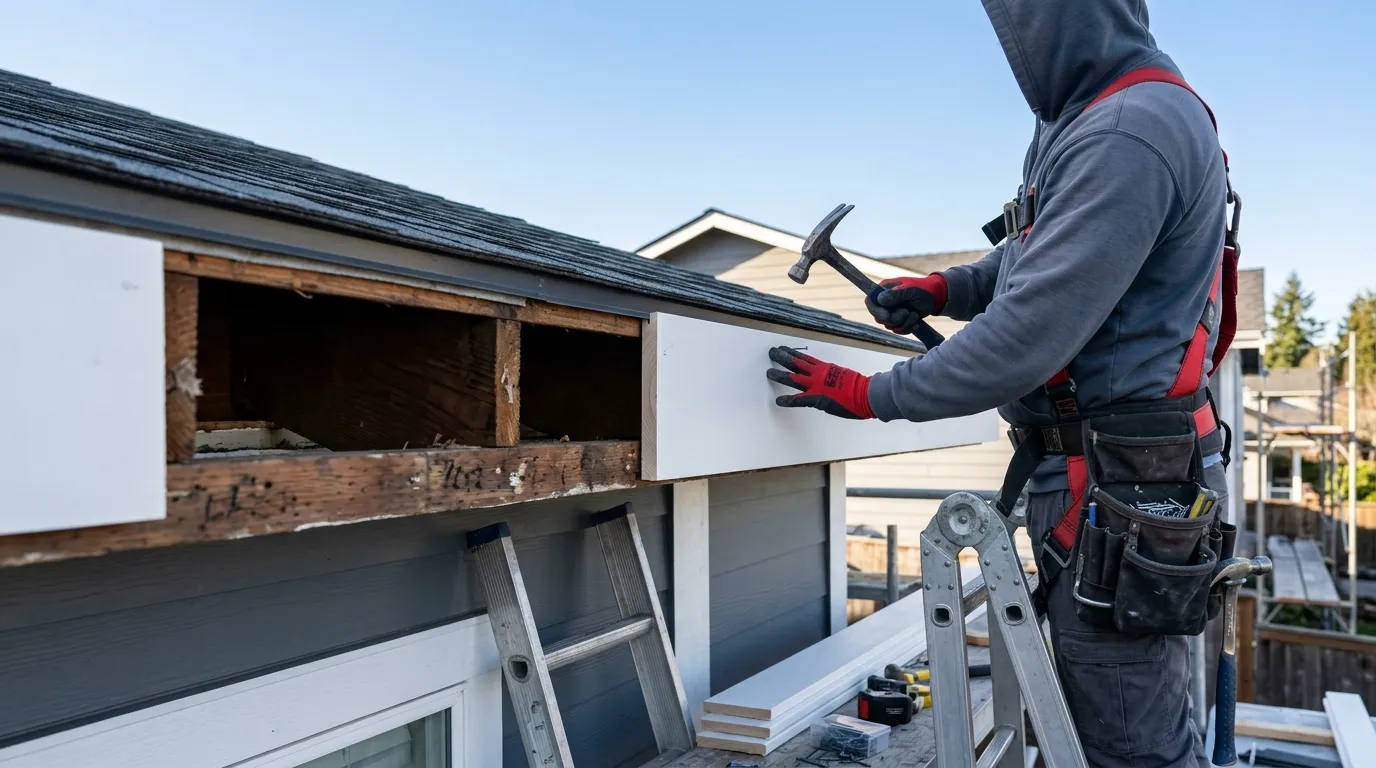
Fascia and soffit repair fails when it’s cosmetic — new fascia nailed over the old problem is a countdown timer: gutters re-hung into rot pull out in the next ice load, and blocked soffit vents breed the next repair upstairs. Our fascia-and-soffit work rebuilds the wood, preserves the airflow, and reworks whatever fed the rot — usually the gutter line above it.
What the Repair Involves
- Pull gutters and probe the full fascia run — rot spreads sideways behind paint
- Replace failed fascia with primed stock; rebuild sub-fascia where needed
- Replace soffit panels, preserving or restoring intake ventilation
- Flash the fascia top edge under the drip edge properly
- Re-hang gutters into sound wood at correct pitch
What It Costs
Typical fascia-and-soffit repairs run $450–$1,600 by linear footage and gutter rework. Whole-eave rebuilds after long-term neglect are quoted from the probe, with photos. Every roof is different — the photo comes first, the real number before we start, and no invoice surprises after.
Materials We Use
Primed solid or PVC fascia stock, vented aluminum or matched wood soffit panels, new drip edge, and hidden gutter hangers into fresh wood. The freeze-thaw swings the NWS Jackson office (weather.gov/jkl) logs every winter are what pry loaded gutters off soft fascia in the first place.
The tree-shaded eaves on Campton and Gorge-area cabins stay damp weeks longer than open-lot homes — soffit ventilation there does double duty, and we never seal it shut. We answer calls from Richmond, Lexington, Berea and Winchester, and across Estill, Powell, Lee, Wolfe, Owsley and Breathitt counties and the Red River Gorge. Fascia and soffit jobs usually start as roof repair calls — the eave is where the roof story shows first.
Not sure this is your problem? Text a photo and find out free — no sales inspection, just a straight answer today.
What is a soffit, and what is fascia?
A soffit is the underside of any architectural element, and on a house it means the finished surface under the roof overhang, between the exterior wall and the roof edge. The fascia is the vertical board that caps the ends of the rafters at that edge; the gutters are fastened to it and the drip edge sits on top of it. Together they close the eave: the fascia keeps rain and wind out of the rafter tails, the soffit keeps weather, birds, squirrels and wasps out of the attic while letting air in.
What does soffit look like?
On most homes built since the 1980s it is vinyl or aluminum panel, white or a trim color, with rows of small perforations or a solid-vented-solid pattern that you can see from the yard when you look straight up under the eave. Older homes have painted wood: beaded tongue-and-groove boards, plywood with round or rectangular vents cut in, or plain smooth panel. A wide overhang shows a lot of soffit; a tight modern eave may show only a few inches.
Why soffits matter more than they look
The soffit is the intake half of the roof’s ventilation system. Air enters through the soffit vents, rises under the roof deck carrying heat and moisture, and leaves at the ridge. Paint, insulation or a new solid panel over the vents breaks that path, and the attic runs hot in summer and damp in winter, which is how ice dams, mold on the underside of the deck and curling shingles start. Our note on soffit vents covers how much intake a roof needs.
Signs your soffit or fascia needs repair
Peeling or bubbling paint along the roof edge. Gutters that sag, pull away or overflow at one spot. Dark streaks or water stains on the soffit panels. Soft wood when you press the fascia behind the gutter. Holes, loose panels or nests: squirrels and birds go in through failed soffit first. Wasps at the eave. Daylight visible from the attic at the eave where there should be a vent screen. Any of these means water or animals have been in the eave for a while; the sooner it is opened up, the less of the rafter tail and decking has to come out with it.
Repair or replace, and what drives the cost
A short run of rotted fascia behind one gutter section is a repair: pull the gutter, cut back to sound wood, sister the rafter tail if it is soft, new primed fascia, new drip edge, re-hang the gutter on fresh wood. Soffit damage follows the same logic panel by panel. Replacement makes sense when the rot runs the length of a side or the panels are brittle and failing everywhere. The cost drivers are the length of the run, the height, how much rafter tail and decking are gone, and whether gutters have to come down and go back; our roof repair cost guide explains how we price it, and the photo report shows you exactly what was replaced.
Common Questions
My gutter pulled off in the ice. Just re-hang it?
Only if the wood behind it is sound — and if it pulled out, it usually isn’t. We probe first, replace what’s soft, and then the new hangers actually hold.
Can you match my soffit style?
Beaded wood, smooth panel, or vented aluminum — yes. Where original profiles matter on older homes, we mill or source the match rather than defaulting to whatever’s on the truck.
Do I need a soffit on my home?
If the roof overhangs the walls, yes. Without it the rafter tails and the attic are open to rain, wind and animals, and there is no clean place for intake ventilation. Homes with no overhang use a different intake detail at the roof edge instead.
What is the difference between soffit and fascia?
The soffit is horizontal and faces the ground; it is the underside of the overhang. The fascia is vertical and faces out; it is the board along the roof edge that the gutters attach to. Water that gets past a failed gutter rots the fascia first, then the soffit behind it.
Last updated: October 3, 2026