
Job Log: A Full Roof Replacement, Start to Finish
Tear-off to last magnet sweep — one roof, the whole sequence.
The Straight Answer
This entry walks a real full roof replacement from our archive, on a home in our service area: tear-off down to bare decking, replacing what the tear-off exposed, dry-in with underlayment and flashings, shingle installation, and a magnet-swept cleanup. It also covers the honest fork in the road that started it — when a roof is past the point where repair is the better deal. The photos below follow the sequence.
Roof problem? Text a photo to (859) 310-1209 — free diagnosis, straight answer.
The call we made first: repair or replace
We are a repair-first outfit — we would rather fix a small leak than sell a whole roof. So a replacement recommendation has to be earned. On this job it was: shingles brittle and shedding granules across every slope, repairs already layered on repairs, and fasteners backing out of decking that flexed underfoot. Patching a roof in that condition sells the owner a subscription to leaks. When the whole field of shingles is done, one honest replacement beats five emergency calls. We showed the owner the photos, walked the reasoning, and they made the call — that order matters.
Tear-off: down to bare wood
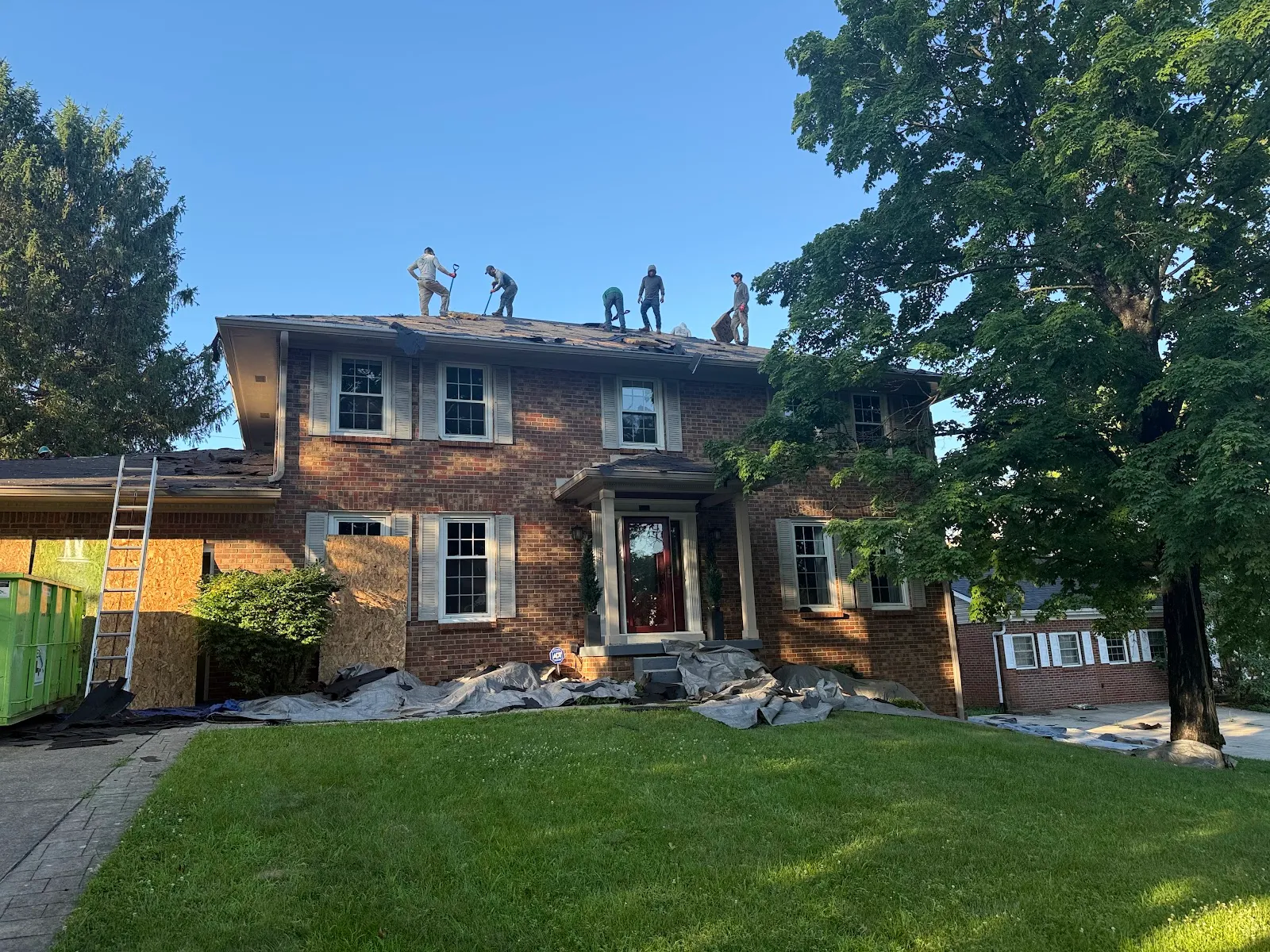
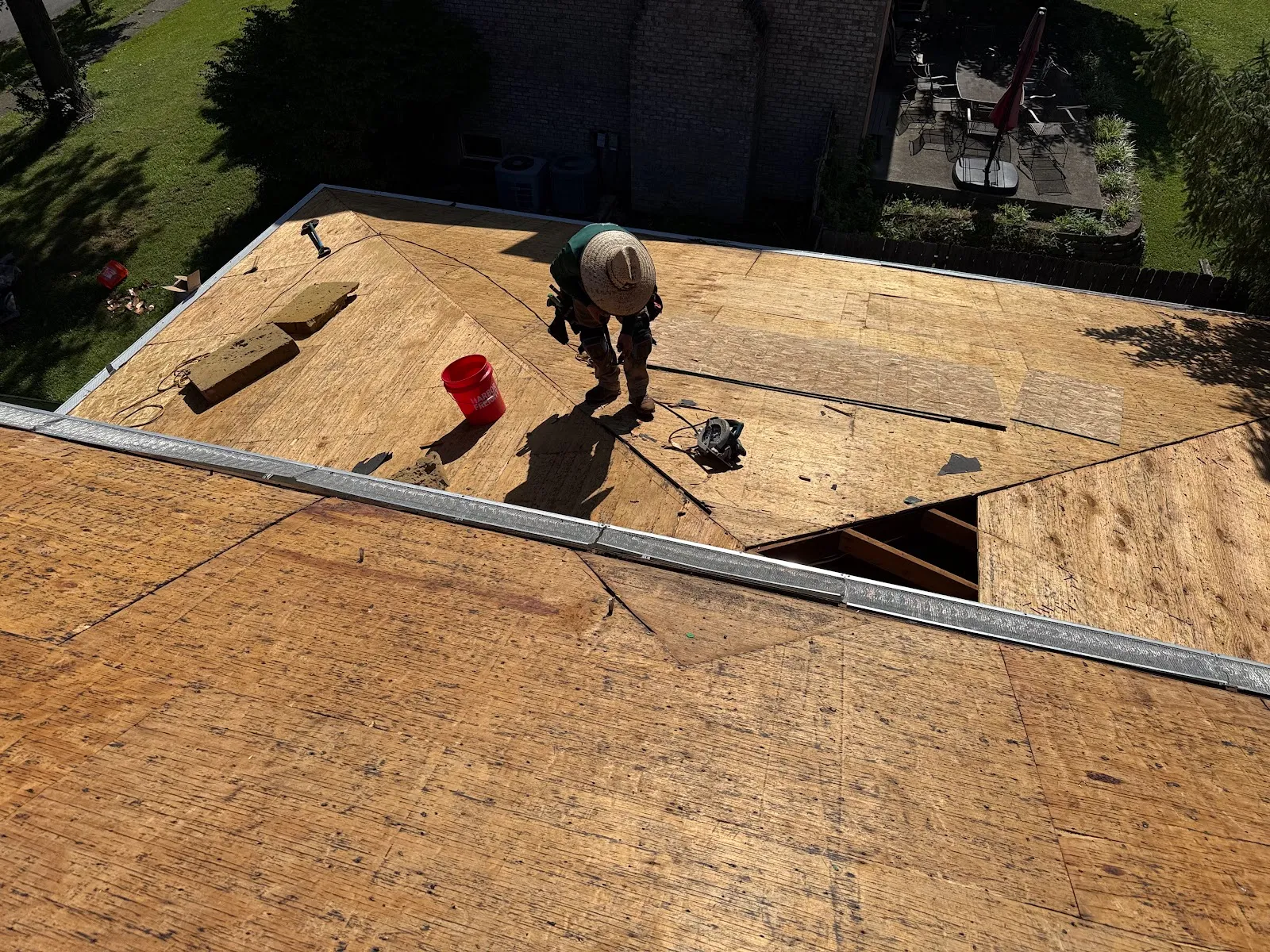
Everything comes off — shingles, old underlayment, every nail and staple, down to bare decking. Tearing off is louder and messier than laying over a second layer, and it is the right way: you cannot inspect wood you cannot see, and new shingles telegraph every hump and soft spot beneath them. The crew works slope by slope, tarps below protecting shrubs and siding, debris going straight to the trailer instead of the yard. The photos below show the roof mid-strip — the stage no stock photo ever shows you, and the stage where the truth about a roof comes out.
Decking checks: what the tear-off exposed
With the deck bare we walk every sheet, probing for soft spots and checking fastener grip. This roof had sections of delaminated and water-darkened decking near old leak paths — exactly the kind we replace before anything new goes down, because underlayment and shingles are only as good as the wood carrying them. Rotten decking is also where carpentry and rot repair earns its keep on a replacement. Owners never see this stage unless somebody photographs it; we photograph it on purpose, so you know what your money replaced.
Dry-in, flashings, and shingles
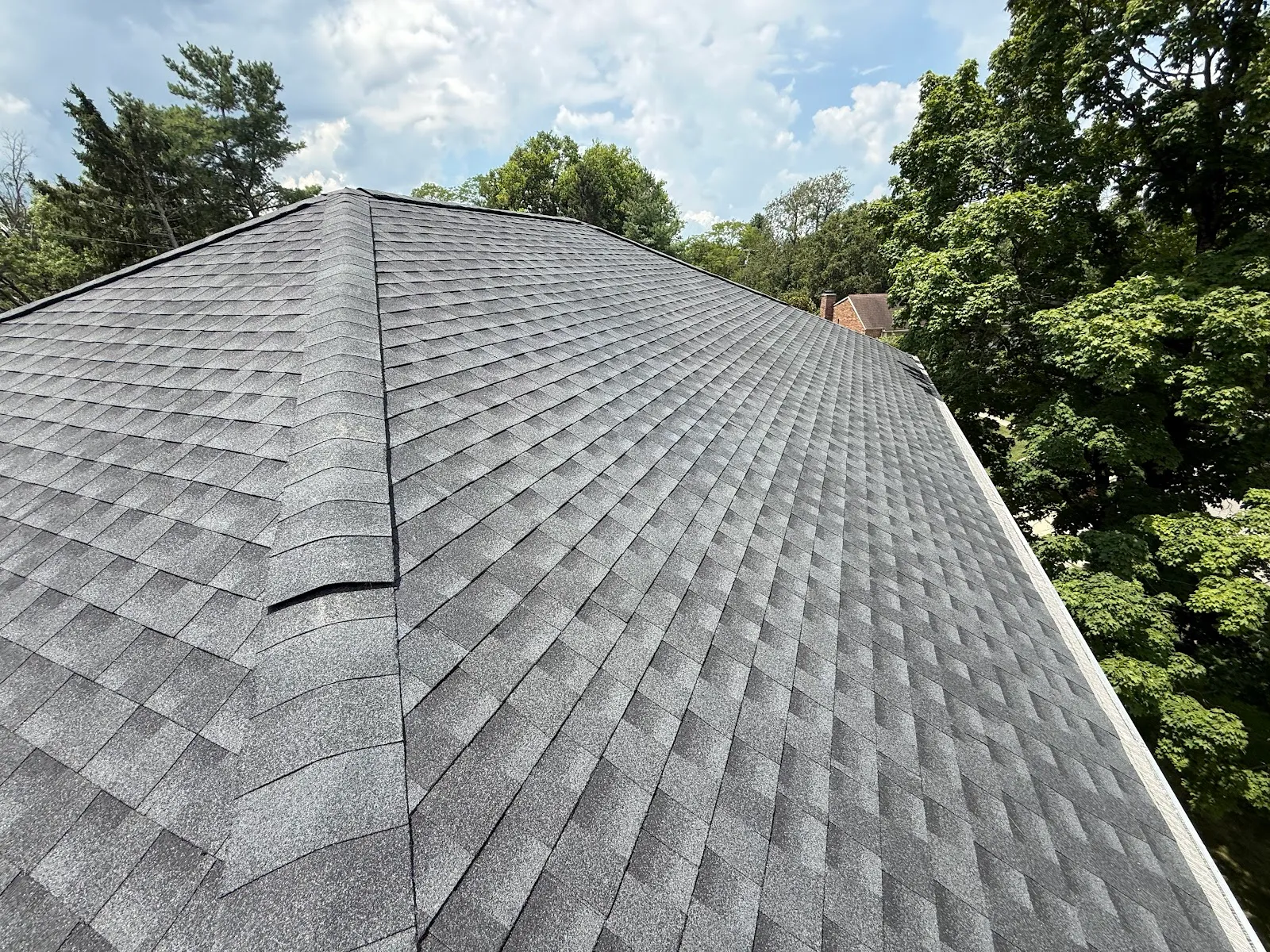
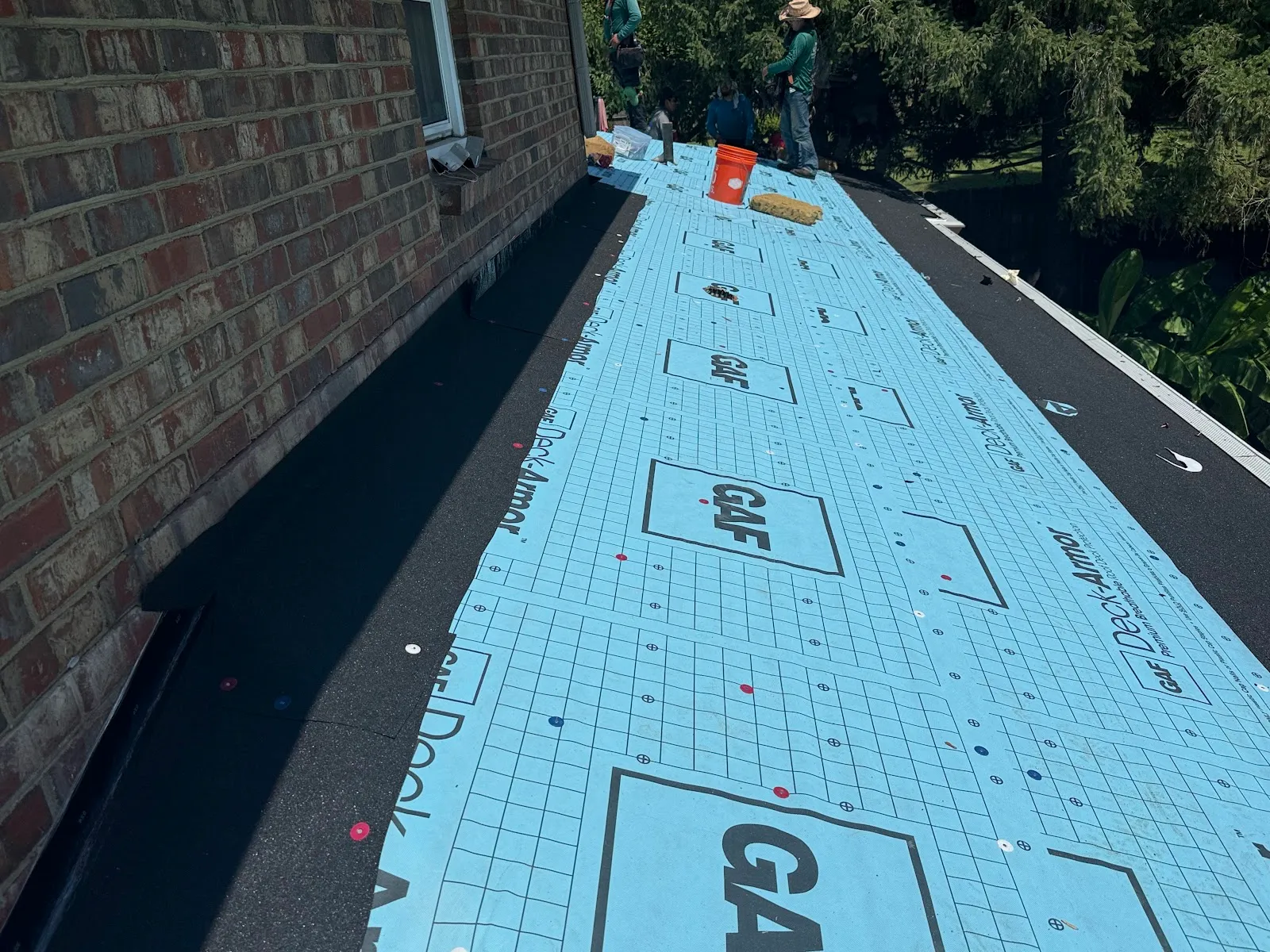
New decking gets sheeted, then the dry-in: underlayment lapped correctly up the slopes, and drip edge at the eaves and rakes. Flashings go in as their courses arrive — step flashing at sidewalls, new pipe boots, kickout flashing where a roof edge meets siding. Around the chimney we set fresh flashing rather than reusing tired metal, because chimneys are the leak point we get called to most. Then shingles, nailed to pattern in the nailing zone, ridge cap last. None of this is exotic. It is sequence and discipline, and skipping either is how new roofs leak.
Cleanup and the walkaround
A replacement is not done when the ridge cap goes on. The crew sweeps the yard and drive with magnets for nails, hauls every scrap of tear-off, and pulls the tarps. Then the walkaround: we circle the house with the owner, ground level and photos from the roof, showing the flashings, the ridge, the new decking locations. The owner keeps the photo set with the written paperwork — see our workmanship warranty for what stands behind the work. The photos below end the sequence the way the job ended: clean yard, dry roof.
Common Questions
How do I know if my roof needs replacement instead of repair?
Honest signals: leaks in multiple places rather than one, shingles cracking or shedding granules across whole slopes, repairs stacking up year over year, and decking that feels spongy. One leak with an otherwise sound field of shingles usually wants a repair, not a roof. Send photos and we will tell you which side of the line you are on — free, before anyone climbs.
Why insist on tear-off instead of layering new shingles over old?
A layover hides the decking, adds weight, and shortens the new roof’s life because shingles over an uneven surface never sit right. It also leaves old flashings buried where they keep failing. Tear-off costs more up front and is the version we would put on our own house — you only find rot by looking at bare wood.
What surprises should an owner budget patience for?
Decking. Nobody can see under shingles before tear-off, so hidden rot is the honest wild card on any replacement. We price the roof with a stated per-sheet approach to decking replacement, photograph every sheet we swap, and show you before we proceed — so the surprise is managed in daylight, not discovered on the invoice.
If your roof is closer to one bad spot than a whole bad field, start with roof repair — and either way, a free photo diagnosis tells you which conversation to have.
Central Roof Repair · Beattyville, KY · Repair-first roofing & exterior work across the Lexington-to-Gorge corridor · Owner Marcos Gil is also a licensed Kentucky REALTOR® (marcosgilrealty.com) and publishes Invest in the Gorge — those interests are disclosed in writing wherever they touch your project.
Text a photo of your roof
Last updated: August 14, 2026