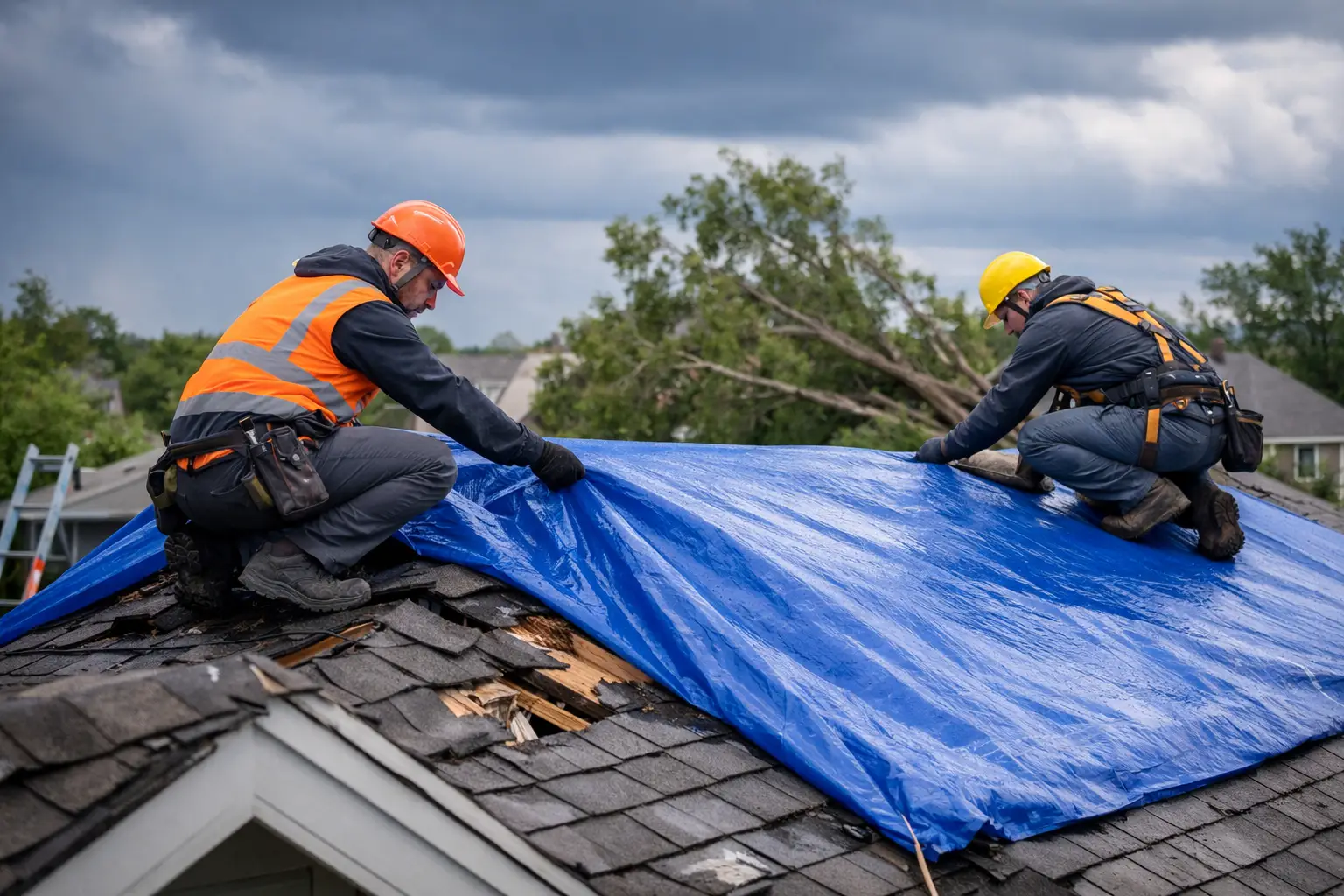
A windstorm does not wait until business hours, and neither does the water coming through a torn roof. Emergency roof tarp service is the fast, temporary step that keeps a bad roof situation from turning into wet insulation, stained ceilings, ruined furnishings, and damaged framing. For cabin owners and short-term rental hosts in the Red River Gorge, it can also mean the difference between a quick repair and a canceled guest stay.
A tarp is not a roof repair. It is a controlled pause – a way to cover the damaged area, direct water away, and buy time for a proper diagnosis. Done right, it protects the structure without creating more damage. Done carelessly, a tarp can trap water, rip loose in the next gust, or leave dozens of unnecessary nail holes behind.
When Emergency Roof Tarp Service Makes Sense
Call for a tarp-up when the roof has an active opening or a strong chance of leaking before permanent work can be completed. That may be missing shingles after high wind, a tree limb that punched through the roof deck, exposed underlayment, storm-torn metal panels, or flashing pulled loose around a chimney, vent, or valley.
Not every roof problem needs a tarp. A small, slow leak with no visible storm damage may need targeted leak detection instead. The source could be a failed pipe boot, an open flashing seam, backed-up gutter, or a valley full of leaves. In that case, throwing a tarp over the general area can hide the real issue without solving it.
The question is simple: Is water getting in now, or is the roof exposed enough that the next rain will get in? If the answer is yes, temporary protection is worth doing quickly.
For remote owners, photos matter just as much as speed. If your cabin is outside Slade, Campton, Beattyville, or another Gorge-area community and you are hours away, you need to see the damage, the protected area, and the condition of the roof after the work is finished. Before-and-after documentation gives you proof that the immediate risk was handled and helps you make a clear decision about the repair that follows.
What a Proper Emergency Tarp-Up Should Do
A professional tarp-up starts with a safe look at the roof, not a guess from the ground. The technician needs to identify whether the damage is limited to the surface or whether the roof deck, ridge, valleys, flashing, gutters, or nearby siding also took a hit.
The tarp should extend well beyond the damaged spot, especially uphill. Water does not travel straight down a roof once wind pushes it sideways or it finds a low spot under damaged shingles. Covering only the visible hole may leave the water path open above it.
The material also has to be secured with the roof in mind. Fastening methods depend on the roof type, slope, damage pattern, and weather conditions. A shingle roof, standing-seam metal roof, low-slope commercial roof, and cabin with steep sections do not get handled the same way. The goal is to keep the covering tight while limiting new penetrations and avoiding loose edges that can catch wind.
A solid emergency roof tarp service should also include a clear report on what was found. That means photos of the damage, notes on the likely cause, and an honest recommendation about the next step. Sometimes the next step is a small repair. Sometimes a larger section needs to be rebuilt. If a full replacement is truly warranted, the evidence should make that plain. If it is not, nobody should be using a storm tarp as a sales pitch for a roof you do not need.
What to Do Before Help Arrives
Your first job is protecting people, not protecting shingles. Stay off the roof. Wet shingles, metal panels, mossy cabin roofs, and storm debris turn a simple climb into a serious fall risk fast. If a power line is down, a tree is tangled in electrical service, or the roof is unstable, keep clear and contact the appropriate emergency utility or public safety resource first.
Inside the building, move furniture, electronics, rugs, and inventory away from the leak if it is safe to do so. Put containers under active drips and take a few photos or short videos of ceiling stains, dripping water, and visible exterior damage. Do not puncture a sagging ceiling bubble unless you understand what is above it and can safely control the water. A ceiling can hold far more weight than it looks like it can.
If you own a rental cabin, notify upcoming guests early if the leak affects a sleeping area, entry, kitchen, or safety. A quick, honest message is better than hoping the ceiling stain stays small through the next storm. Property damage gets expensive. Guest complaints, refunds, and bad reviews add another layer.
Why Waiting Costs More Than Most Owners Expect
The visible roof damage is rarely the only damage. Water works its way into insulation, roof decking, wall cavities, and framing. It can soak drywall from the back side, where a surface stain appears days later. In a closed-up cabin, moisture may sit unnoticed until it creates odor, mildew, wood rot, or a soft spot in the ceiling.
This is especially true after wind-driven rain. A roof can look mostly intact from the driveway while water is being pushed under lifted shingles or through damaged flashing. Metal roofs have their own trouble spots: loose fasteners, failed sealant, lifted trim, and openings around penetrations can all let water travel a long way before it shows up indoors.
There is a trade-off, of course. Emergency dispatch and temporary protection cost money, and no one wants to pay for a tarp when a repair could happen immediately. But when weather is still moving through eastern Kentucky, materials are unavailable, or a roof needs more investigation before repairs begin, covering the opening is often the lower-cost choice. It limits the part of the property that weather can reach first.
The Repair Comes After the Tarp
Once conditions are safe, the temporary covering needs to lead into a real repair plan. A good inspection looks beyond the tarp line. The technician should check adjacent shingles or panels, roof decking, ridge and valley areas, chimney flashing, vents, gutters, and the interior where possible.
The right repair may be straightforward: replace a few shingles, reseal a flashing detail, reset a metal panel, repair a pipe boot, or patch a damaged low-slope membrane. A branch strike may require replacing roof decking and framing before the roofing material goes back on. Water damage around a chimney may point to failed flashing rather than a problem with the roof field itself.
This is where repair-first work matters. A temporary tarp creates urgency, but urgency should not erase common sense. Get a straight answer about what failed, what needs attention now, what can wait, and what the repair is expected to prevent. A contractor who documents the area and explains the options gives you something much better than a vague promise to “take care of it.”
Storm Tarp Service for Cabins, Rentals, and Commercial Properties
Different properties carry different risks. At a primary home, the priority may be keeping bedrooms and belongings dry. At a vacation cabin, the priority may be preventing hidden damage while the owner is out of state. At a short-term rental, fast protection can preserve a weekend booking and keep a minor roof failure from becoming a guest emergency.
Commercial roofs require their own approach. A puncture in EPDM or TPO, a split seam, or storm damage around a rooftop penetration can put inventory, equipment, ceilings, and operations at risk. Flat roofs also hold water differently, so temporary protection has to account for ponding and drainage rather than treating the roof like a steep shingle slope.
Central Property Services handles emergency tarp-ups with the next repair in mind. The work is documented with before-and-after photos so local owners, property managers, and people checking on a Gorge cabin from several counties away can see what happened and what was done.
When the storm passes, do not let a tarp become a permanent plan. Use it for what it is meant to do: keep the weather out long enough to make a smart repair decision. The sooner the roof is assessed and the true entry point is fixed, the sooner your property is protected for the next hard rain.

Leave a Reply