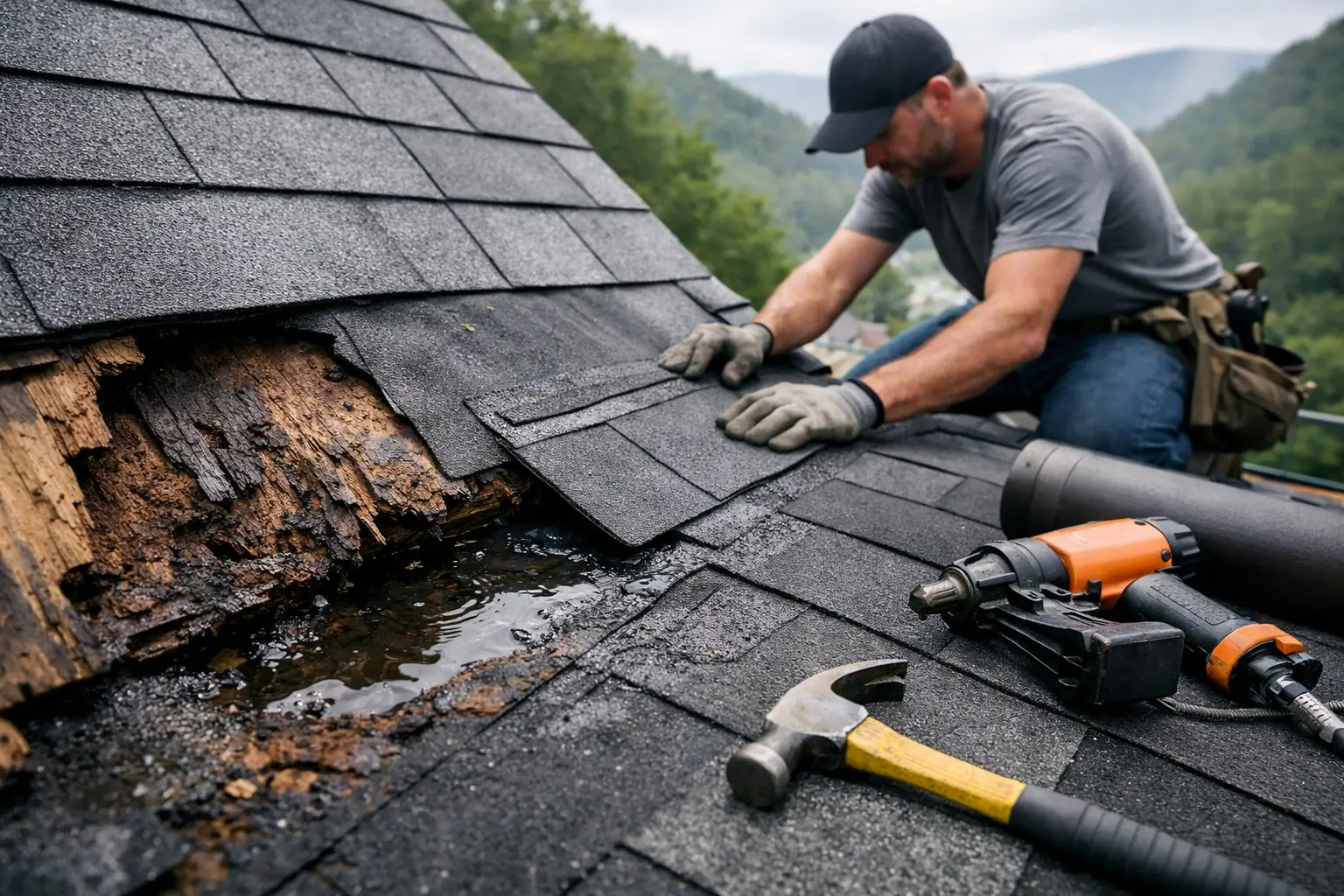
A roof leak rarely announces itself with a hole you can see from the driveway. More often, it shows up as a brown ceiling ring after a hard rain, a damp smell in a cabin bedroom, or water near a chimney that was dry last month. For roof leak repair Beattyville KY property owners can count on, the job starts with finding where water is getting in – not selling a roof replacement before anyone has diagnosed the problem.
That matters around Beattyville and the Red River Gorge. Our weather can drive rain sideways, drop limbs across a roof, and keep shaded cabin roofs damp long enough for small defects to become rotten decking. If water is getting inside, act now. A repair made while the problem is limited can protect your framing, insulation, ceilings, and rental income.
A Stain Is Usually Not the Leak Location
Water travels. It can enter near a ridge, pipe boot, valley, flashing joint, or nail hole, then run along decking or framing before it drips onto a ceiling. The stain inside may be several feet from the actual failure on the roof.
That is why a quick look from the ground is not always enough. A proper leak inspection follows the likely water path and checks the roof system around it. On a shingle roof, that may mean examining lifted tabs, exposed fasteners, aging pipe boots, wall flashing, valleys, and penetrations. On a metal roof, the trouble may be a backed-out screw, failed washer, loose ridge cap, deteriorated sealant, or a flashing detail where the roof meets a wall or chimney.
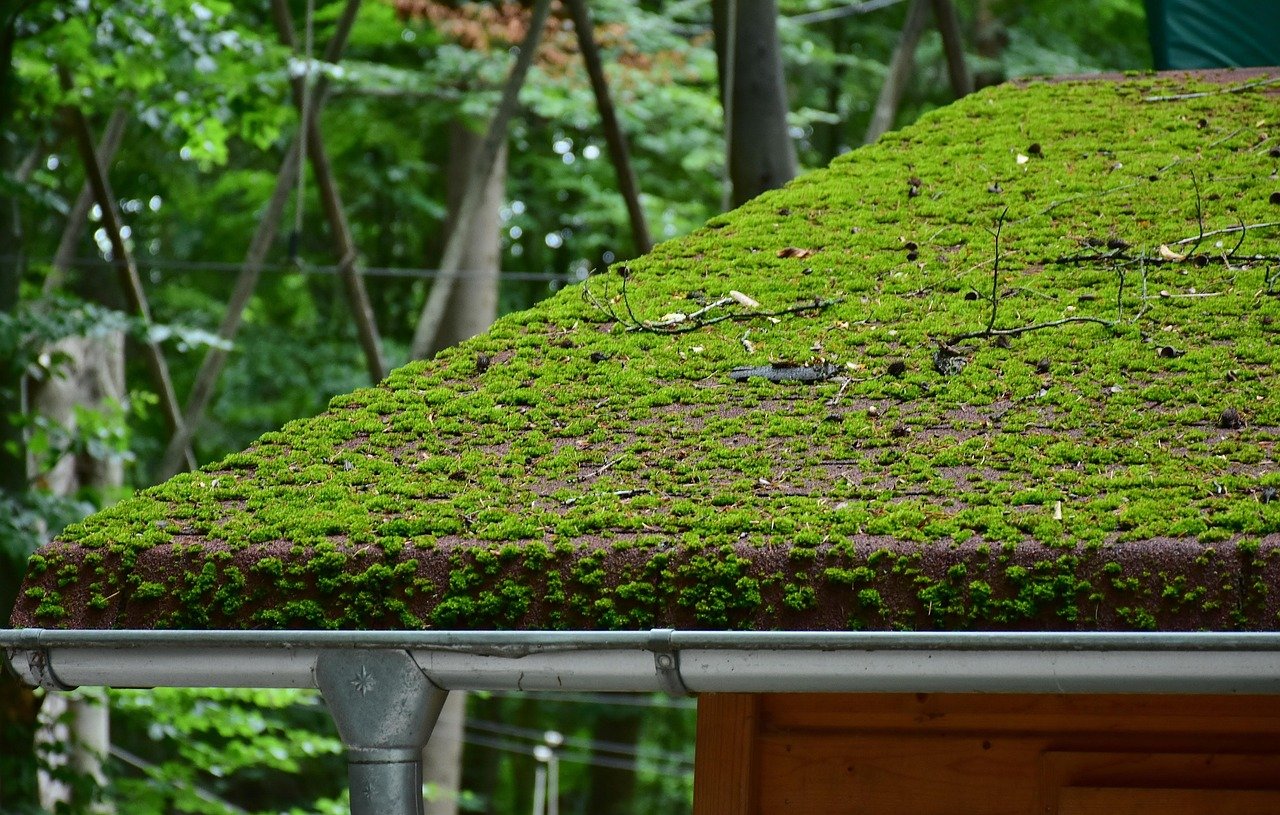
Cabins add another layer of trouble. Tall trees, steep slopes, long driveways, and roofs that sit unattended between visits make routine problems worse. Valleys full of leaves are how cabin roofs die. Water slows down, debris stays wet, and the roof surface and wood underneath never get a chance to dry properly.
What to Do When Water Is Coming In
First, protect people and the interior. Move furniture, electronics, bedding, and valuables out of the wet area. Put a bucket under an active drip if it is safe to do so, and take clear photos of the ceiling, walls, and any visible water. If a ceiling is bulging with trapped water, keep clear of it. A saturated ceiling can fail without much warning.
Do not climb onto a wet, steep, icy, or storm-damaged roof. A temporary tarp can prevent more damage, but it needs to be secured without creating additional holes or pulling loose material. For an active leak, storm opening, or tree-strike situation, local emergency tarp service is often the right first move while conditions are unsafe for a permanent repair.
Remote cabin owners should also document the time and weather conditions, then arrange for someone local to inspect the property as soon as possible. If the home is a short-term rental, a small leak is not just a maintenance issue. It can force a canceled reservation, damage a guest’s belongings, or turn into a mold concern between turnovers.
Common Roof Leak Problems in Beattyville
Most roof leaks are repairable when caught early. The right fix depends on the roof material, roof age, slope, and whether water has reached the decking or framing.
A few problems show up again and again in this area:
- Failed flashing around chimneys, walls, skylights, and roof transitions. Flashing has to move water away from a joint. When it rusts, pulls loose, or was installed poorly, water finds the gap.
- Damaged pipe boots around plumbing vents. Rubber boots crack with age and sun exposure, often causing a leak that looks like a ceiling problem in a bathroom or hallway.
- Wind-lifted shingles and missing fasteners. Wind can break a seal without tearing off an entire shingle. The roof may look mostly normal until the next hard rain.
- Metal roof screw and sealant failures. Metal roofs can last a long time, but fasteners, washers, penetrations, and lap details need attention. More caulk is not always the answer.
- Clogged gutters and packed valleys. When water backs up at the roof edge or valley, it works behind materials that were built to shed flowing water, not standing water.
- Tree damage and storm debris. A branch does not need to punch through the roof to cause a leak. It can scrape shingles, bend metal panels, loosen flashing, or crack a vent.
The repair may be as focused as replacing a pipe boot and sealing the surrounding detail. It may also involve removing damaged roofing, replacing soft decking, correcting flashing, and tying the repair back into the existing roof. The goal is to fix the source and leave the roof able to shed water again.
When a Repair Makes Sense – and When It May Not
Repair-first roofing is not about pretending every roof can be saved. It is about giving a straight answer after looking at the actual condition.
A targeted repair often makes sense when damage is isolated, the surrounding roof is still serviceable, and the roof system has useful life left. A single leaking chimney flashing detail, a few wind-damaged shingles, or a failing metal-roof fastener pattern may not justify replacing the whole roof.
Replacement becomes a more realistic conversation when leaks are widespread, shingles are brittle and losing major coverage, decking damage extends across multiple areas, or prior patch jobs have left the roof unreliable. A roof near the end of its life can still receive a temporary repair, especially when a property owner needs time to plan, but the trade-off should be clear. Paying for repeated emergency patches on a failing roof can cost more than addressing the larger issue on a planned schedule.
For commercial flat roofs, the same principle applies. EPDM, TPO, and other low-slope systems often leak at seams, drains, penetrations, edge details, or damaged membrane sections. A careful repair can extend service life, but ponding water, widespread membrane failure, or wet insulation may call for a larger scope. The diagnosis should fit the roof, not a sales quota.
Why Photo Documentation Matters for Remote Owners
If you live in Lexington, Louisville, Cincinnati, or farther away, you should not have to wonder whether someone actually addressed the leak at your Beattyville cabin. Before-and-after photos show the condition found, the repair area, and the completed work. They also help establish a maintenance record for your property.
That record is useful when you are tracking recurring trouble spots, coordinating with a property manager, preparing for guests, or deciding whether a roof is approaching replacement age. It gives owners a clearer basis for decisions than a vague message that says the roof was “taken care of.”
Central Property Services approaches leak calls this way because property care is bigger than a single wet ceiling. A roof leak can expose weak gutters, rotted trim, bad drainage, damaged siding, or a neglected valley. The wood the weather gets to first is usually not the only material that needs attention.
Preventing the Next Leak
Not every leak can be prevented, especially after a severe storm, but regular observation cuts down on surprises. Check the attic or upper ceiling areas after major rain. Look for new staining, wet insulation, daylight around penetrations, and damp wood. From the ground, watch for displaced shingles, sagging gutters, branches on the roof, or debris building up in valleys.
For cabins and rentals, schedule seasonal checks before the wettest stretches and after wind events. Gutter cleaning is not cosmetic work when it keeps water from backing up at the roof edge. Trim limbs that rub the roof, keep valleys clear, and address small flashing or sealant failures before they have a season to work on the decking.
If you are managing multiple properties, keep a simple record of roof age, prior repairs, storm dates, and photo documentation. That makes it easier to spot a repeat issue and act before a guest, tenant, or building occupant discovers it during a downpour.
A leaking roof does not need panic, but it does need an honest look and timely action. Get the water source checked, protect the interior, and keep the repair record with your property files. That is how a small roof problem stays a repair instead of becoming a renovation.
Leave a Reply