
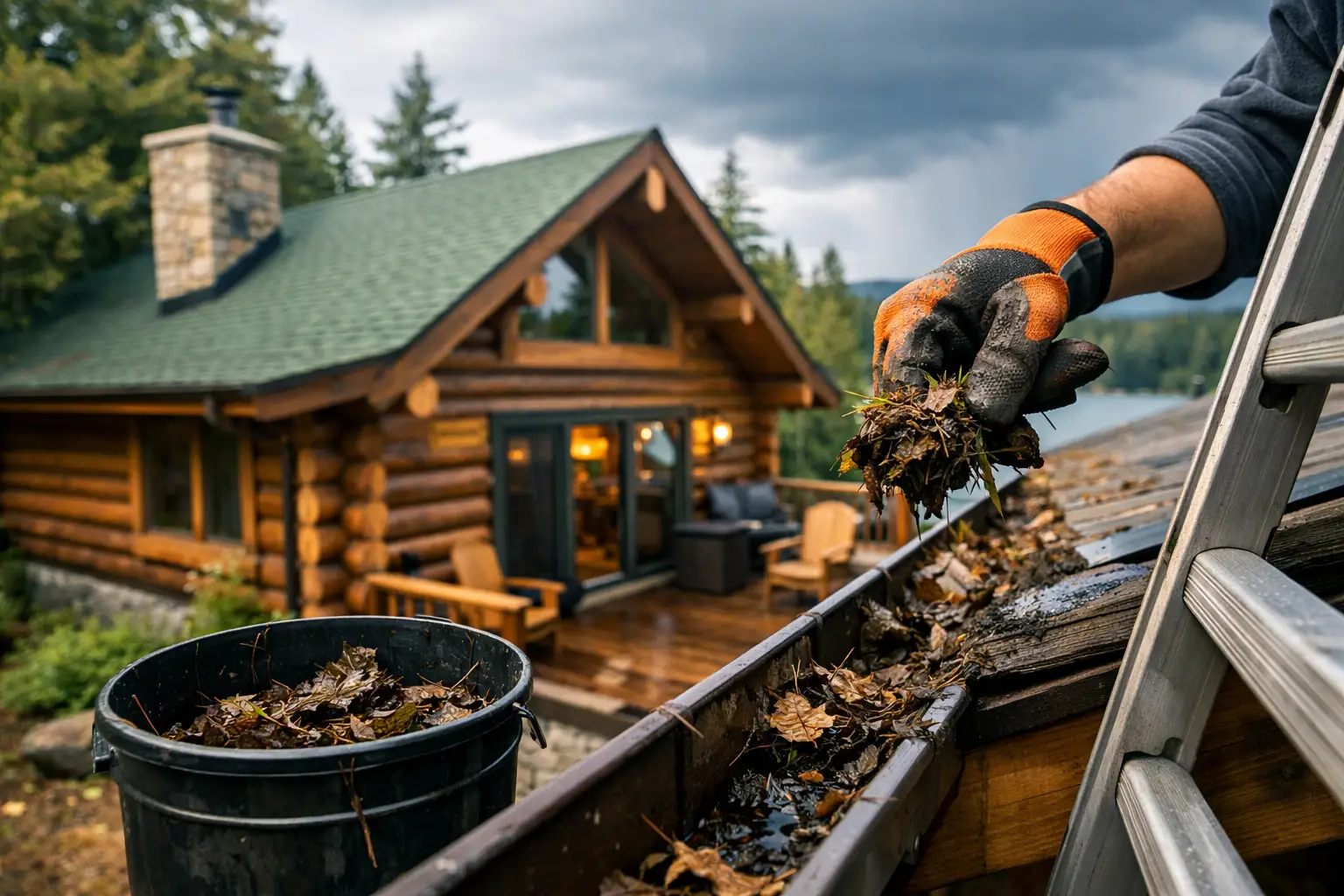
A clogged gutter can turn into a canceled booking
The gutter cleaning cabin rentals need in the Red River Gorge is not a quick cosmetic chore. A few wet leaves packed at the downspout can send water over the gutter edge, down the siding, behind trim, and into the wood your guests never see. By the time a host notices a stain on the ceiling or a soft spot on the deck, the water has usually been working for a while.
That is especially true around Slade, Beattyville, Campton, and the wooded backroads where cabins sit under heavy tree cover. Valleys full of leaves are how cabin roofs die. When gutters cannot move water away from the roofline, rain backs up where shingles, flashing, fascia boards, and roof decking are already taking a beating.
For a short-term rental owner, the problem is bigger than a dirty gutter. It can mean an emergency call between guests, a damaged exterior, a bad review, or a booking that has to be moved because part of the cabin is wet. Regular gutter service is one of the simpler ways to protect the roof, the structure, and the income the property is supposed to produce.
Why cabin gutters clog faster than house gutters
A cabin in town may have the same gutter system as a house, but it does not live the same life. Many rentals in this area are surrounded by oak, maple, pine, hickory, and steep wooded slopes. Leaves do not just land in the gutter during fall. Wind, summer storms, pine needles, twigs, shingle grit, and roof moss can build up across the year.
Cabins also tend to have rooflines that make drainage less forgiving. Long runs, multiple valleys, dormers, porches, metal roof sections, and low-slope transitions all concentrate water in specific places. If a valley dumps into a gutter that is already half blocked, water has nowhere useful to go. It can overshoot the gutter, wash out landscaping, or push backward under the roof edge.
Then there is vacancy. A primary home owner may notice an overflowing gutter during a Saturday rainstorm. A remote cabin owner may not know there is a problem until a cleaner finds wet flooring, a guest sends a photo, or a neighbor calls after seeing water pour over the front porch. That delay is where minor maintenance turns into repair work.
Gutter cleaning for cabin rentals protects more than gutters
A clean gutter is meant to control where roof water goes. It catches runoff, directs it through downspouts, and moves it away from the foundation and walkways. When that path fails, water starts choosing its own route.
At the roof edge, overflowing water can soak fascia, soffit, and trim. Those are often the first boards to rot because they are the wood the weather gets to first. On cabins with stained or natural wood exteriors, damage can spread behind a good-looking surface before it becomes obvious.
At ground level, discharged water can create muddy entry paths, splash siding, undermine gravel, and collect near crawlspaces or foundations. In winter, a bad drainage path can freeze near steps and decks. That is a safety issue for guests, not just a maintenance item.
The roof itself is also at risk. Gutters do not usually cause a roof leak by themselves, but backed-up water exposes weak flashing, aging shingle edges, open seams, and poorly managed roof transitions. A repair-first inspection can separate a simple cleaning need from a gutter pitch problem, loose hangers, a failed downspout connection, or a roof issue that needs attention.
How often should a rental cabin’s gutters be cleaned?
For most wooded Red River Gorge rentals, twice a year is the minimum practical schedule: once after heavy leaf drop and once in spring after winter debris and early storms. Cabins beneath dense trees, properties with long roof valleys, and homes using gutters that clog repeatedly may need a third visit during the year.
The right timing depends on the property. A cabin on an open ridge with limited tree cover may do fine with spring and late fall service. A rental tucked into a hollow under mature hardwoods can need attention after every major leaf season. If pine needles are involved, waiting until fall is often too long.
A quick look from the ground helps, but it does not tell the whole story. Water can be trapped behind a visible pile of leaves, and a downspout can be blocked even when the gutter line looks clear. During a service visit, the goal should be to remove debris, clear the outlets and downspouts, and make sure water is actually traveling where it should.
Put gutter service on the same calendar as turnover planning
Rental owners already plan ahead for deep cleans, HVAC checks, firewood, pest control, and seasonal supplies. Gutter cleaning belongs in that same property-care calendar. Schedule it before the busy fall booking stretch and again before spring rain picks up.
Do not wait for an overflow to make the call. By then, the gutter may be the visible part of a larger moisture problem. Planned service is usually easier to schedule and less expensive than dealing with wet trim, roof-edge rot, or a leak during a guest stay.
What a worthwhile gutter visit should include
A crew should not simply pull a few leaves out of the front gutter and call it finished. Cabin properties need a look at the full drainage route, especially where roof valleys drain, where gutters meet porch roofs, and where downspouts empty at the ground.
A thorough visit generally means removing loose debris, clearing outlet openings and downspouts, checking for standing water, and looking for obvious sagging or separated sections. It should also include an eye on loose gutter hangers, leaking seams, missing end caps, and downspouts that discharge too close to the cabin.
Photo documentation matters for remote owners. Before-and-after photos let you see the clogged areas, the cleared gutter runs, and any repair concerns without guessing from several counties away. Central Property Services provides that visual accountability because a text saying the job is done is not the same as seeing what was found and what was corrected.
Cleaning will not fix every drainage problem
Sometimes the debris is the whole issue. Other times, cleaning exposes why the gutter keeps failing. If water remains pooled after clearing, the gutter may be pitched incorrectly. If a section is pulling away from the fascia, the fasteners may be loose or the wood behind them may be soft. If a downspout dumps beside a foundation wall, the system may need an extension or a better drainage route.
Gutter guards can help in the right setting, but they are not a promise of zero maintenance. Fine debris and pine needles can still sit on top of guards, and guards can make cleaning or repairs more involved. They make the most sense after the gutters are correctly installed, pitched, and repaired. Installing a guard over a failing gutter only hides the problem for a while.
The same goes for caulk and quick patches. A small leaking seam can often be repaired. A gutter section that has lost its slope, separated from rotten fascia, or been damaged by a fallen limb may need more than sealant. An honest assessment should tell you which situation you have without using a simple gutter issue to push a full replacement.
When to treat gutter trouble as urgent
There are a few signs that should move gutter work to the top of the list. Water running behind the gutter, stains beneath roof edges, visible sagging, overflowing water near an entry, and downspouts that are not draining all deserve a prompt look. After a windstorm, check for branches, torn gutter sections, and damage around roof valleys and flashing.
If there is an active roof leak, wet ceiling, or water entering near a wall, gutter cleaning alone may not be the answer. The property needs the source diagnosed quickly. Water often travels before it shows up inside, so the stain is not always directly below the failure.
Safety matters here. Steep cabin roofs, wet decks, tall ladders, electrical lines, and uneven mountain ground are not good conditions for a homeowner or cleaner to take chances. A gutter job can become a fall risk in a hurry. If access is questionable, send someone equipped to work the property safely and inspect the roof edge while they are there.
Keep water moving before the next guest arrives
A cabin does not need a dramatic storm to get damaged. It just needs water held in the wrong place often enough. Clean, working gutters are a basic defense against roof-edge rot, stained siding, slick walkways, and avoidable repair calls.
If your rental has not had its gutters checked since the last leaf drop, handle it before the next hard rain puts water where it does not belong. A few photos and a straight answer can give a remote owner the confidence to keep the property ready for guests.
Leave a Reply