Central Roof Repair · Insured · (859) 310-1209
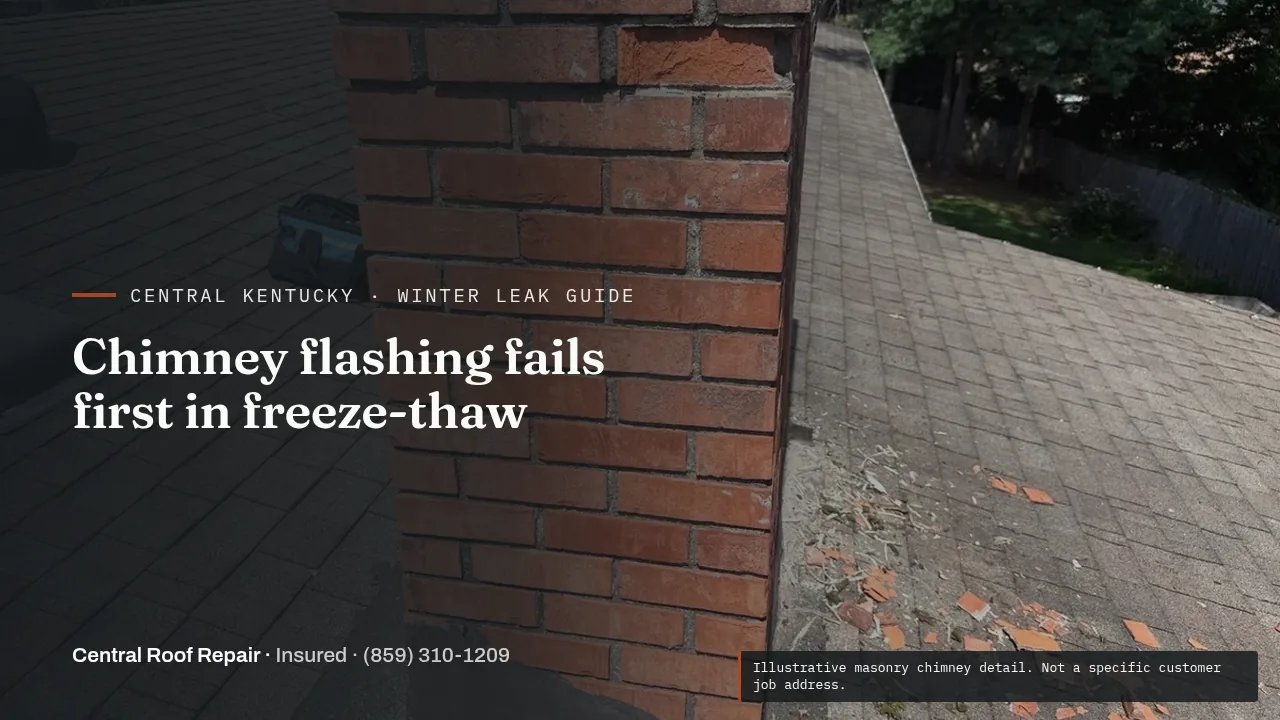
Chimney flashing is the metal where brick meets the roof. Kentucky freeze-thaw and ice dams open those seams first. Black algae streaks are usually cosmetic. Text a ground photo to insured Central Roof Repair at (859) 310-1209 for a plain read on tarp versus reflash.
Call (859) 310-1209 · Text a roof photo
Last updated: November 6, 2026
Why the chimney is usually the leak (not the black streaks)
A chimney leak rarely starts with a dramatic hole in the field of the roof. Water slips through a small break where brick, metal, shingles, and old sealant meet. Then it travels. By the time a stain shows on a ceiling, the water may already have soaked decking, insulation, or drywall.
That black streak pattern on asphalt shingles is usually algae, not a leak path. The entry point in winter is commonly failed step flashing, failed counterflashing, or a missing or failed cricket on the uphill side of the chimney.
Around Lexington, Richmond, Winchester, Nicholasville, Frankfort, Berea, Irvine, Beattyville, and the Red River Gorge corridor, chimneys take hard rain, wind-driven storms, leaf buildup, freeze-thaw cycles, and long damp stretches. The flashing system is what keeps that water outside.
What chimney flashing actually does
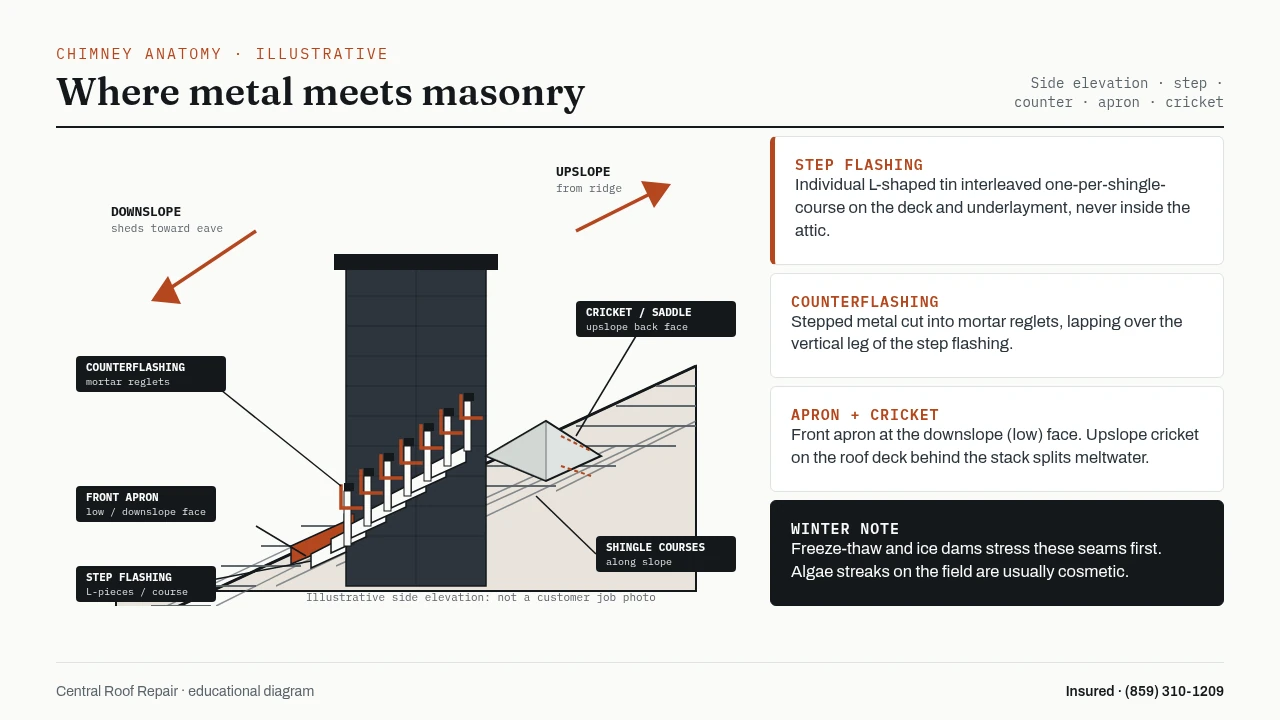
Flashing is the material installed where a chimney meets the roof. It redirects water around the chimney and onto the shingles or metal panels below. A properly flashed chimney is not protected by a thick bead of caulk alone. It uses overlapping metal pieces layered with the roofing so water sheds downhill instead of finding a seam.
On many shingle roofs that system includes:
- Step flashing along the sides, woven with the shingle courses
- Counterflashing seated in a mortar reglet (cut joint), covering the top edge of the step flashing
- A cricket or saddle on the uphill side that splits water around the chimney
- A properly integrated front apron piece
Metal roofs use different details. The rule is the same: every transition has to shed water, even in hard sideways rain.
How winter and ice dams open flashing seams
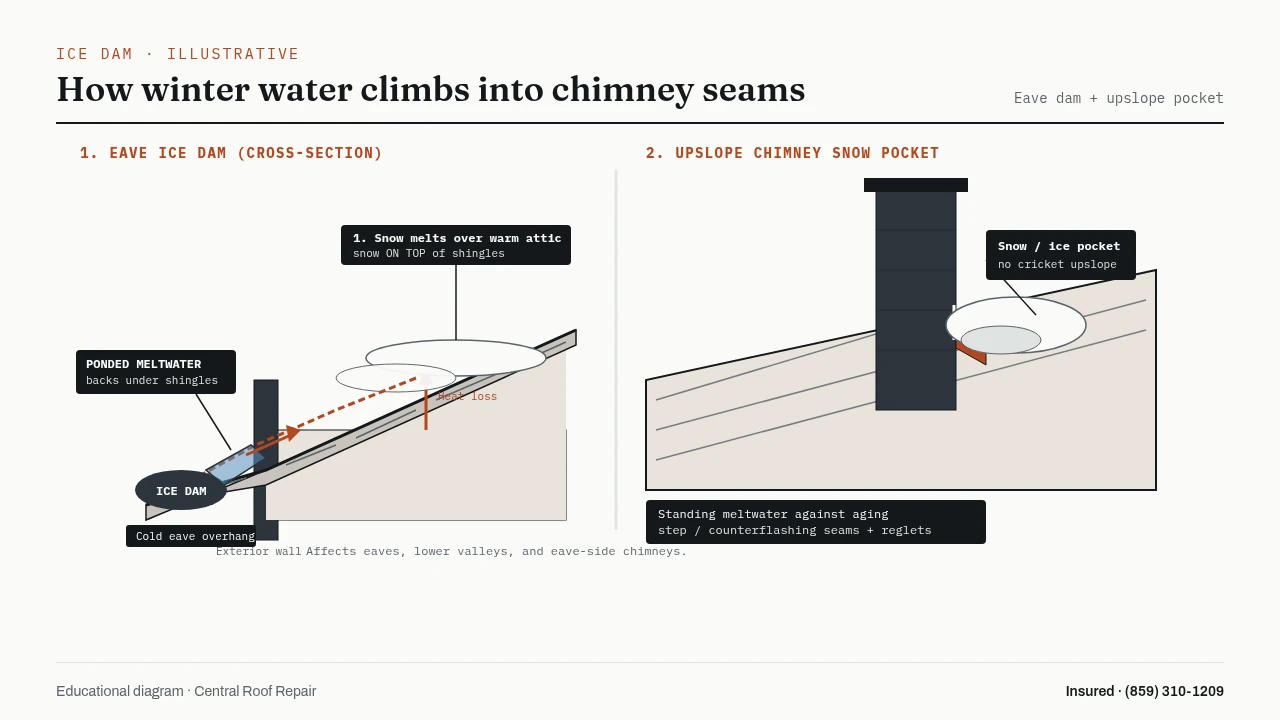
Kentucky freeze-thaw cycles work the metal and the masonry at different rates. Two winter water paths matter most for chimneys:
- Eave ice dams. Warm attic air melts snow on the upper roof. Cold eaves refreeze that water into a dam on the overhang outside the exterior wall. Ponded meltwater then backs under the shingles above the eave. That path reaches eaves, lower valleys, and chimneys that sit near the eave line.
- Upslope snow and ice pockets. On mid and upper slopes, snow and ice pack against the uphill face of a chimney that has no cricket. Standing meltwater sits against aging step flashing, counterflashing seams, and mortar reglets until those seams open.
For ice-barrier and cricket rules that apply on Kentucky roofs, see:
- Ice dam prevention
- Ice barrier required under Kentucky roof code
- Chimney cricket 30-inch rule
- Kick-out flashing
What drives chimney leak repair scope
Chimney leak work in Central Kentucky is priced in writing after photos and an on-roof inspection. Scope usually falls into one of these tiers, and the written verdict names which one applies to your stack:
- Localized counterflashing or sealant touch-up when the step tin and decking are still sound and only the upper metal or mortar reglet needs attention.
- Full perimeter rebuild of step flashing, front apron, and mortar-reglet counterflashing, with ice-and-water underlayment tied into the courses.
- Localized roof-decking replacement where trapped moisture softened OSB or plank sheathing around the chimney (see roof decking replacement).
- Upslope cricket framing on wider stacks so meltwater and debris split around the masonry instead of packing against it.
Deck rot, soft mortar, cricket rebuilds, and interior drywall are change-order items when they appear. We do not invent a job total from another homeowner’s bid, and we do not publish client names or addresses.
For broader repair math, see the roof repair cost guide and patching versus reroofing costs.
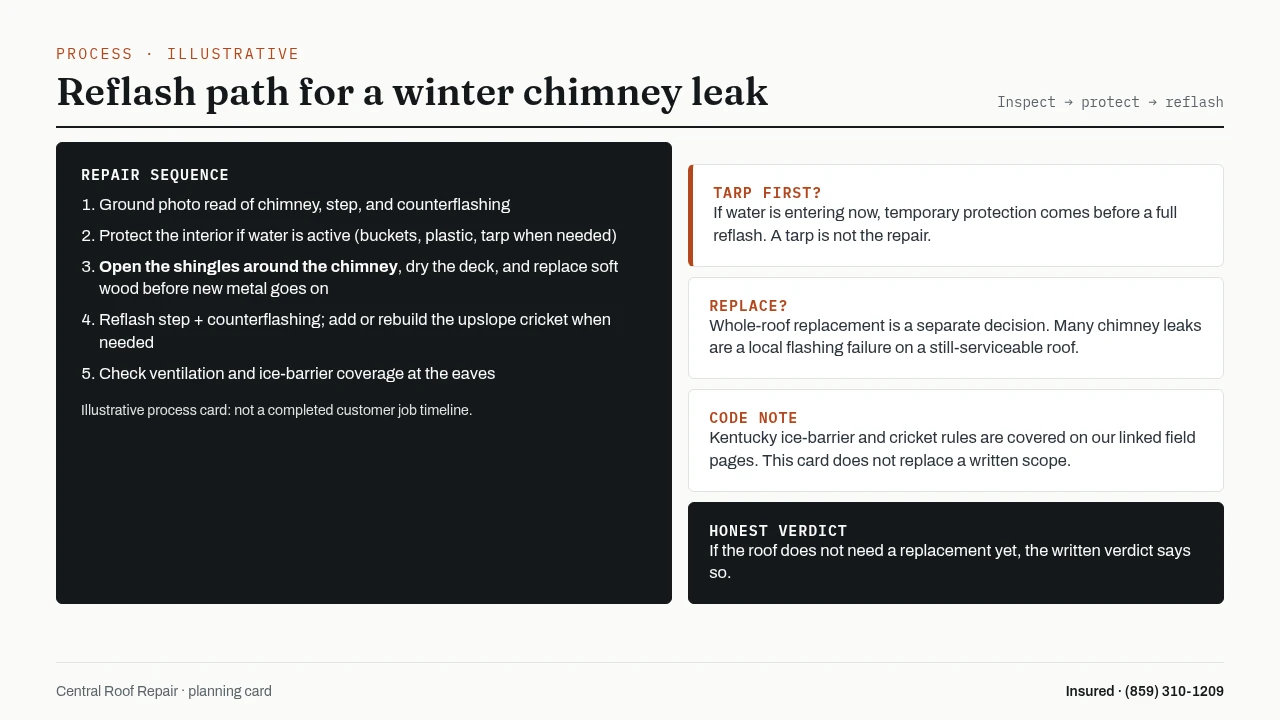
Repair process: inspect, protect, reflash
- Ground photo read of the chimney, step flashing, counterflashing, cricket, and nearby valleys.
- Protect the interior if water is active (buckets, plastic, and, when needed, a temporary emergency tarp).
- Open the shingles around the chimney, dry the deck, and replace soft wood before new metal goes on.
- Reflash step and counterflashing; rebuild or add a cricket when the uphill side needs one.
- Check ventilation and ice-barrier coverage at the eaves so the next freeze is less likely to repeat the same path.
Related field pages:
- Valley and wall flashing repair
- Chimney reseal
- Emergency roof tarp service after a storm
- Cabin winterization services
- Short-term rental maintenance
Repair vs tarp vs replace
A tarp buys time. It is not the repair. A local reflash is the common fix when the rest of the roof is still serviceable. A full replacement is a separate decision driven by age, deck condition, and how much of the field is already failing. If the roof does not need a replacement yet, the written verdict should say so.
Insurance notes stay narrow: honest damage documentation is fine. We do not promise a claim outcome, and we do not offer or imply waiving or rebating an insurance deductible.
Service area
Central Roof Repair works from Beattyville across Richmond, Lexington, Winchester, Nicholasville, Frankfort, Berea, Irvine, and the Red River Gorge region. Text a photo from wherever the chimney sits. If the address is outside the area we can reach promptly, we say so.
Chimney flashing FAQ
Why does my Kentucky roof leak at the chimney in winter?
Freeze-thaw and ice dams stress the metal flashing where the chimney meets the roof. Algae streaks are usually cosmetic; water entry is commonly failed step or counterflashing. An insured roofer can diagnose from ground photos and advise tarp vs reflash. Call (859) 310-1209.
Is black streaking on my shingles a leak?
Usually no. Black streak patterns on asphalt shingles are commonly algae. A leak at the chimney is a flashing or cricket problem until a photo diagnosis says otherwise.
Do I need a full roof replacement for a chimney leak?
Not automatically. Many chimney leaks are local flashing failures on a still-serviceable roof. Replacement is a separate call based on age, deck condition, and how much of the field is already failing.
What is a chimney cricket?
A cricket (or saddle) is a small ridge built on the uphill side of a chimney so water splits around the masonry instead of pooling against it. See our cricket code page for the Kentucky sizing context.
Can you waive my insurance deductible?
No. Waiving or rebating an insurance deductible is not something we offer or imply. You remain responsible for your deductible under your policy.
How do I start?
Text a ground photo of the chimney and a photo of the interior stain to (859) 310-1209. You get a plain read first. If it is leaking now, call and say so.
Call (859) 310-1209 · Text a roof photo · Insured · Contact
Leave a Reply