A drip coming through a cabin ceiling may show up ten feet from where water actually entered. That is why metal roof leak repair is not about smearing sealant over the first wet spot you find. It is about tracing water uphill, checking the details that move with heat and cold, and fixing the specific failure before wet wood, insulation, or drywall turns a small repair into a larger property problem.
Around the Red River Gorge, roofs take a beating. Heavy rain runs hard through valleys. Wind works on exposed ridge caps and flashing. Leaves pile up behind chimneys and under low-slope transitions. A metal roof can last a long time, but its screws, seams, pipe boots, flashing, and edges still need attention. Metal itself is tough. The small parts around it are usually where the trouble starts.
Where Metal Roof Leaks Usually Begin
Most leaks do not come from a random hole in the center of a panel. They start at a connection, penetration, overlap, or transition where water has a path in and gravity has time to work.
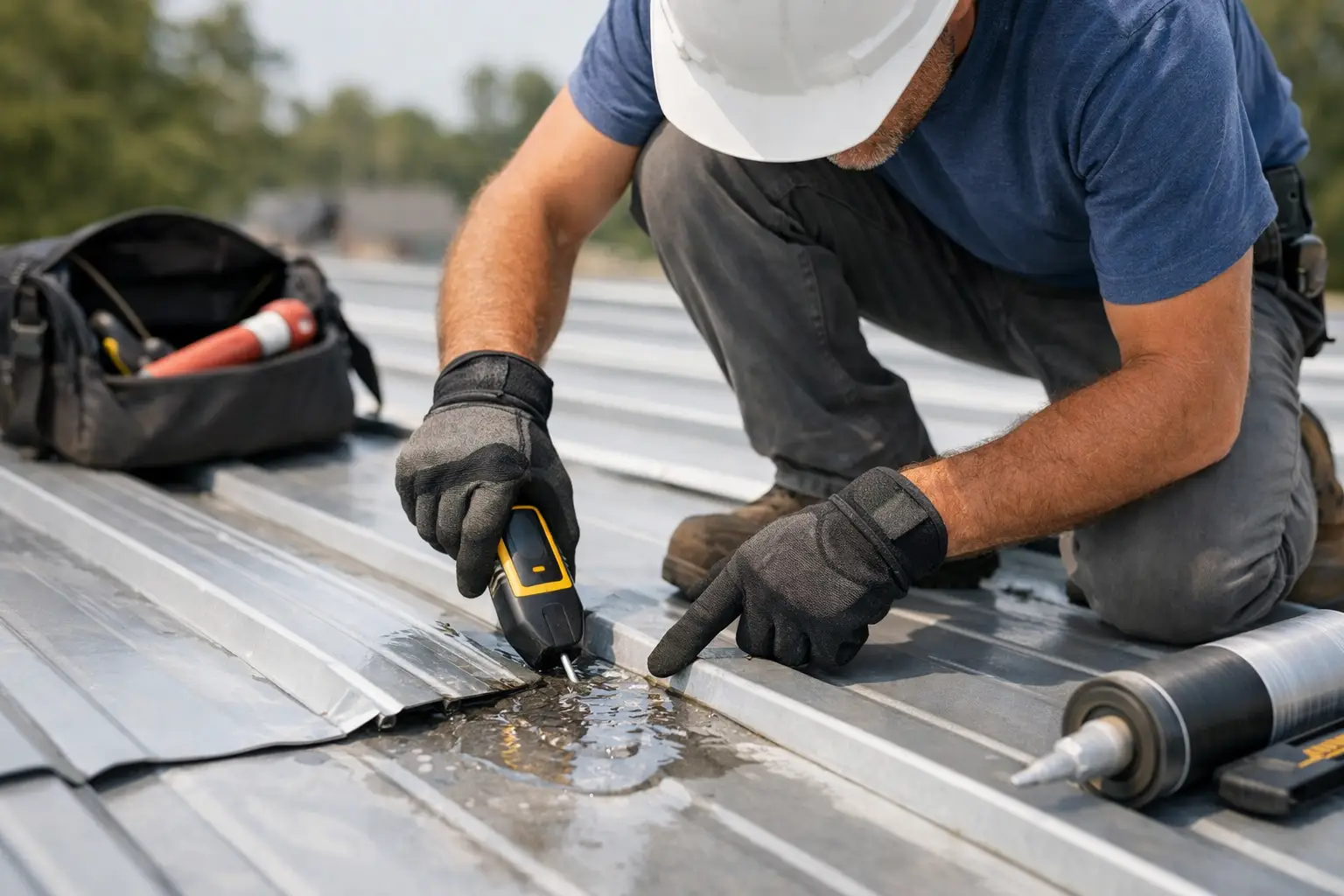
Exposed fasteners are one of the most common causes. Screws use a rubber washer to seal against the metal. Over time, that washer can dry out, crack, compress too far, or back off as the roof expands and contracts. A screw that looks close to flush may still let water under the panel during a hard, wind-driven rain. Replacing a failed fastener with the right screw and washer is often a straightforward repair. Covering it with a blob of caulk is usually temporary at best.
Pipe boots are another repeat offender. The rubber or neoprene collar around a plumbing vent sees direct sun, heat, cold, and constant movement. Once it splits, water follows the pipe opening straight into the attic. On a rental cabin, that can stay hidden until a guest notices a ceiling stain or a musty smell during turnover.
Flashing deserves close attention too. Chimneys, skylights, wall intersections, dormers, and roof-to-porch transitions all interrupt the normal flow of water. If the flashing was installed poorly, bent by a branch, pulled loose by wind, or buried under leaves, water can get behind it. The leak may look like a roof-panel problem from inside, but the real source is often the detail work at the edge.
Valleys are especially important in wooded parts of eastern Kentucky. Valleys full of leaves are how cabin roofs die. Water slows down, backs up, and stays against areas that were meant to shed it quickly. Debris also hides loose screws, rusted edges, and damaged sealant until the next downpour makes the issue obvious.
A Metal Roof Leak Repair Starts With Diagnosis
The right repair depends on what failed, not on what is easiest to reach. A good inspection starts inside when possible. Ceiling stains, wet insulation, rusty nail points, moldy sheathing, and water trails all help narrow down where water is traveling. Then the roof is inspected above the stain and beyond it, because water often follows rafters, purlins, or the underside of a panel before it drops.
Rain patterns matter. Does it leak only during a driving rain from one direction? Does it show up after a slow all-day storm? Is it worse after snow, ice, or a rapid thaw? Those answers point toward different causes. A wind-driven leak may be a flashing or panel-lap issue. A leak after standing water in a valley may be debris, a failed closure, or a drainage problem. Water that appears without rain may be condensation or a plumbing issue, not a roof leak at all.
For remote owners, photos are more than a courtesy. They help answer the question that matters: what was actually found, and what was actually fixed? Central Property Services documents repair work with before-and-after photos so cabin owners, landlords, and property managers do not have to guess from hours away.
Do Not Assume Every Leak Requires Replacement
A metal roof can look rough and still be repairable. Surface oxidation on an older panel, faded paint, or a handful of failed screws does not automatically mean the whole roof is done. Repair may be the sensible route when the panels are structurally sound, the damage is limited, and the roof still has good drainage and attachment.
Replacement becomes a more realistic conversation when corrosion has eaten through panels, widespread fastener failure has opened up large sections, underlying decking is badly damaged, or the roof was installed with a design problem that keeps creating leaks. The honest answer is sometimes that a larger project is needed. But that answer should come after diagnosis, not before it.
What a Proper Repair May Include
Metal roof repair is rarely one-size-fits-all. A targeted job may involve replacing backed-out screws, installing new gasketed fasteners, changing a cracked pipe boot, resealing an approved metal-to-metal lap, or rebuilding flashing at a chimney or wall.
If a panel is punctured by a limb or torn near an edge, the repair may require a fitted patch or panel replacement. The method depends on panel profile, location, roof slope, and how water runs across that area. A patch that holds on a sheltered section may fail in a valley or near a ridge where wind and water pressure are stronger.
Some jobs also expose the need for related work. Rotten fascia, loose gutters, damaged siding, or poor drainage can keep feeding water toward the roof edge. The wood the weather gets to first is usually the wood at the eaves, behind failing gutters, or around a neglected chimney. Fixing the roof while ignoring the water path below it can leave the property vulnerable.
What You Can Check From the Ground
You do not need to climb onto a metal roof to recognize a problem. In fact, wet metal is slick, and even a dry roof can be unsafe without the right equipment. Start from the ground or from inside the attic if it is safely accessible.
Watch for these signs:
- A new ceiling stain, peeling paint, damp insulation, or a musty odor after rain.
- Missing, lifted, or visibly crooked metal trim along a ridge, rake, or roof edge.
- Leaves and branches packed in valleys, behind chimneys, or at gutters.
- Rust streaks below fasteners, loose screws, cracked vent boots, or panels damaged by limbs.
- Overflowing gutters or water washing against fascia and siding during a storm.
Take clear photos from the ground and note when the leak happens. That information can save time during inspection, especially when a cabin is vacant and weather is changing fast.
Stop the Water First When the Weather Will Not Cooperate
During an active leak, property protection comes before a perfect permanent repair. Move furniture and electronics, catch interior water safely, and avoid opening ceilings unless there is an immediate reason to do so. If water is near electrical fixtures, shut off power to the affected area if it is safe and call an electrician when needed.
A professional tarp-up or temporary dry-in can be the right move when storms are still coming, materials are not available, or the roof needs to dry before flashing and sealants can be installed correctly. A temporary fix is not a failure when it prevents further damage. It is a way to buy the property time without pretending a rushed repair will last.
For short-term rental owners, speed matters for another reason: a small leak can become a guest issue, a canceled booking, or a ceiling repair that disrupts the next turnover. Fast dispatch and clear photo documentation let you make decisions without driving to the Gorge just to see whether the problem is real.
Preventing the Next Leak
The best time to find a failed washer or cracked boot is before water reaches the ceiling. Have the roof checked after major wind events, falling limbs, or long periods of heavy rain. Keep valleys, gutters, and roof-to-wall areas clear of leaf buildup. Trim branches that rub panels or hang over vulnerable areas.
Older exposed-fastener roofs benefit from periodic inspection because fasteners age at different rates. A few replaced screws today can prevent wet decking later. If your property sits empty for part of the year, a seasonal maintenance visit is cheap insurance against discovering a leak only after weeks of rain.
A leaking metal roof does not need a sales pitch. It needs a straight answer, a careful look at where water got in, and a repair that respects the rest of the roof. Catch it early, document the work, and keep water from getting another chance at the structure underneath.
Leave a Reply