
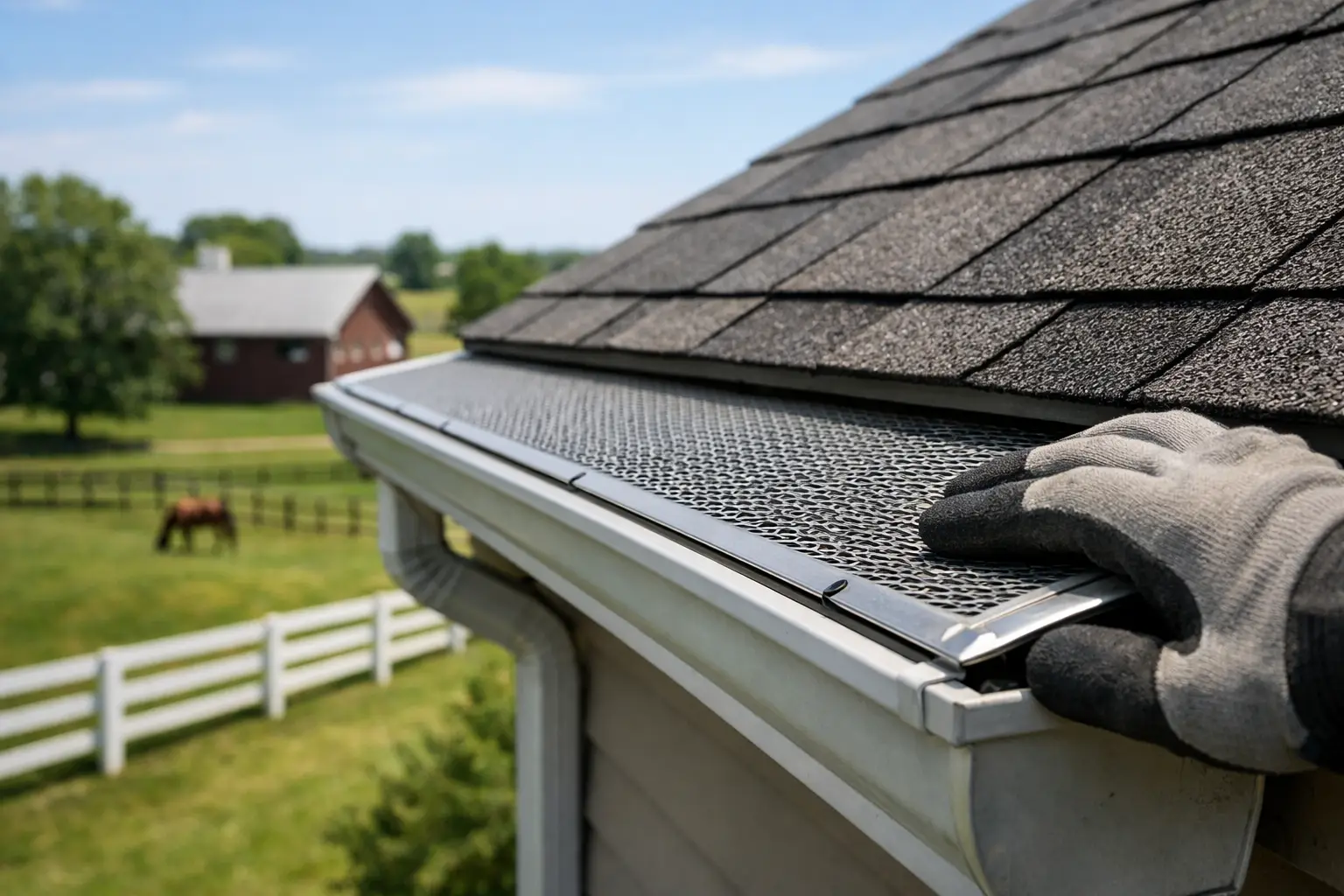
A gutter guard is not a cure for a bad gutter system. Around the Red River Gorge, that distinction matters. Gutter guard installation Kentucky property owners choose can cut down on leaf cleanup, but it cannot correct gutters pulling off rotten fascia, downspouts that dump water at the foundation, or valleys already packed with wet leaves.
For a home in town, missed gutter maintenance can turn into peeling paint and a soggy crawl space. For a cabin outside Slade, Campton, or Beattyville, it can become a roof leak, soft soffit, and a repair bill that grows while the owner is hours away. The right guard can help protect the property. The wrong guard, installed over existing problems, can hide trouble until the wood the weather gets to first starts failing.
What Gutter Guards Actually Do
Gutter guards sit over or inside the gutter channel to limit how much debris enters. Their main job is to keep leaves, twigs, acorns, and roof debris from collecting in a solid mat that blocks water flow. When gutters flow freely, rainwater reaches the downspouts instead of pouring over the edge or backing up toward the roofline.
That is especially useful in eastern Kentucky. Our hillsides and woods are hard on gutters. Oak leaves, maple leaves, pine needles, seed pods, shingle grit, and storm-broken sticks do not arrive one at a time. A heavy rain can move all of it at once, and the low point in a gutter run is where it settles.
Still, guards reduce maintenance. They do not eliminate it. Fine debris can collect on top of a screen. Pollen and shingle grit can work through openings. Wet leaves may bridge across certain styles, letting water run over rather than into the gutter. A guard system should make cleaning less frequent and less hazardous, not give anyone permission to forget the gutters exist for five years.
Start With the Gutter, Not the Guard
Before gutter guard installation in Kentucky, inspect the whole drainage path. This is the repair-first part that gets skipped when somebody is focused only on selling a product.
The gutters need proper pitch so water moves toward the downspouts. Hangers need to be secure. Seams, end caps, and corners need to be sealed. Downspouts need to be open and directed away from the foundation. Just as important, the fascia board behind the gutter must be solid enough to hold the system.
If a gutter is sagging, it may simply need new hidden hangers. If the fascia is soft or rotten, the repair goes deeper. Fastening a new guard to failing wood does not protect the home. It puts a clean-looking cover over a problem that will keep getting worse.
Roof edges deserve a close look too. Water should move off the roofing and into the gutter without slipping behind it. Missing or poorly placed drip edge can send water onto the fascia. On cabins with metal roofs, snow and fast runoff can place extra strain on gutter sections and guards. The right approach depends on the roof design, slope, tree cover, and how the existing gutter system is attached.
Which Guard Style Fits Your Property?
There is no single best gutter guard for every Kentucky home or cabin. The right choice depends on the debris around the property and whether the gutter itself is in good shape.
Mesh guards
Fine stainless or aluminum mesh guards are common because they block smaller debris while allowing water through. They are often a strong fit under hardwood trees, where leaves break down into smaller pieces after repeated storms. Quality mesh can also handle a good amount of rain, but it still needs occasional surface cleaning, especially where pine needles and shingle grit are heavy.
Screen guards
Screen-style guards have larger openings and are usually more affordable. They can work well on a property with light leaf cover and easy roof access. Their limitation is simple: smaller debris gets through more easily, and cheaper screens can shift, bend, or become brittle over time.
Surface-tension or hooded guards
These systems use a curved cover to guide water into a narrow opening while debris slides off the edge. They can be effective in the right installation, but performance depends heavily on roof pitch, rainfall volume, and correct placement. During Kentucky downpours, a poorly matched hood can overshoot water right over the gutter.
Foam inserts and brush inserts
Foam and brush products are quick to place inside a gutter, but they are often not the best long-term answer in wooded areas. Debris can settle into them, and cleaning means removing the material rather than simply clearing a gutter channel. They may have a place as a temporary option, but property owners should understand the maintenance trade-off before choosing them.
The best system is usually the one that fits the roof edge, handles the debris you actually have, and can be serviced without creating a new headache.
Watch for These Problems Before Installation
A guard installation is a good time to catch small failures before they become roof or rot repairs. Look for water stains on soffits, dark streaks on fascia, loose gutter spikes, rusted seams, standing water in the trough, and downspouts that discharge right beside the foundation.
Pay attention to roof valleys. Valleys full of leaves are how cabin roofs die. Water and debris collect there, then spill onto one short section of gutter with far more force than the rest of the system sees. A guard may help, but a valley that regularly sends piles of wet debris downhill may also need routine roof clearing.
For rental cabins and short-term rentals, timing matters as much as the product. A guest arriving Friday does not care that a gutter repair was planned for next month. Overflowing gutters can splash entryways, soak deck areas, stain siding, and create a bad first impression. If a storm exposes a problem, a fast local inspection and photo documentation give remote owners a clear picture of what needs attention.
Installation Details That Make a Difference
Good gutter guard installation is not just laying material across a gutter. Guards should be secured so wind cannot lift them, but they also should not interfere with shingles, flashing, or the roof’s drainage edge. Driving fasteners through vulnerable roofing areas can create a leak path if the work is not thought through.
The installer should make sure each downspout is flowing before the guard goes on. There is little value in keeping leaves out of a gutter that is already blocked ten feet below. Extensions, splash blocks, underground drains, and the grade around the building should be considered as part of the same water-management problem.
On older cabins, it may make more sense to repair a few sections, replace damaged fascia, and rehang gutters before adding guards. On a newer home with solid gutters and a heavy tree canopy, guards may be a smart preventive upgrade right away. That is why an honest site assessment beats a one-size-fits-all quote.
How Often Do Guarded Gutters Need Service?
Most guarded gutter systems should be checked at least once a year. Properties under dense trees often need a spring check and a fall check, plus an inspection after a major windstorm. A cabin left empty for long stretches deserves extra attention because nobody is there to notice water pouring over a clogged corner.
The inspection does not have to turn into a major job every time. It may involve brushing debris off the guard surface, clearing valley buildup, flushing downspouts, resealing a small seam, or tightening a loose hanger. Those small corrections are cheaper than waiting for overflow to rot the fascia or find its way behind siding.
Central Property Services approaches gutters the same way it approaches roofs: find the actual source of the problem, repair what needs repair, and document the work with before-and-after photos. If a guard makes sense, it should be part of a drainage plan that protects the roofline, walls, foundation, and the property value you worked hard to build.
The useful question is not, “Can gutter guards stop every problem?” They cannot. Ask whether your gutters are currently carrying water where it belongs, whether the wood behind them is sound, and whether a guard will make regular maintenance more manageable. Get those answers right, and the next hard Kentucky rain has fewer places to do damage.
Leave a Reply