A small brown spot on a cabin ceiling can turn into a big decision fast. Owners want a straight answer: fix the leak at the source, or spend the money on a new roof? Patching versus reroofing costs are not just about the first invoice. They are about how much sound roof is still overhead, how far water has traveled, and whether a repair will genuinely protect the property.
For homes, cabins, rentals, churches, and commercial buildings around the Red River Gorge, the right answer is often more specific than a roofing sales pitch. A missing shingle, loose pipe boot, failed chimney flashing, or punctured metal panel may need a focused repair. A roof with widespread age failure, soft decking, and leaks in several places may be telling you it is time to plan for replacement.
What drives patching versus reroofing costs?
A patch is priced around a defined problem. A reroof is priced around an entire system. That is why the totals can be far apart, but a cheaper repair is only a better value when it stops the water and leaves the surrounding roof in reliable condition.
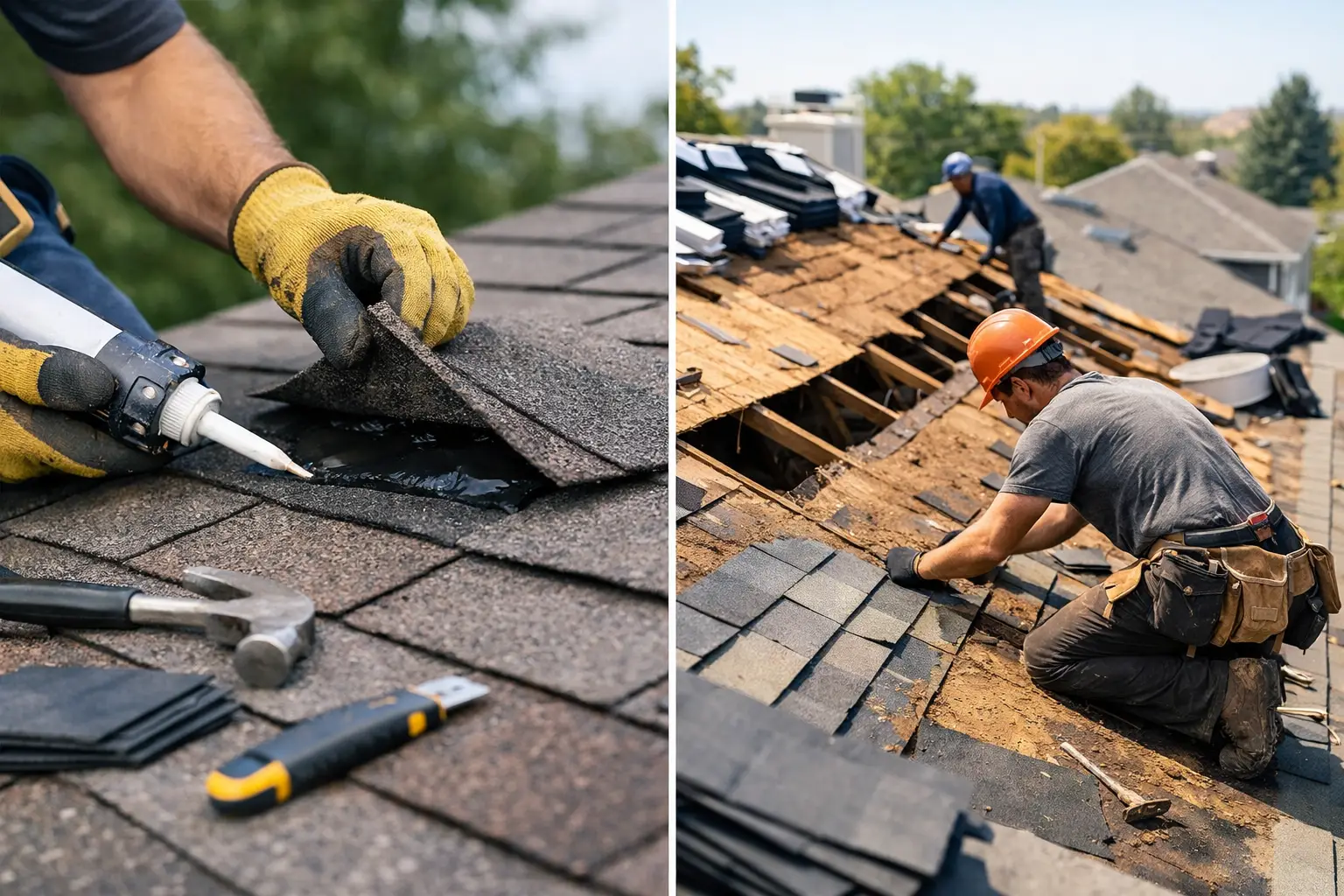
Repair pricing depends on access, roof pitch, height, material, and the actual source of the leak. A straightforward shingle repair near a low roof edge is different from repairing a steep cabin roof above a deck, chimney, or vaulted ceiling. Metal roofs can require panel fastener work, sealant replacement, new closure strips, or a carefully matched panel repair. Flat roofs may need membrane patching, seam work, drain corrections, or insulation replacement below the surface.
Reroofing costs rise with the roof’s size and complexity, but labor is only part of the number. Tear-off and disposal, replacement decking, underlayment, flashing, ventilation, ridge materials, pipe boots, permits, and access all matter. A simple one-story ranch is not priced like a steep, cut-up cabin roof with valleys, dormers, skylights, and long runs of flashing.
The material matters too. Architectural shingles, standing-seam metal, exposed-fastener metal, EPDM, TPO, and modified bitumen each have different repair methods and replacement costs. Good estimates identify the material and spell out what is included. If a quote only gives a large round number with no scope, ask what problem it is solving.
When a roof patch is the smarter investment
A repair makes sense when the roof is generally sound and the damage is isolated. Think of wind-blown shingles in one area, a cracked vent boot, flashing that pulled away from a chimney, a small limb puncture, or a leaking valley with a clear cause. In these cases, replacing the failing component can stop the leak without throwing away years of service left in the rest of the roof.
Age matters, but it is not the only test. A roof that is getting older can still be repaired responsibly if the shingles or panels remain functional, the decking is solid, and the leak has a known source. This is especially common on cabins where leaves collect in valleys, gutters overflow, and water keeps working against one section of roof. Valleys full of leaves are how cabin roofs die, but cleaning the valley and repairing the damaged area early can prevent a full replacement decision.
A repair is also useful when an owner needs to stabilize damage after a storm. An emergency tarp-up or dry-in protects the interior while the roof is inspected, insurance is sorted out, or a larger project is scheduled. That is not a permanent fix, but it can keep one bad week from becoming soaked insulation, stained drywall, rotten framing, and canceled guest stays.
For remote owners, documentation is part of the value. Central Property Services provides before-and-after photos so an owner can see the damaged area, the repair, and the condition around it without guessing from hours away.
When reroofing costs are easier to justify
Replacement becomes the better financial choice when repair would turn into a string of temporary fixes. If the roof has active leaks in multiple unrelated areas, widespread curled or brittle shingles, failing granules, corroded metal, repeated fastener leaks, or soft spots in the decking, patching one hole may only buy time.
The same is true when a roof is near the end of its expected service life and a repair would require disturbing large areas of fragile material. Old shingles can crack during repair work. Aging metal panels may have widespread fastener and sealant failure that cannot be solved with one small patch. On a flat roof, recurring seam failures or saturated insulation can mean the trouble is below the visible membrane.
A reroof may also make sense when the roof design is causing repeat damage. Poor drainage, inadequate flashing transitions, bad valley details, or ventilation problems can shorten the life of otherwise decent materials. Replacement gives the contractor a chance to correct system-level problems instead of repeatedly treating the symptom.
For a rental cabin, consider the operating cost of uncertainty. A roof that leaks every heavy rain can mean guest complaints, emergency calls, refunds, interior repairs, and calendar gaps. Spending more for a properly scoped replacement can be sensible if it removes a recurring threat to revenue and protects the property during periods when you cannot be there.
Do not compare estimates by the bottom line alone
Two estimates can have very different prices because they describe different work. One repair quote may include replacing damaged shingles and resealing flashing. Another may include opening the roof, replacing wet decking, installing new underlayment, and rebuilding a transition where water has been getting in. Neither is automatically wrong, but they are not the same job.
The word reroof can create confusion too. Some people use it to mean installing a new layer over existing shingles. Others mean a full tear-off down to the decking followed by a new roofing system. These are very different scopes. An overlay may cost less upfront, but it can hide bad decking, add weight, and make future leak diagnosis harder. Local code, roof condition, and the number of existing layers all affect whether it is even an option.
Ask whether the estimate includes damaged wood replacement, underlayment, flashing, ventilation work, disposal, and cleanup. For a repair, ask what area will be opened, how the leak source will be confirmed, and what happens if hidden rot is found. A candid contractor will explain the likely range before work begins rather than pretending old roofs never have surprises.
The hidden cost is usually water, not roofing
The roof bill gets attention because it is visible. The larger expense often starts after water gets through. Wet insulation loses performance. Drywall stains and sags. Trim swells. Framing and roof decking can rot. On cabins, moisture can sit unnoticed between visits, which gives a small leak plenty of time to become a structural problem.
That is why waiting for a leak to become obvious is expensive. A roof may be leaking around a chimney, pipe boot, valley, wall flashing, or fastener line long before the ceiling shows it. By the time water reaches the living space, it may have moved several feet from the actual entry point.
Gutters and drainage deserve attention here. Clogged gutters can push water behind fascia and into roof edges. Overflow at a cabin can splash against siding, soak trim, and feed rot where the weather gets to the wood first. Roof repair and water management often belong in the same conversation.
How to make the call without guessing
Start with a hands-on inspection focused on the leak source, not just the stain inside. The right diagnosis follows the water path from the roof surface through the flashing, underlayment, decking, and interior. It also checks nearby areas for conditions likely to create the next leak.
Then weigh the repair cost against the roof’s remaining condition. If a targeted repair protects a sound roof for years, it is usually the practical move. If the roof has multiple failures, damaged decking, or a pattern of repeat leaks, putting repair money toward replacement may save more over the next few seasons.
Do not let a contractor use fear to sell a roof you do not need. At the same time, do not demand a patch when the roof structure is telling you the problem has outgrown a patch. Get photos, get the scope in writing, and make the decision based on the condition of the whole system.
A roof does not have to be perfect to be worth repairing. It does need to be honest work: stop the water, protect the wood, and give you a clear picture of what your property will need next.
Leave a Reply