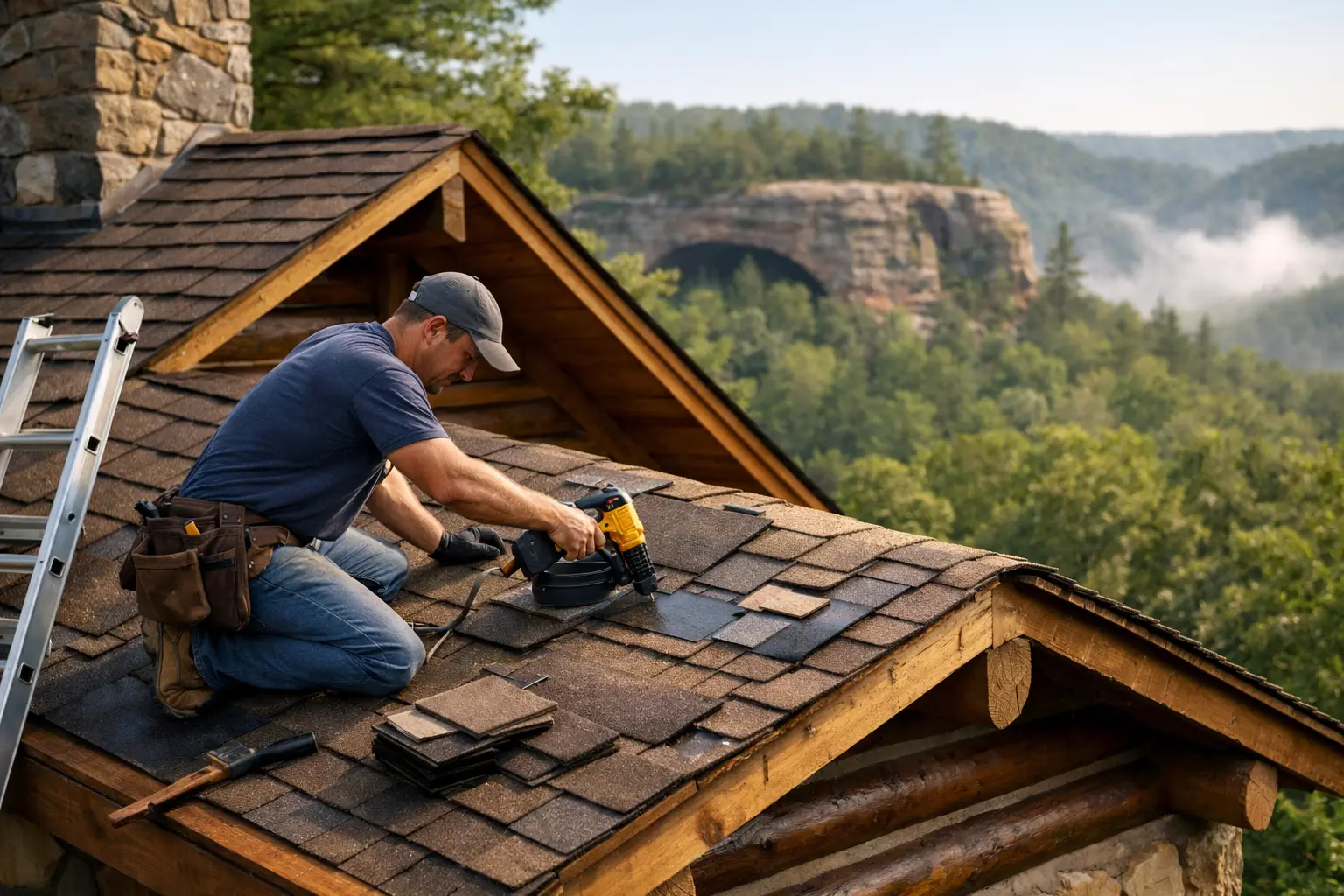
A cabin roof can look fine from the driveway and still be taking on water where the weather gets to it first. In the Gorge, that usually means a leaf-packed valley, a lifted piece of flashing, a pipe boot split by sun and cold, or a metal-roof screw that has worked loose. Cabin roof repair Red River Gorge property owners need is not about selling a roof before anyone has found the leak. It starts with locating the actual failure, stopping the water, and documenting what was repaired.
That matters even more when the cabin is a short-term rental or a second home. A small drip can stain a ceiling this weekend, soften framing over the winter, and turn into a guest cancellation when the next hard rain rolls through Slade, Campton, or Beattyville. The fastest way to control the cost is to deal with the first visible sign before water reaches insulation, drywall, wiring, or the deck beneath the roofing.
Why Gorge Cabins Get Roof Problems Faster
Red River Gorge cabins take a different kind of beating than a house on an open suburban lot. Many sit under heavy tree cover, on steep roads, or in hollows where roofs stay damp long after a storm. Shade keeps leaves and pine needles wet. Wet debris blocks drainage. Then water works under shingles, backs up at transitions, and sits against metal panels or flashing.
Valleys full of leaves are how cabin roofs die. The valley is supposed to move water quickly off the roof. When it becomes a compost pile, rain has nowhere to go but sideways and underneath the roofing. A roof may not leak during a light shower, then suddenly show water after a slow, all-day rain because the backed-up water finally found an opening.
Wind is another common problem. Ridge cabins and exposed properties around the Gorge can take hard gusts that lift shingles, loosen ridge caps, or pull flashing away from a chimney wall. Metal roofs hold up well in this region, but they are not maintenance-free. Loose fasteners, failed screw washers, open laps, and poorly sealed penetrations can leak just as surely as damaged shingles.
The roof itself is not always the only issue. Bad gutters can overflow behind fascia, soak eaves, and cause rot in the wood the weather gets to first. A chimney chase, siding transition, skylight, or roof-to-wall connection can also be the real source of what looks like a roof leak. Good repair work follows the water path instead of guessing from the stain on the ceiling.
Cabin Roof Repair Red River Gorge Owners Should Not Delay
A roof leak rarely stays in one place. Water runs along rafters, framing, and electrical lines before it becomes visible inside. By the time a brown ceiling spot appears, the entry point may be several feet away. That is why a repair should begin outside with a close inspection of roof details, drainage, and all the places where one material meets another.
Common warning signs include a ceiling stain, a musty smell, damp insulation, peeling paint near an exterior wall, or a drip that only shows up during wind-driven rain. Outside, look for granules in gutters, curled or missing shingles, exposed nail heads, rust around metal fasteners, cracked sealant, bent flashing, and moss or debris holding moisture on the roof.
For rental owners, there is also an operational warning sign: a guest mentions a stain, mildew smell, or drip after a storm. Treat that report seriously, even if the weather has cleared and the ceiling is dry when someone arrives. The source may only reveal itself under a particular wind direction or heavy rainfall. Waiting for the next guest to confirm it can turn a manageable repair into a refund, a bad review, and a larger repair bill.
Emergency tarp service has its place after a tree strike, wind damage, or an active opening in the roof. A tarp is a dry-in measure, not a finished roof repair. It buys time to protect the interior while the damage can be inspected safely and the right materials can be lined up. The next step is always a permanent fix that restores the roof’s water-shedding system.
Repair First, Replacement Only When It Makes Sense
Not every leak means the whole roof has failed. A single damaged shingle area, bad pipe boot, failed chimney flashing section, or loose metal fastener can often be repaired without replacing everything. That is especially true when the roofing field is still in sound condition and the problem is isolated.
A repair-first approach saves money when it is honest about the limits. If the roof has widespread shingle loss, widespread rot, repeated leaks in unrelated areas, or a surface that has reached the end of its service life, patching can become false economy. The right answer depends on the roof’s age, condition, slope, material, past repairs, and how long the owner plans to hold the property.
The key is getting a straight answer. A contractor should be able to show you the failed detail, explain why it leaked, and tell you whether the repair is meant to be a lasting correction or a short-term measure. Vague talk about “storm damage” without identifying the actual opening is not enough, especially when you are paying from out of town.
Central Property Services approaches cabin roofing with that repair-first mindset. If a focused repair will protect the cabin, that is the work that should be recommended. If the condition points to larger planning, the owner deserves clear photos and a plain explanation, not pressure.
What a Proper Cabin Roof Repair Visit Should Cover
A useful inspection is more than a quick look from the ground. The roof needs to be checked at its vulnerable points: valleys, ridges, penetrations, roof edges, transitions, chimneys, skylights, and any place flashing meets siding or masonry. Gutters and downspouts should be considered too, because a functioning roof cannot drain correctly into a clogged or broken system.
For shingle roofs, repairs may involve replacing torn or missing shingles, correcting exposed fasteners, sealing a properly prepared detail, or rebuilding damaged flashing. The repair must preserve the way water overlaps and sheds downhill. Smearing a lot of sealant over a problem can hide it temporarily, but sealant alone is not a substitute for correctly lapped materials.
For metal roofs, the work may include replacing backed-out screws, installing new sealing washers where needed, repairing panel damage, addressing open seams, or correcting flashing at chimneys and walls. Metal expands and contracts, so details need to allow for movement without leaving a path for water.
If water has already reached the interior, the inspection should not end on the roof. Damp insulation, stained decking, soft fascia, and wet wall materials need attention before hidden moisture becomes mold or rot. Sometimes a small roof repair prevents a large interior repair. Sometimes the roof repair exposes damage that should be handled while access is available. That is not bad news – it is the truth that keeps a cabin from quietly getting worse.
Remote Owners Need Proof, Not Just a Text Message
Many Red River Gorge cabin owners live hours away. They cannot always drive over after a storm, climb onto a wet roof, or verify whether a repair was completed. For those owners, before-and-after photos are part of the service, not an extra.
Photos should show the problem area before work begins, the repair as it is performed when practical, and the completed condition afterward. They give an owner a record for maintenance planning, insurance conversations, property managers, and future contractors. They also make it easier to spot recurring trouble in the same valley, chimney, or drainage area.
A remote owner should also know what happens next. Was the leak repaired? Was there evidence of rot? Does the gutter system need cleaning or adjustment? Is a return visit needed after weather conditions change? Clear answers help owners decide whether they need an immediate follow-up, a seasonal maintenance visit, or simply a watch point for the next storm.
Keep Small Roof Problems From Becoming Cabin Problems
The cheapest roof repair is often the one caught early. A spring and fall check is smart for heavily wooded properties, along with an inspection after major wind, hail, or a fallen limb. Gutters need to stay open, valleys need to stay clear, and overhanging branches should not scrape the roof or drop a constant load of debris onto it.
Do not wait for a ceiling stain to make the call. If you see missing shingles, a loose metal panel, damaged flashing, overflowing gutters, or debris piled in a valley, the roof is already telling you where to look. Handle it while the repair is still focused, the cabin is protected, and your next rainstorm is just weather instead of a test of your property.
Leave a Reply