A chimney leak rarely starts with a dramatic hole in the roof. More often, water slips through a small break where brick, metal, shingles, and old sealant meet. Then it travels. By the time a stain shows up on a ceiling or a cabin guest reports a drip, the water may have already soaked roof decking, insulation, framing, or drywall.
That is why chimney flashing repair Kentucky property owners need should start with finding the actual entry point, not guessing and not selling a roof replacement that may not be necessary. Around Beattyville, Slade, Stanton, Campton, and the Red River Gorge, chimneys take hard rain, wind-driven storms, leaf buildup, freeze-thaw cycles, and long stretches of damp weather. The flashing is the small but critical system that keeps that water outside.
What chimney flashing actually does
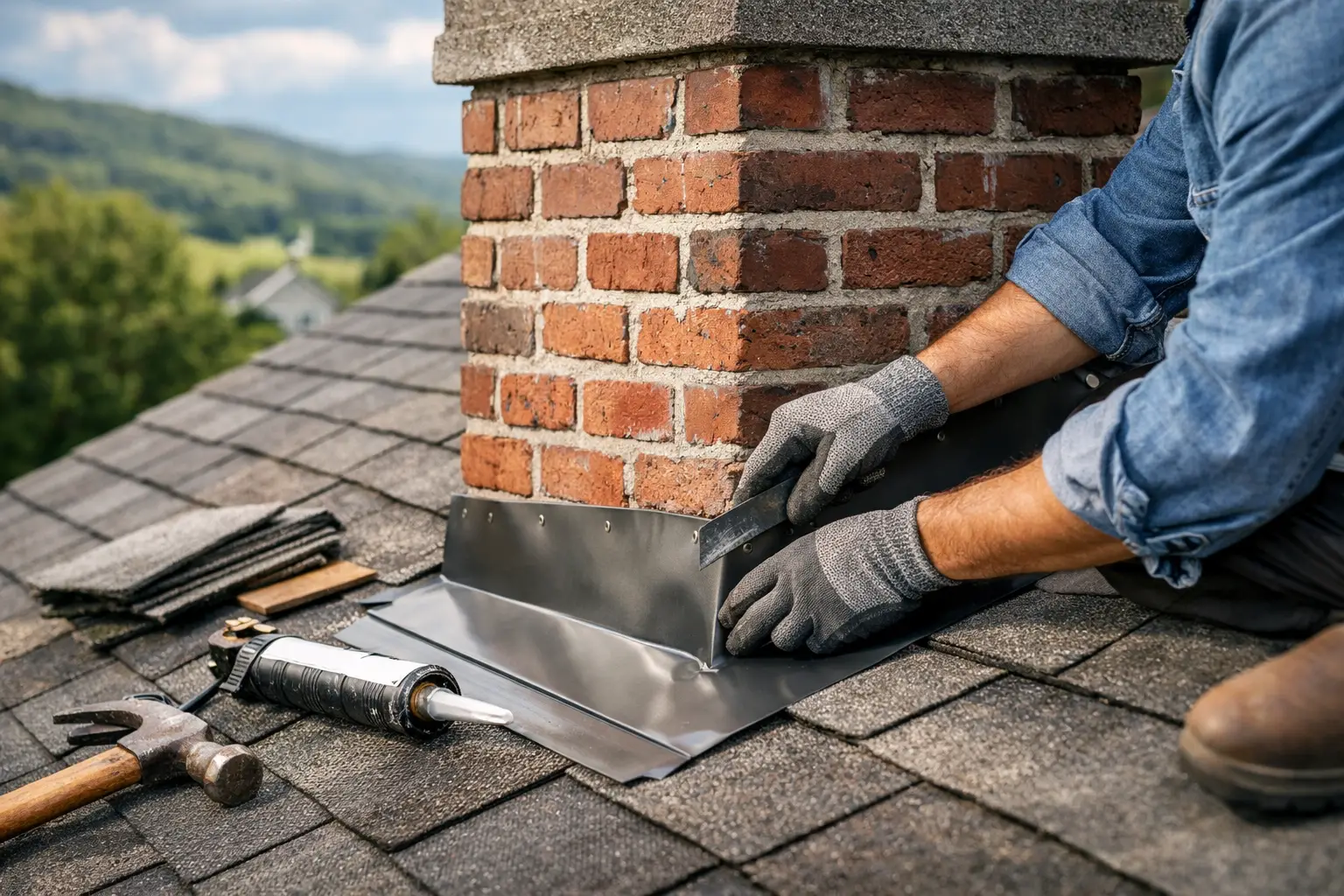
Flashing is the material installed where a chimney meets the roof. It redirects water around the chimney and onto the shingles or metal panels below. A properly flashed chimney is not protected by a thick bead of caulk alone. It uses overlapping metal pieces, layered with the roofing so water sheds downhill instead of finding a seam.
On many shingle roofs, that system includes step flashing along the sides, a wide back pan or cricket at the uphill side, and counterflashing set into the chimney mortar joints. The front side also needs a properly integrated flashing piece. Metal roofs have different details, but the same rule applies: every transition has to shed water, even in a hard sideways rain.
When one piece fails, water can get behind the roof covering. That is why a chimney can leak even when the surrounding shingles look fine from the ground.
Signs you may need chimney flashing repair in Kentucky
A ceiling stain near the chimney is a clear warning, but it is not the only one. Look in the attic after a rain if it is safe to do so. Damp wood, darkened roof decking, wet insulation, rusted nails, or a musty smell near the chimney are all signs that water has been getting in.
Outside, watch for loose or lifted flashing, cracked sealant, gaps at the brick, rusted metal, missing shingles around the chimney, or mortar joints that are crumbling where counterflashing should be secured. On older cabins, you may find layers of roofing cement smeared over the area. That often means someone tried to stop a leak from the surface without correcting the flashing underneath.
Not every chimney-area leak is flashing. Cracked chimney crowns, damaged brick, failed mortar, a leaking chimney cap, or a roof valley that drains toward the chimney can cause similar symptoms. A straight answer starts with inspecting the whole area, not pointing at the first visible crack.
Why leaks often show up after heavy rain
A slow, steady rain tests one set of weaknesses. A thunderstorm tests another. Wind can push water uphill under lifted shingles or through a failed side seam. Heavy runoff can overwhelm a poorly detailed back pan. In winter, ice and repeated freezing can open tiny gaps in mortar and sealant.
Kentucky cabins are especially vulnerable when a roof goes unchecked between visits. Leaves and pine needles trap moisture behind a chimney and keep the area wet longer. Valleys full of leaves are how cabin roofs die, and a backed-up chimney cricket can create the same kind of trouble.
Repair or replacement? It depends on what failed
Good chimney flashing repair is not one-size-fits-all. If the metal is sound and the issue is a small open joint, a targeted reseal may be appropriate. If a few shingles were damaged by wind or age, replacing those shingles and restoring the flashing layers can stop the leak without disturbing the rest of the roof.
But surface sealant has limits. Caulk dries out, separates from brick, and fails under movement. If the flashing was installed flat against the chimney, nailed where it should not be, or buried under roofing cement, the lasting fix may require removing shingles around the chimney and rebuilding the flashing system correctly.
For masonry chimneys, failed counterflashing can also require mortar work. The metal needs to be secured into a mortar joint or properly integrated with the masonry. Simply running sealant across the top edge may buy time, but it is usually not the repair you want protecting a home, rental cabin, or commercial building through another wet season.
A full roof replacement makes sense when the roof itself is worn out, broadly damaged, or nearing the end of its service life. It does not make sense just because there is a leak at one chimney. Repair-first work means separating a localized flashing problem from a roof-wide problem and telling you which one you actually have.
What a proper chimney flashing repair should address
The repair should begin with diagnosis. A contractor needs to inspect the roof slope, shingles or metal panels, chimney masonry, nearby valleys, and the attic or interior signs of moisture when accessible. Water does not always enter directly above the stain.
From there, the work may involve removing compromised roofing around the chimney, replacing damaged decking if water has softened it, installing new step flashing and back-pan material, and tying the roof covering back in correctly. If the chimney is wide enough, a cricket may be needed on the uphill side to split water around it instead of allowing debris and runoff to pile up.
The final detail matters. Metal must overlap in the right direction. Shingles must shed over the flashing where intended. Fasteners need to be placed where they will not become leak points. Sealant is useful as a finishing component, not as the entire waterproofing plan.
For remote owners, photos are not an extra. They are proof. Before-and-after documentation lets you see the damaged area, the repair in progress, and the finished flashing without driving hours to the property. Central Property Services provides photo documentation on every job because a text saying “all fixed” is not enough when the property is in the Gorge and you are somewhere else.
Do not wait for rot to make the decision for you
A flashing leak can stay hidden for months. Each rainfall adds a little more moisture to the same area. Eventually, the wood the weather gets to first starts to soften. Then a relatively contained repair can turn into decking replacement, framing repair, interior drywall work, mold cleanup, or a ceiling failure during a guest stay.
For short-term rental owners, that risk is more than a repair bill. A leak can force a cancellation, damage furnishings, create a bad review, or leave a cleaner dealing with a wet ceiling hours before check-in. For homeowners, it can mean a small brown mark becomes a much larger opening once the drywall finally gives way.
If water is actively coming in, protect the interior first. Move belongings, place containers under drips, and document what you see. Avoid climbing onto a wet roof or trying to tarp around a chimney in wind. A temporary tarp can prevent additional damage, but it needs to be installed without creating more holes or trapping water where it does not belong.
Questions to ask before approving the work
You do not need a roofing vocabulary lesson to make a sound decision. Ask where the water is entering, what materials have failed, and whether the repair addresses the flashing layers or only covers the area with sealant. Ask whether nearby shingles, decking, mortar, or the chimney crown show damage that affects the repair.
For a cabin or rental property, ask for photos before work begins and after the repair is complete. Also ask what conditions could make the repair more involved once the roof is opened up. Hidden rot is possible, and an honest contractor should explain that possibility without using it as a scare tactic.
The right fix is the one that stops water at the transition, protects the roof system around it, and fits the actual condition of the property. A chimney flashing problem is not something to ignore, but it is also not an automatic reason to replace an entire roof. Get eyes on it early, get the work documented, and keep a small leak from becoming the repair that takes over the whole house.
Leave a Reply