Author: Marcos Gil

  • Does a Re-Roof Need a Permit in Central Kentucky?

    Kentucky has a mandatory statewide residential building code, and it applies to the roof on your house. It also says, in the same regulation, that permits and inspections are not required for a single-family dwelling unless a local ordinance requires them. Both of those things are true at once, and the gap between them is where most homeowner confusion about re-roof permits lives.

    Does Kentucky require a permit to replace a roof on a house?

    Not at the state level. 815 KAR 7:125 provides that permits, inspections and certificates of occupancy are not required for a single-family dwelling unless required by local ordinance.

    That is an exception written into the residential code itself, not a loophole. The same regulation makes the residential code mandatory for all single-family dwellings, two-family dwellings and townhouses built in Kentucky. So the construction standard is statewide and compulsory; the enforcement mechanism — whether anybody pulls a permit and comes to look — is a local decision made by your city or county.

    Which means the honest answer to “do I need a permit for my re-roof?” is: ask the jurisdiction the house actually sits in. Richmond, Berea, and unincorporated Madison County are not obliged to answer that question the same way, and a contractor who tells you “Kentucky doesn’t require one” has answered only half of it.

    No permit required does not mean no code required. The standard applies whether or not anyone shows up to check it.

    Which code book is actually in force right now?

    The 2015 International Residential Code, as amended by the 2018 Kentucky Residential Code. The current incorporation is the Third Edition of the Kentucky Residential Code, dated August 2024.

    815 KAR 7:125 incorporates both documents by reference and states that the Kentucky amendments supersede any conflicting provision in the 2015 IRC. The regulation’s own history line records the most recent version as effective 3 December 2024, filed with the Legislative Research Commission on 13 August 2024. The material is held at the Department of Housing, Buildings and Construction in Frankfort.

    Two details in that sentence matter on a real job. First, the edition year of the base IRC and the edition year of the Kentucky amendments are different numbers — 2015 and 2018 — and quoting one without the other is how people end up citing a provision Kentucky changed. Second, the Kentucky amendment document was revised as recently as last year, so a detail a roofer learned a decade ago is not automatically current.

    What if the building is not a single-family house?

    Then the exception does not apply to it, and a different code book does. Residential occupancies that are not single-family dwellings, two-family dwellings or townhouses fall under the 2015 International Building Code and the 2018 Kentucky Building Code.

    That line is written directly into 815 KAR 7:125 as its second exception, and it is the state-level version of a boundary we have looked at from the local side before: Lexington’s own published code list draws the same division at two families, which is the subject of which rulebook your re-roof answers to. A triplex, an apartment building, a church or a commercial roof is on the other side of that line, and the permit-exception for single-family dwellings does not reach it.

    BuildingGoverning codeState permit exception?
    Single-family dwelling2015 IRC + 2018 Kentucky Residential CodeYes — unless local ordinance requires one
    Two-family dwelling / townhouse2015 IRC + 2018 Kentucky Residential CodeException is written for single-family dwellings
    Three or more units, commercial2015 IBC + 2018 Kentucky Building CodeNo

    How do you find out what your own jurisdiction requires?

    Ask the office that issues building permits where the property sits, and ask it before the tear-off rather than after. In Madison County the county publishes a Planning and Development department with building permit applications through its official site.

    The Madison County Planning and Development page is where the county’s permit applications are published. Inside a city’s limits the answer may come from the city rather than the county, which is why “Madison County” and “Richmond” are not interchangeable when you are asking this question. Two practical notes: a permit requirement can attach to work that is not a full replacement, and a homeowner’s insurance claim or a future buyer’s inspection may ask for permit records regardless of whether the jurisdiction required one at the time.

    What this means for how we work

    The useful habit is to treat the permit question and the code question as two separate questions, asked in that order. Whether a permit is required is local and answerable with a phone call. Whether the work meets the residential code is statewide, mandatory, and not contingent on anyone inspecting it — which is exactly why it is worth caring about on jobs where nobody will.

    Where a permit is required, pulling it is the contractor’s normal part of the job and belongs in the written scope. Where one is not, the specification still belongs in writing — underlayment, fastening, flashing, ventilation — because that document is the only record that the mandatory standard was met. The same logic applies to reading a roofing estimate: what is written down is what can be verified later.

    Common questions

    If no permit is required, does the code still apply to my roof?

    Yes. 815 KAR 7:125 makes the residential code mandatory for single-family dwellings built in Kentucky. The permit exception in the same regulation removes the permitting and inspection requirement at state level; it does not remove the construction standard.

    Which edition of the code is in force?

    The 2015 International Residential Code together with the 2018 Kentucky Residential Code, Third Edition, August 2024, incorporated by reference in 815 KAR 7:125. The Kentucky amendments supersede any conflicting provision of the 2015 IRC.

    Does the exception cover a duplex?

    The exception in 815 KAR 7:125 is written for a single-family dwelling. Two-family dwellings and townhouses are governed by the same residential code, but the permit question for them should be confirmed with the local permitting office rather than assumed.

    Code provisions above are quoted from 815 KAR 7:125, Kentucky Residential Code, as published by the Kentucky Legislative Research Commission and retrieved 23 September 2026. Local requirements vary; confirm with the permitting office with jurisdiction over the property. Last updated 23 September 2026.

    By Marcos Gil, REALTOR® — Keller Williams Commonwealth · KY Real Estate License No. 296259 · Call or text (859) 310-1209.
  • The Clock Your Insurer Is On After a Kentucky Roof Claim

    After a Kentucky roof claim, your insurer is on a clock — and the clock is written down. 806 KAR 12:095 is the Kentucky regulation that sets out unfair claims settlement practices for property and casualty insurance, and it puts specific day counts on acknowledging a claim, replying to you, deciding it, and paying it. Most homeowners never see the numbers. They are short, they are public, and knowing them changes how a storm claim feels.

    How fast does a Kentucky insurer have to acknowledge a roof claim?

    Fifteen days. Under 806 KAR 12:095 Section 5(1), every insurer must acknowledge receipt of a claim notice within fifteen days unless payment is made in that period.

    Two details in that same subsection are worth keeping. If the acknowledgement is not in writing, “an appropriate notation of the acknowledgement shall be made in the claim file of the insurer and dated” — so there is meant to be a record even of a phone call. And “notification given to an agent of an insurer shall be notification to the insurer,” which means telling your local agent starts the clock.

    Section 5(3) adds a second fifteen-day duty: the insurer “shall make an appropriate reply within fifteen (15) days on all other pertinent communications from a claimant which reasonably suggest that a response is expected.” Section 5(4) requires the insurer to promptly provide the claim forms, instructions and reasonable assistance you need to meet the policy’s conditions — and doing that within fifteen days counts as satisfying the acknowledgement duty.

    What are the deadlines to decide and pay?

    Thirty calendar days from proof of loss to offer payment, and thirty days from affirming liability to tender it. If the investigation drags, the insurer owes you a written explanation every forty-five days.

    What has to happenDeadlineWhere it says so
    Acknowledge the claim15 days from noticeSection 5(1)
    Reply to your communications15 daysSection 5(3)
    Provide forms and assistancePromptly; within 15 days satisfies 5(1)Section 5(4)
    Offer any payment due30 calendar days from receipt of proof of lossSection 6(1)(a)
    Tell you more time is needed, with reasons30 calendar days after receipt of proofs of lossSection 6(1)(c)
    Update you while the investigation is open45 calendar days from initial notification, then every 45 daysSection 6(1)(d)
    Tender payment after affirming liability30 days, if the amount is determined and not in disputeSection 6(5)

    Sections 5 and 6 are captioned as applying to all insurers. Sections further down the regulation deal specifically with motor vehicle claims — those rules are not about your roof, and it is worth knowing the difference before you quote one at an adjuster.

    Every deadline in the regulation starts from a document. Which is why the dates on your photos matter more than the photos.

    Two provisions homeowners almost never hear about

    Section 4 restricts two moves that catch people out: denying a claim because the property was not exhibited, and settling partially with a release printed on the cheque.

    Section 4(2) states that insurers “shall not deny a claim on the basis of failure to exhibit property unless there is documentation in the claim file of breach of the policy provisions.” Section 4(3) similarly bars denial based on a first-party claimant’s failure to give written notice of loss within a specified time limit “unless written notice of loss is a written condition” of the policy.

    And Section 4(5) is the one to read twice: “Insurers shall not issue checks or drafts in partial settlement of a loss or claim under a specific coverage which contain language which releases the insurer or its insured from total liability.” If a partial payment arrives with release language on it, that is a thing the regulation addresses. Read what you are endorsing.

    What is in the claim file, and for how long?

    More than most people assume, and for six years. Section 3 requires insurers to keep claim data accessible and retrievable for examination by the commissioner.

    Under Section 3(1) an insurer must be able to produce the claim number, line of coverage, date of loss, date of payment, and date of denial or date closed without payment — “for all open and closed files for the current year and the five (5) preceding years.” Section 3(2) requires documentation in each file sufficient to permit reconstruction of the insurer’s activities on the claim. That is the standard the regulator examines against.

    What this means for how you document a storm

    • Report the loss promptly and note the date and who you told — Section 5(1) makes notice to the agent notice to the insurer, so write down which one you called.
    • Get the roof photographed before anything is moved or covered, with dates attached. That is the front half of every deadline in the table above; our photo-documented inspection exists for exactly this.
    • Make the roof safe and stop the water without destroying the evidence. A temporary tarp and a dated photo set are not in tension — do both.
    • Keep your own dated log of every call, letter and email. The regulation gives the insurer duties that run from dates; you cannot invoke a date you did not record.
    • Read the wider sequence of a storm repair in our note on Kentucky storm restoration.
    • If you want an independent set of eyes on the roof first, send photos through our free roof photo diagnosis.

    On the roofs we look at after a storm, the difference between a straightforward claim and a slow one is almost never the damage. It is the file. A homeowner who can say “reported the fourteenth, photographs from the fifteenth, tarp on the sixteenth, estimate on the twentieth” is holding a timeline that lines up against the regulation’s day counts. A homeowner working from memory is arguing about what probably happened. The roof does not change between those two conversations; only the paperwork does.

    Central Roof Repair is a roofing contractor. We inspect, document and repair roofs. We do not adjust claims, negotiate with carriers or give legal or insurance advice, and nothing here is a prediction about what any carrier will do on any claim. The regulation quoted above is 806 KAR 12:095, adopted under the authority of KRS 304.2-110, as published by the Kentucky Legislative Research Commission, with its most recent effective date shown as 11-30-2021. Regulations change — read the current version at the link before relying on it. Questions about an insurer’s conduct belong with the Kentucky Department of Insurance, the state regulator, or with your own counsel. Central Roof Repair is owned by Marcos Gil, who is also a REALTOR® with Keller Williams Commonwealth and publishes Invest in the Gorge.

    Does the 30-day payment clock start when I report the storm?

    No. Section 6(1)(a) runs the thirty calendar days from the insurer’s receipt of proof of loss, not from your first phone call. The first call starts the fifteen-day acknowledgement clock in Section 5(1). Those are two different events with two different deadlines, and confusing them is the most common reason people think a carrier is late when it is not.

    What if the adjuster never gets back to me?

    Section 5(3) requires an appropriate reply within fifteen days to pertinent communications that reasonably suggest a response is expected, and Section 6(1)(d) requires a letter every forty-five days explaining why an investigation is still open. Put your follow-ups in writing so the dates exist. If you believe a carrier is not meeting the regulation, the Kentucky Department of Insurance is the state regulator for insurer conduct.

    Do these rules mean my roof claim has to be approved?

    No. 806 KAR 12:095 regulates how a claim is handled — the timing, the communication and the documentation — not whether a particular loss is covered. Coverage is decided by your policy and the facts of the loss. The regulation is about process, and process is the part you can actually control by reporting promptly and documenting well.

    Last updated: September 22, 2026

    By Marcos Gil — Central Roof Repair · Call or text (859) 310-1209.

  • Lexington Roof Code: Which Rulebook Your Re-Roof Answers To

    A re-roof in Lexington answers to one of two different code books, and which one depends on how many units are under it. Owners assume “residential” means anything you live in. Lexington-Fayette Urban County Government does not draw the line there — it draws it at two families. A duplex is on one side, a triplex is on the other, and the books on each side are not the same.

    Which building code covers a Lexington roof?

    For a house or a duplex, the Kentucky Residential Code. For three units or more, and for anything commercial, the Kentucky Building Code plus the existing-building code.

    LFUCG publishes its enforced code list openly. On the City of Lexington current building codes page, “Residential 1 & 2 Family Construction” is governed by the “2018 Kentucky Residential Code (2015 IRC with KY Amendments).” Under the separate heading “Commercial and Multi-Family Construction,” the listed codes include the “2018 Kentucky Building Code – 2015 IBC” and the “2015 International Existing Building Code.”

    Read those two headings next to each other and the practical line appears. One and two family dwellings sit under the residential book. A fourplex, an apartment building, a church, a strip centre and a warehouse all sit under the commercial and multi-family book — and work on an existing one of those brings the International Existing Building Code into the conversation, which is a different set of triggers from new construction.

    Two families is the line. Not “is somebody living in it” — how many units are under the roof.

    Why does the book matter if it is just a roof?

    Because the two books ask different questions about the same job, and the answers drive scope, inspection and cost.

    On a small-multifamily building an owner often expects a roof job to be priced and scheduled the way a single-family re-roof is. It frequently is not. The existing-building code path treats work on an occupied structure as its own category, and the review that follows is a commercial review. None of that makes the project harder to do well — it makes it a project that has to be scoped honestly at the estimate stage rather than discovered halfway through.

    This is also where the choice between a repair and a replacement stops being purely economic. If you are weighing those, our note on patching versus reroofing costs covers the trade-off, and roof decking replacement covers the item most likely to change the scope once the old covering is off.

    Who sets these codes in Kentucky, and can Lexington change them?

    The state adopts them. Local enforcement is local; the code itself is a state document.

    The Kentucky Residential Code is published by the Kentucky Department of Housing, Buildings and Construction. The 2018 Kentucky Residential Code Third Edition, dated August 2024, carries the department’s Frankfort address on its title page as the adopting authority. That is why the answer to “what does the code say” does not change when you cross a county line inside Kentucky — but the answer to “who inspects it and what does the permit cost” very much does.

    Does my roofer have to be registered with the city?

    In Lexington, yes — and an unregistered contractor cannot pull a permit for your job.

    LFUCG’s Building Inspection division states that “This ordinance requires all contractors to register with the Building Inspection,” and that “Unregistered contractors cannot obtain building permits.” The division describes its goal as ensuring “safe construction of projects by enforcing the Kentucky Building Code.”

    That is a two-second question worth asking any roofer bidding your building: are you registered with LFUCG Building Inspection, and will you be pulling the permit? If a job needs a permit and the contractor cannot obtain one, that constraint does not disappear — it gets pushed onto you, usually at the worst moment.

    What to do before you sign a roofing contract in Lexington

    • Count the units. One or two families, or three and up — that determines which code book your job is read under.
    • Ask which permit, if any, the job requires, and confirm it with LFUCG Building Inspection rather than taking it on faith either way.
    • Confirm the contractor is registered with Building Inspection before work is scheduled, not after.
    • Get the decking contingency in writing. Rotten decking is the most common mid-job change order on any re-roof, and it should be priced per sheet up front.
    • Ask who calls for inspection and what happens to the schedule if a correction is required.

    The pattern we see on small commercial and multi-family buildings is that the roof itself is rarely the complicated part. The paperwork around it is — which book, which permit, which inspection, and whether the contractor can legally carry the job through it. Sorting that out before the tear-off starts is the difference between a four-day project and a four-week one. For repair work and scope questions on an existing building, start with roof repair in Lexington, KY.

    Codes, ordinances and fee schedules change. Every code edition and quotation above is reproduced as LFUCG and the Kentucky Department of Housing, Buildings and Construction published it on the date noted, and permit requirements for a specific address and scope should be confirmed with LFUCG Building Inspection before you rely on them.

    Is a duplex treated as residential or commercial in Lexington?

    LFUCG lists the 2018 Kentucky Residential Code under “Residential 1 & 2 Family Construction,” so a two-family building falls on the residential side of the list. A third unit moves the building into the “Commercial and Multi-Family Construction” grouping. Confirm the classification for your specific property with Building Inspection.

    Does every roof repair need a permit?

    LFUCG does not publish a roofing-specific permit rule on its building permits pages, so the honest answer is that it depends on the scope and the building, and the division is the authority that decides. Ask before the work is scheduled. A contractor who will not put the permit question in writing is telling you something.

    Do the same codes apply in Richmond and Madison County?

    The Kentucky Building Code and Kentucky Residential Code are state documents published by the Department of Housing, Buildings and Construction, so the code text is statewide. Enforcement, permit fees and inspection scheduling are handled by the local jurisdiction, so confirm those with the building department for the county the property sits in.

    Last updated: September 21, 2026

    Central Roof Repair — roof repair across Central Kentucky. By Marcos Gil, REALTOR® — Keller Williams Commonwealth · KY Real Estate License No. 296259 · Call or text (859) 310-1209.
  • Thinking About Starting Your Own Roofing Crew? Read This First

    We get this question more than you’d think — usually from someone who has been tearing off shingles for somebody else for five or six years and knows he could run a tighter job than his boss does. The short answer: the roof work is the part you already know. The business is the part that puts new crews under.

    Before you order business cards, put real numbers on paper. Liability insurance and workers’ comp are not optional and they are not cheap in Kentucky. You need a truck that can carry a crew and a day’s tear-off, a plan for dump fees, and enough cash to float sixty to ninety days of payroll before the checks start clearing. Most first-year roofing companies don’t fail on workmanship — they fail on cash.

    When someone on one of our own crews asks about going out on their own, we point them to a startup workbook built for roofing companies. It walks through licensing, insurance, equipment and the first-ninety-days cash math one page at a time, and it was put together by someone who runs roofing crews here in central Kentucky — not by a content farm.

    And if you’re not looking to start a company — you just have a roof that leaks — that part we handle ourselves. Call us.

  • Fall Checklist for Gorge-Area Roofs and Gutters

    Roof worry? Text a photo to (859) 310-1209 for a free straight answer · or call now

    Around the Gorge, autumn is beautiful and brutal in the same month: the canopy that draws the visitors drops straight into your valleys and gutters. This is the checklist we run each fall.

    1. Clear Valleys and Gutters — After the Drop

    Timing matters: clean too early and you do it twice. Once the bulk of the leaves are down, clear the valleys, gutters, and downspouts so winter water has somewhere to go besides under your roofing.

    2. Walk the Fasteners and Boots

    Summer’s heat cycles work metal-roof screws loose and dry out pipe boots. A fall re-check catches them before freeze-thaw turns small gaps into real leaks.

    3. Look at the Trees

    Dead limbs over a roofline are winter roof damage on a schedule. Deal with the obvious hangers before ice adds weight to them.

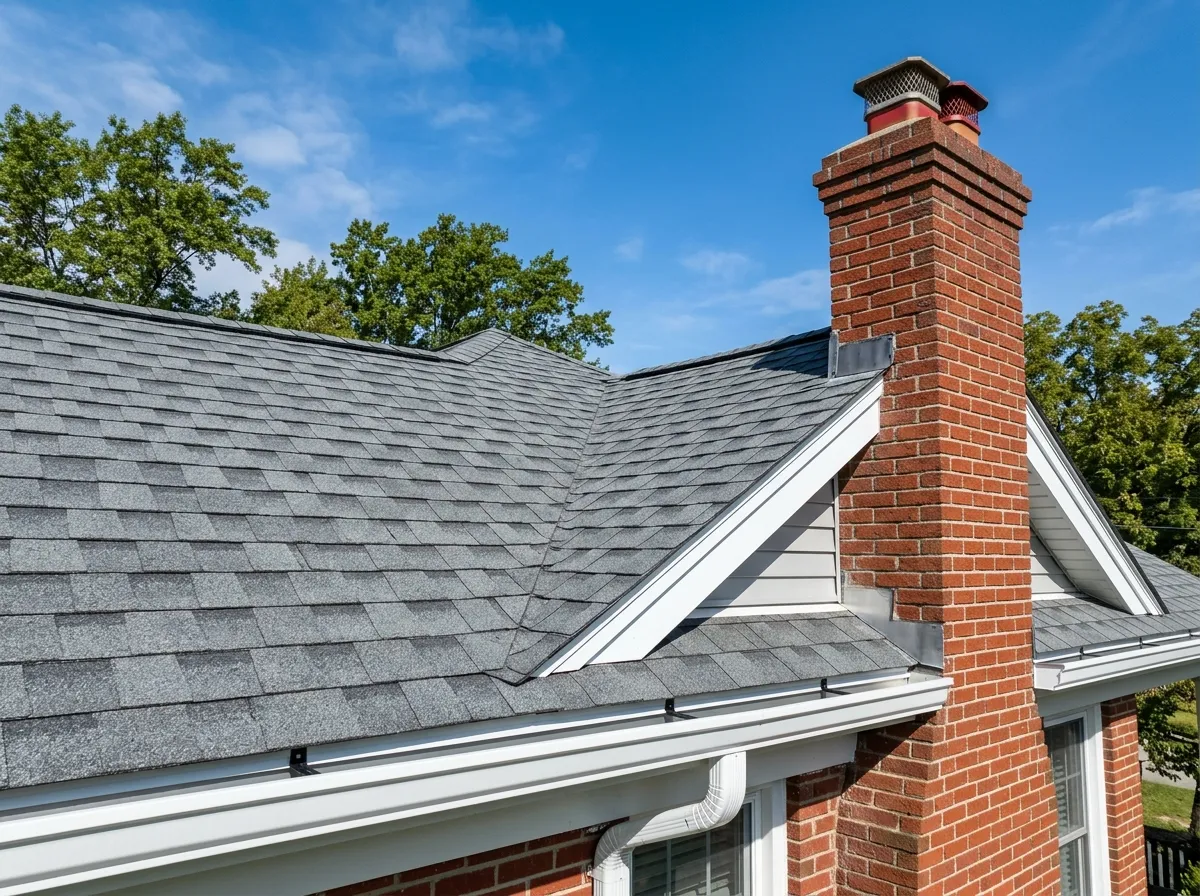
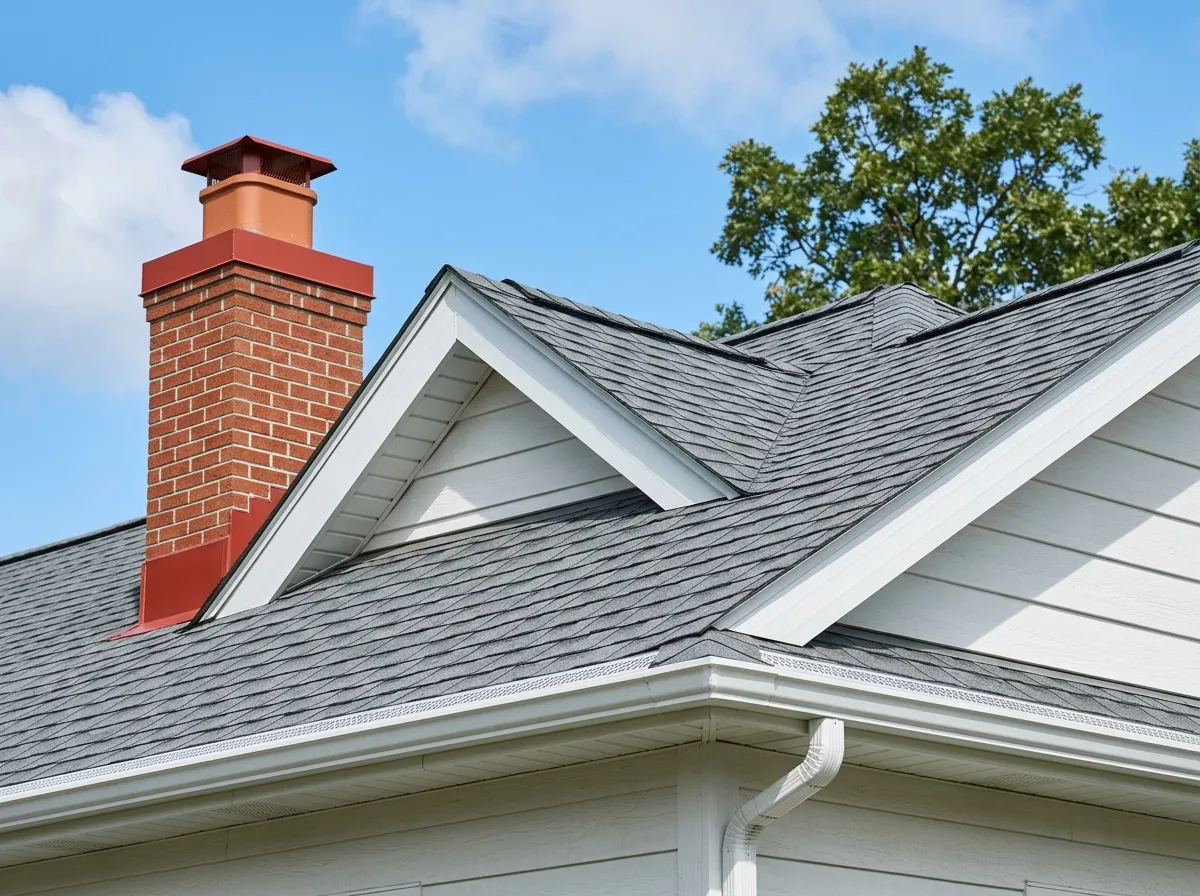
    A tidy roofline with new shingles, clean gutters and a brick chimney against blue sky
    A tidy roofline with new shingles, clean gutters and a brick chimney against blue sky

    4. Cabins: Winterize

    For rental cabins, add exterior faucet and line protection, door seal checks, and a photo record of the roof going into winter — the cheap insurance against the season’s expensive claims. Our seasonal packages exist for exactly this; the checklist is the same one we run on paid visits.

    Get a Straight Answer

    Send a photo, get a call back. If it doesn’t need work, we’ll tell you that too.

  • How to Spot a Roof Leak Before It Shows on Your Ceiling

    Roof worry? Text a photo to (859) 310-1209 for a free straight answer · or call now

    By the time a stain blooms on your ceiling, water has usually been working for weeks. Here are the early signs we look for on every roof check — catch them and the repair stays small.

    In the Attic

    Dark streaks on rafters, damp or matted insulation, daylight where there should be none, and a musty smell after rain. Ten minutes with a flashlight after a storm beats any ceiling surprise.

    On the Roof

    Backed-out screws on metal panels, cracked rubber boots around pipes, lifted or torn flashing at chimneys and walls, and shingle granules collecting in gutters. Binoculars from the ground work fine — you don’t need to climb.

    The Gutter Tell

    Overflowing or sagging gutters push water where it was never meant to go: behind fascia, into soffits, down the wall cavity. In the Gorge’s leaf country, clogged valleys and gutters cause a surprising share of the “roof” leaks we get called for.

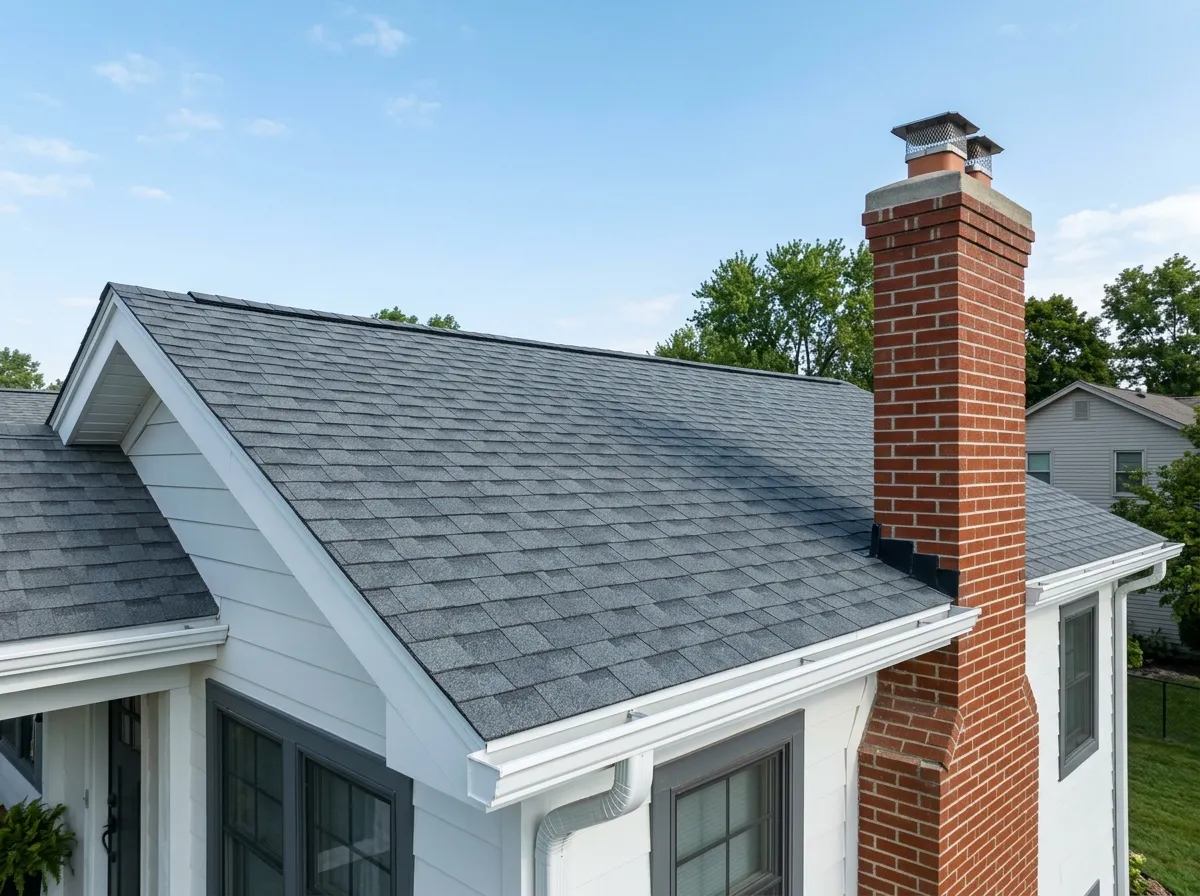
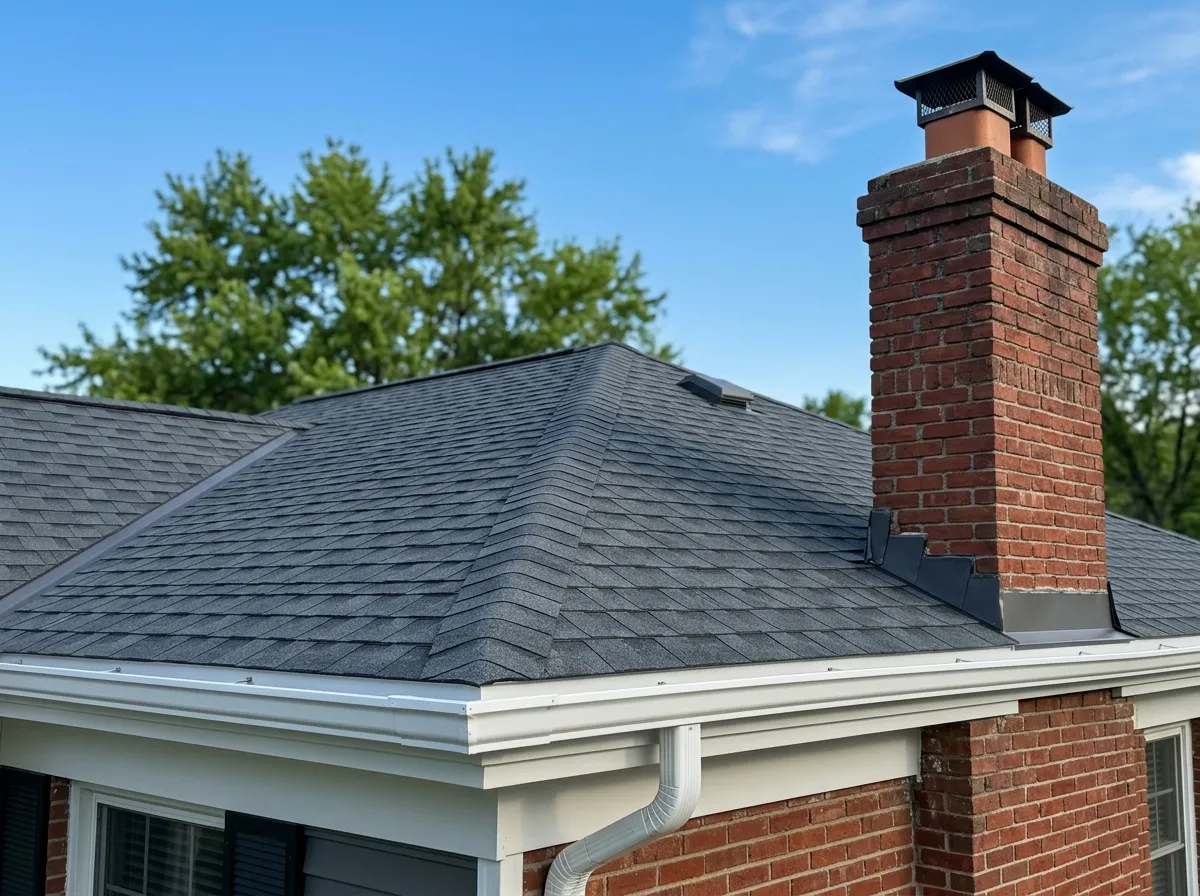
    A tidy roofline with new shingles, clean gutters and a brick chimney against blue sky
    A tidy roofline with new shingles, clean gutters and a brick chimney against blue sky

    When to Call

    If you find any of the above — or you’d rather we look — send a photo and the property’s location. If it doesn’t need work yet, we’ll say exactly that and leave you a photo record for your file.

    Get a Straight Answer

    Send a photo, get a call back. If it doesn’t need work, we’ll tell you that too.