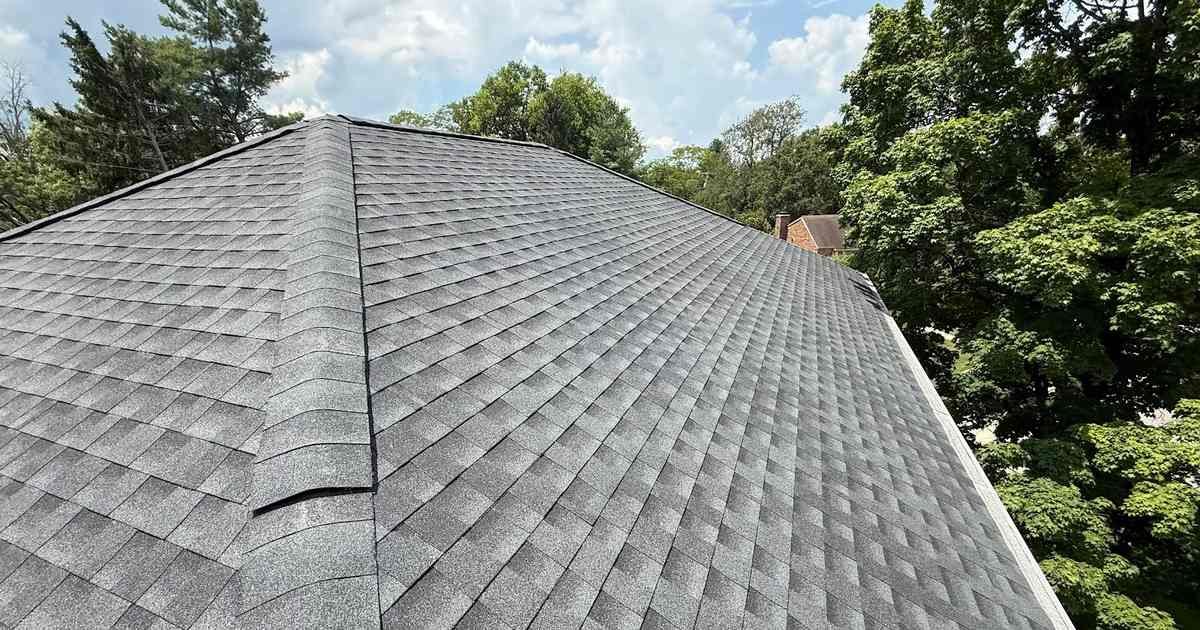
Our job: a shingle roof replacement.
After hail or wind, a roof claim can leave you deciding whom to trust with the work. Kentucky has a statute about what a contractor may and may not do when the work will be paid from insurance: KRS 367.628, with definitions in KRS 367.620 and enforcement in KRS 367.627. Here is what the text says, so you know where the lines are before you sign anything.
When the law applies
KRS 367.620 defines a “real estate goods or services contract” as “a contract for the provision of goods or services relating to real estate, where the goods or services are expected to be paid from property, casualty, or property and casualty insurance proceeds.” “Real estate” means “any parcel of real estate located in this state that is used for any purpose” and includes residential and commercial real estate. “Contractor” includes “any person that directly or indirectly solicits or offers a real estate goods or services contract.”
What a roofer may do
KRS 367.628(1)(c) says nothing in the claim-negotiation ban prohibits a contractor from:
- “Providing an estimate for the provision of goods or services relating to real estate”; or
- “Conferring with an insurance company’s representative about damage to real estate after a claim has been submitted by an insured.”
What a roofer may not do about your claim
Under KRS 367.628(1)(a), a contractor shall not:
- “Represent, negotiate, or advertise to represent or negotiate, as a public adjuster or otherwise, on behalf of any insured on any insurance claim” connected with the work; or
- market the contractor or its business as “a claims specialist or expert,” “an insurance specialist or expert,” or “having any affiliation with an insurer or an insurer’s agent.”
A contract provision that breaks the first rule “shall not be enforceable” (KRS 367.628(1)(b)).
Deductibles, discounts and gifts
Where the work is expected to be paid from insurance proceeds, KRS 367.628(2) says a contractor shall not:
- “Offer to pay or rebate all or any portion of an insurance deductible or claims proceeds as an inducement to the sale of goods or services”;
- “Grant an allowance or discount against the fee to be charged by a contractor”;
- pay or offer the insured “any form of compensation in excess of one hundred dollars ($100),” such as a bonus, coupon, credit, gift, prize or referral fee;
- cause, or “command or encourage another person to cause,” damage to the property to increase the scope of work or to win the contract;
- be “financially connected, directly or indirectly” to a public adjuster, an appraiser or others who specialize in insurance claims, estimates other than for the real estate work itself, insurance, or supplements, or solicit contracts for them; or
- file a mechanic’s lien under KRS 376.010 against the insured “by reason of the insured’s failure or refusal to pay any excess charge over and above the amount paid or expected to be paid by an insurer.”
KRS 367.628(3) adds that a violation of the damage ban in subsection (2)(a) is also “a fraudulent insurance act in violation of KRS 304.47-020” and “criminal mischief in the first degree in violation of KRS 512.020.”
Who can enforce it, and the stakes
Under KRS 367.627, the Attorney General enforces these sections, and “a person injured by a violation” may also sue. A court that finds a violation may order an injunction, award the plaintiff “two (2) times the amount of any actual economic damages,” and award “reasonable attorney’s fees and costs.” The Attorney General may also recover “a civil penalty of five thousand dollars ($5,000) per violation.”
The LRC notes on these statutes say the latest amendments “apply to contracts entered into on or after July 15, 2026,” and that the 2025 amendments applied to contracts entered on or after June 27, 2025.
What this means when you hire a roofer
- Estimates are normal. A roofer writing a scope and price for the roof work is inside the statute’s own carve-out.
- The claim stays with you and your insurer. A contractor who offers to run or negotiate your claim is offering something KRS 367.628(1)(a) bars.
- A deductible offer is a red flag. Under KRS 367.628(2)(b), offering to pay or rebate it as an inducement is prohibited.
- Ask who the contractor is connected to. The statute bars financial ties to adjusters and similar claim specialists.
- Read the contract. Check what it says about your claim, and what happens if the insurer pays less than the bill.
For the plain-language version of how claims work, see Roof Insurance Claims 101.
This is general information about Kentucky statutes, not legal or insurance advice. Ask an attorney or your insurer about a specific claim.
Roof damage and not sure what comes first?
Call Central Roof Repair at (859) 310-1209. We will look at the roof, write the scope and price for the roof work, and leave the claim in your hands.
By Central Roof Repair
Leave a Reply