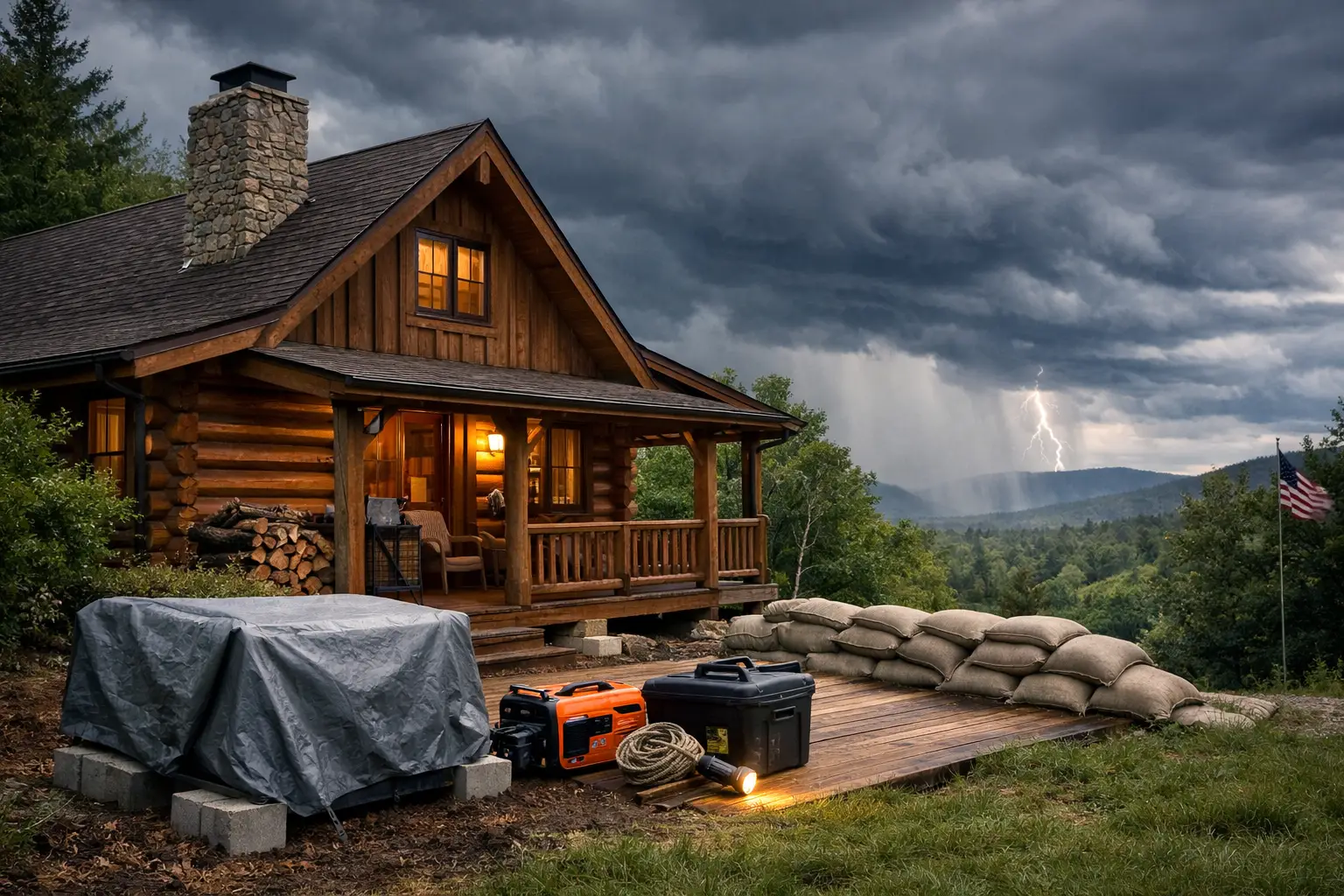
A hard rain can find one loose flashing edge that looked harmless last week. Add wind, wet leaves, and a steep Gorge hillside, and that small opening becomes a ceiling stain, wet insulation, swollen trim, or a canceled guest stay. To prepare cabins for storms, start before the forecast turns ugly – when there is still time to inspect, clean, repair, and document what is going on overhead.
For cabin owners in the Red River Gorge, storm preparation is not about making a property look tidy. It is about keeping water outside, keeping access open, and catching the wood the weather gets to first. This matters even more when you live hours away and cannot run over after every downpour.
Prepare Cabins for Storms From the Roof Down
The roof is where most expensive storm problems begin. Wind-driven rain does not need a large hole. It can work under a lifted shingle, through a nail pop, behind a loose ridge cap, or around a pipe boot that has started to crack. On metal roofs, trouble often shows up at loose fasteners, failed sealant, open laps, and flashing transitions.
Do not wait for a visible interior leak to look up. By the time water reaches the ceiling, it may have traveled across roof decking, insulation, framing, or a wall cavity. A repair-first inspection looks for the actual entry point instead of treating the stain as the whole story.
Before storm season, check roof valleys, penetrations, chimney flashing, skylights, ridge lines, and areas where one roof plane meets another. Valleys full of leaves are how cabin roofs die. That packed debris holds moisture against the roof surface and sends rain sideways when water has nowhere else to go.
If you have a cabin roof that is hard to access, do not climb it in wet conditions or after a storm. Use binoculars from the ground for a basic visual check, then have a local pro inspect suspicious areas. Steep cabins, slick metal, and wooded lots are a bad place for guesswork.
Pay special attention to chimneys and flashing
Chimneys are a common weak point because several materials meet in one spot: roofing, masonry, flashing, sealant, and sometimes siding. Watch for cracked mortar, bent metal flashing, missing counterflashing, rust, or staining on the ceiling near the chimney chase.
Caulk alone is not a lasting answer when flashing has come loose or was installed wrong. A small, correctly targeted flashing repair can prevent the kind of water damage that leads people to assume they need a full roof replacement.
Keep Gutters and Drainage Working
A roof can shed water perfectly and still create damage if the gutters are clogged or the ground drainage is poor. When gutters overflow, water runs behind fascia boards, down exterior walls, and into the soil next to the foundation. That is how a $150 cleaning turns into rot repair, siding work, or a damp crawl space.
Clean gutters before the heavy spring rains and again after the main fall leaf drop. In heavily wooded parts of Lee, Powell, Wolfe, and surrounding counties, one cleaning a year is often not enough. Pine needles, oak leaves, twigs, and roof grit build up faster than most owners expect.
Make sure downspouts are attached, clear, and sending water away from the cabin. If a downspout dumps at the corner of the foundation, extend it. If the ground slopes toward the building, address that drainage path before repeated storms turn it into a moisture problem under the cabin.
Look at the fascia while the gutters are being cleaned. Soft spots, peeling paint, dark wood, and sagging sections are warning signs. Gutters do not just carry water. They reveal where water has been getting behind the system for a while.
Secure the Outside Before Wind Arrives
Wind damage is not limited to shingles. It can tear loose siding, bend fascia, pull screens free, knock branches onto roofs, and turn unsecured furniture into a window hazard. Walk the property with wind in mind, especially if the cabin sits on an exposed ridge or at the edge of a tree line.
Trim dead limbs and branches hanging over the roof, driveway, power service, and deck. Healthy mature trees are valuable, but limbs rubbing on metal roofing or scraping shingles through every storm need attention. Do not assume a branch is safe just because it has been there for years.
Secure deck furniture, grills, trash cans, firewood racks, and outdoor décor. Check that shutters, porch screens, skirting, and exterior light fixtures are firmly attached. A loose section of vinyl siding may seem cosmetic until wind gets behind it and tears off a larger section.
If your cabin has a gravel drive, make sure culverts and roadside ditches are open. A washed-out drive can keep guests, cleaners, repair crews, or emergency responders from reaching the property. For short-term rental owners, access is part of storm readiness.
Protect the Cabin Interior When You Are Away
Remote owners need a plan that works without them standing in the driveway. Start with smart shutoffs: know where the main water valve, electrical panel, propane shutoff, and well controls are located. Label them clearly for cleaners, co-hosts, caretakers, or family members who may need to act fast.
If the cabin will be vacant during a stormy season, move valuables away from windows and off the floor in known leak-prone areas. Keep a few clean buckets, towels, plastic sheeting, and a flashlight in an easy-to-find spot. Those simple supplies will not repair a roof, but they can limit damage while help is on the way.
A moisture alert, leak sensor, or temperature monitor can be useful, particularly in a rental cabin that sits empty between bookings. Technology is helpful, but it does not replace regular physical checks. Batteries die, Wi-Fi drops, and an alert cannot tell you whether a branch is resting on the ridge cap.
Take current photos of key areas before storm season: ceilings, exterior walls, rooflines visible from the ground, decks, gutters, and mechanical equipment. These photos give you a baseline if you later need to identify new damage. They also help a local repair crew understand what changed.
Have a Storm Response Plan Before You Need One
After a storm, the first job is not making a permanent repair. It is stopping additional water from getting in safely. That may mean an emergency tarp, a temporary dry-in, clearing a blocked drainage point, or securing loose siding. Permanent repair comes after the area is dry enough to inspect properly and the true damage is visible.
For rental owners, decide ahead of time who can authorize emergency work if you are unreachable. Give that person the property address, gate code, parking instructions, emergency contacts, and any notes about difficult access. A crew losing 30 minutes trying to find a cabin in the dark is not good for your roof or your guests.
Keep a simple written record of past repairs, roof age if known, and recurring trouble spots. If a ceiling stain comes back in the same place, that history matters. It may point to a failed previous patch, a hidden flashing issue, or water entering farther uphill than expected.
Central Property Services provides before-and-after photos on jobs because remote owners should not have to wonder what was found or what was fixed. Documentation helps you make better property decisions, whether the answer is a small repair, ongoing maintenance, or a larger project that truly cannot wait.
Know When a Small Problem Needs Fast Action
Some damage can wait for a scheduled visit. Other problems need attention now. Call for help promptly if you see active dripping, a sagging ceiling, a tree limb on the roof, missing roof material, exposed underlayment, loose metal panels, water running behind gutters, or a new stain spreading after rain.
Be careful with the word “minor.” A small leak over a guest bedroom is not minor if another storm is coming Friday. A loose gutter is not minor if it is dumping water against a foundation. The right repair depends on the material, the location, the weather window, and how long water has been moving through the area.
The best storm preparation is usually not dramatic. It is clean valleys, open gutters, sound flashing, trimmed limbs, working drainage, and somebody local who can look at the property when you cannot. Handle those basics while the weather is calm, and your cabin has a much better chance of staying dry when the Gorge gets hit hard.
Leave a Reply