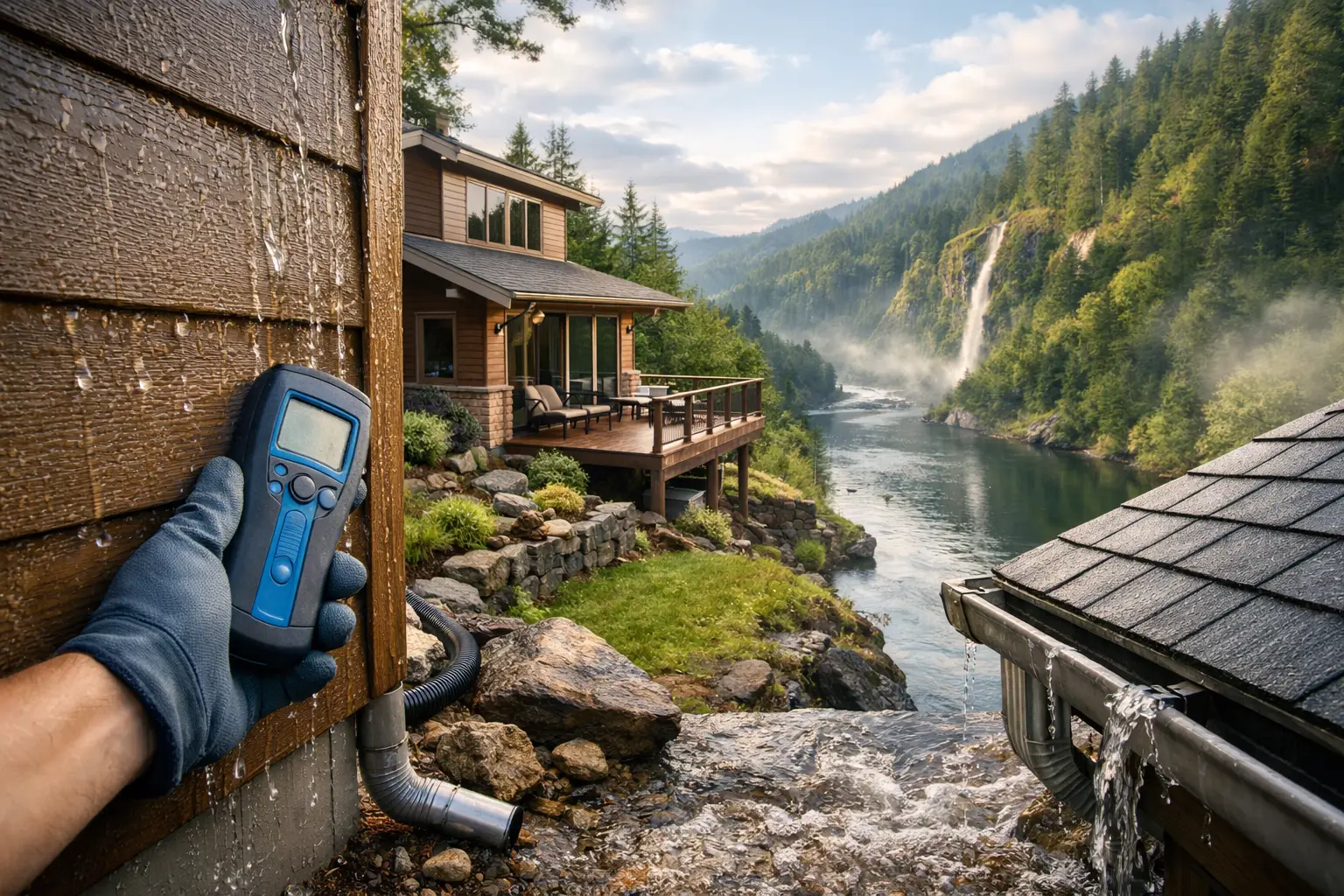
A ceiling stain rarely starts at the ceiling. It starts with a lifted shingle, a flashing gap, a gutter packed with leaves, or water sitting where it has no business sitting. Water damage prevention is about catching those small failures before they reach insulation, framing, drywall, flooring, and the parts of a property that cost real money to rebuild.
That matters everywhere, but especially around the Red River Gorge. Our properties deal with hard rain, wind-driven storms, heavy leaf fall, freeze-thaw cycles, shaded roofs, steep terrain, and cabins that may sit empty for days or weeks. A minor leak at a full-time home is bad enough. At a remote rental cabin, it can run for days between guest turnovers and turn into stained ceilings, wet flooring, mold concerns, canceled bookings, and damaged guest confidence.
Water Damage Prevention Starts Above the Ceiling
The roof is the first place to look, but not every roof problem means the whole roof is finished. A repair-first inspection should identify where water is getting in and why. Often, the answer is specific: cracked pipe boot, loose chimney flashing, exposed fastener on a metal roof, failed seal at a vent, damaged valley, or shingles lifted by wind.
Roof valleys deserve extra attention in this region. They collect runoff from multiple roof planes, so even a small buildup of leaves and sticks can hold water in place. Valleys full of leaves are how cabin roofs die. The debris stays wet, breaks down shingles or metal coatings, and pushes water sideways beneath materials that were designed to shed it downhill.
Look over the roof after major storms and at least twice a year. You do not need to climb on it. From the ground, watch for missing shingles, bent metal, sagging gutter sections, branches rubbing the roof, dark streaks below penetrations, or piles of debris in valleys. Inside, check attic areas and upper ceilings for new staining, damp insulation, rusty nail points, or a musty smell.
If you find a concern, act while it is still a repair. Waiting for a leak to become obvious usually means water has already traveled beyond the entry point. The visible stain may be ten feet from the actual roof failure.
Flashing Is Small, but It Does Big Work
Flashing is the metal or membrane detail that protects transitions: around chimneys, skylights, vents, walls, dormers, and roof valleys. These are the places where a roof changes direction, and water looks for every shortcut it can find.
Chimneys are a frequent trouble spot. Mortar can crack, counterflashing can pull loose, and the roof-to-chimney connection can fail long before the surrounding shingles look worn out. The wood the weather gets to first is often behind siding, trim, or flashing where nobody sees it until it is soft.
A good repair addresses the detail itself, not just the symptom. Smearing sealant over a failing flashing system may slow a drip temporarily, but it is not always a lasting fix. Sometimes the right answer is a targeted flashing rebuild. Sometimes a small opening needs sealing. The condition of the materials decides it.
Keep Water Moving Away From the Building
A sound roof cannot do its job alone. Gutters, downspouts, grading, and drainage all determine where rainwater goes after it leaves the roof.
Clogged gutters are one of the most preventable causes of water damage. When water spills over a blocked gutter, it saturates fascia boards, runs down siding, pools by the foundation, and can find its way into crawlspaces and basements. In wooded areas, one cleanout in spring is rarely enough. Fall leaf drop can fill a gutter fast, especially on cabins surrounded by trees.
Downspouts need to discharge away from the foundation, not into a mulch bed that holds water against the house. Extensions are simple, inexpensive protection when used correctly. The ground should slope away from the building where possible, though steep or rocky lots often need a more tailored drainage plan. French drains, swales, catch basins, or redirected runoff may make sense depending on the property.
Pay attention to these warning signs: muddy splashback on siding, erosion below downspouts, wet crawlspace insulation, standing water after rain, peeling paint near trim, or soil that stays soaked against the foundation. These are not cosmetic issues. They are early evidence that water is repeatedly hitting the wrong place.
Protect Vulnerable Siding, Trim, and Deck Connections
Water often enters through the walls after a roofing or gutter problem starts above. Wood trim around windows, doors, decks, and roof edges takes a beating in Kentucky weather. Once paint fails or caulk pulls away, water works behind the surface and begins softening the material from the inside.
Walk the exterior of your property after a hard rain. Look for drips coming from behind gutters, water tracking down corners, staining below windows, loose siding, or swollen trim. Press carefully on suspicious wood with a screwdriver or fingertip. If it feels soft, flakes apart, or gives under light pressure, the damage may be deeper than the surface.
Deck ledger boards and railing connections need particular care. These points are attached to the structure, and poor flashing or rot can allow water into the wall system. A cabin deck may look fine from a distance while its connection to the building has been taking on water for years.
Small siding patches, trim repair, caulking, and rot replacement are not glamorous work. They are still some of the best property-protection work an owner can authorize. Replacing one damaged board before it spreads into framing is a much better day than opening an entire wall.
Winterize Before Freezing Weather Finds the Weak Spots
Water damage prevention changes with the season. Before winter, clear gutters, inspect roof penetrations, repair loose siding, and make sure exterior hose connections are shut down properly. Frozen water lines are especially hard on vacant cabins, rental properties between stays, and older homes with exposed plumbing.
If a property will be vacant, keep enough heat on to protect plumbing unless it has been properly winterized. Open cabinet doors near plumbing on cold nights, insulate vulnerable pipes, and know where the main water shutoff is. Remote owners should also make sure a trusted local contact can access the property quickly if a freeze, storm, or alarm issue occurs.
For cabins and short-term rentals, a basic check after severe weather is part of protecting revenue. Look for a fallen limb, damaged roof material, a branch blocking a gutter, wet spots near exterior doors, and water around utility areas. A fast inspection can prevent a guest from discovering the problem first.
Build a Simple Inspection Routine
The best maintenance plans are realistic enough to follow. Put a roofline and drainage check on the calendar in spring and fall, then add checks after major wind or heavy-rain events. For rental and commercial properties, pair those checks with regular turnover or site visits.
Your routine should cover the roof surface and flashings, gutters and downspouts, attic and ceiling stains, exterior trim and siding, crawlspace or basement moisture, and drainage around the foundation. Take photos as you go. A picture from the same corner of the building each season makes changes easier to spot.
Remote owners benefit from visual documentation even more. Before-and-after photos turn a vague message like the gutter was cleaned into clear proof of what was found and corrected. That is useful when deciding whether a repair can wait, needs prompt attention, or calls for an emergency tarp to stop active water intrusion.
Do Not Wait for the Ceiling to Fall In
Some water events need immediate action: an active roof leak, a tree strike, wind-torn roofing, water pouring behind siding, a burst pipe, or a sagging ceiling. Move valuables away from the area, contain what water you can safely contain, and get help quickly. Do not climb onto a wet or storm-damaged roof. A same-day tarp or dry-in can protect the building while a proper repair is planned.
Central Property Services approaches these calls with a straight answer. If a targeted repair will solve the problem, that is the work worth doing. If the damage is broader, clear photos and an honest assessment give owners a better basis for the next decision.
The practical goal is not a property that never sees rain. It is a property where water sheds off the roof, moves through clean gutters, drains away from the foundation, and gets stopped quickly when something fails. Keep an eye on the small weak spots. That is where expensive water damage usually begins.
Leave a Reply