
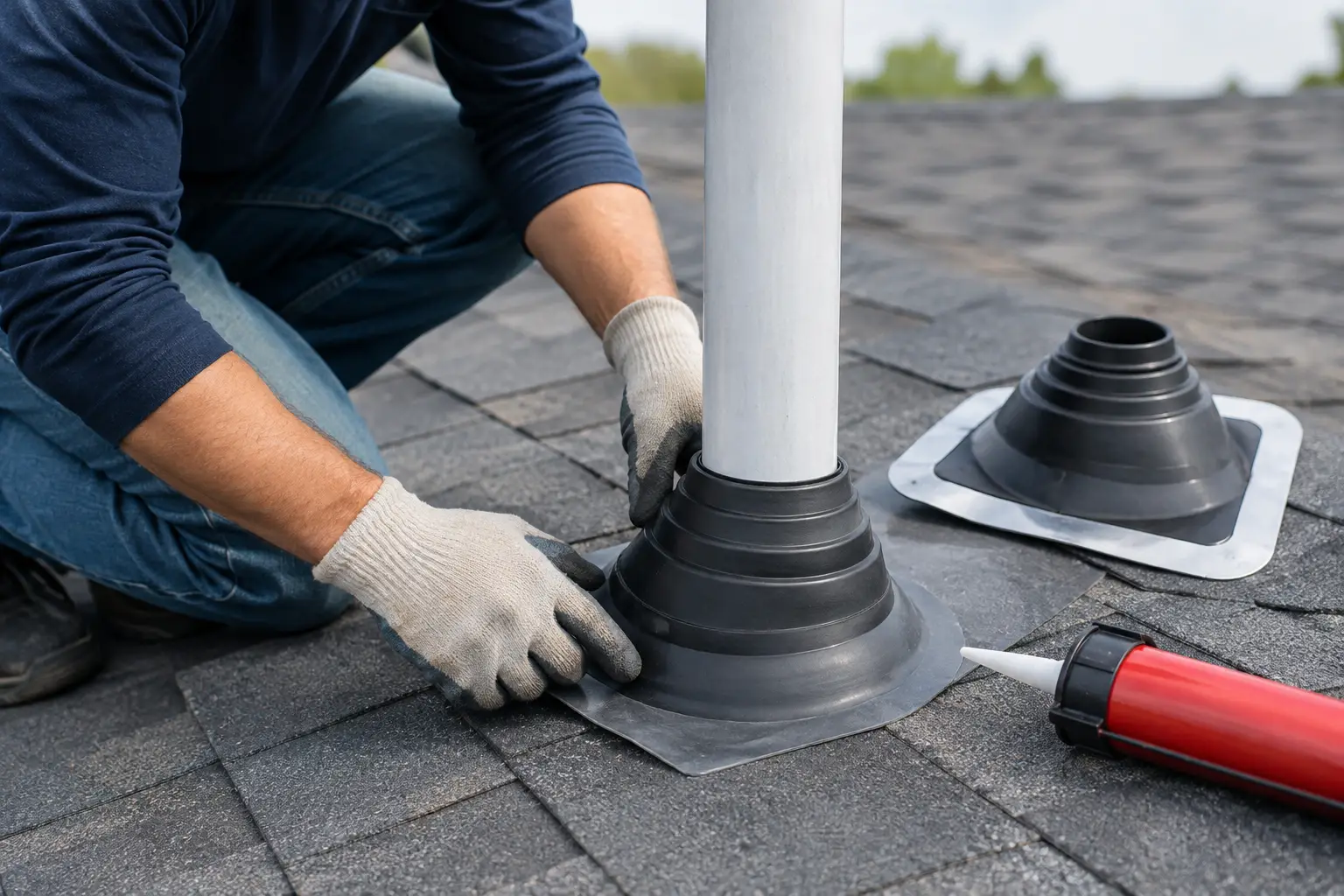
A roof can look fine from the driveway and still leak around one small plumbing vent. That is why homeowners need to replace damaged pipe boots before a cracked rubber collar turns into wet insulation, stained ceilings, rotten decking, or a guest complaint at a rental cabin.
Pipe boots are not flashy. They sit around the plumbing vent pipes that come through your roof, usually several feet below the ridge. But they are one of the roof penetrations weather attacks first. Sun cooks the rubber. Winter cold stiffens it. Wind works at the flashing. On cabins in the Red River Gorge, heavy leaf cover and slow-drying shade can keep that area damp longer than it should be.
The good news is that a failed pipe boot often has a targeted repair. The bad news is that waiting on it can turn a small roof detail into a larger carpentry and interior repair.
What a Pipe Boot Does on Your Roof
A plumbing vent pipe carries sewer gases safely out of the house. Where that pipe passes through the roof, it needs a waterproof transition. The pipe boot, sometimes called a vent boot or pipe flashing, is that transition.
Most installations combine a metal or plastic flashing base with a rubber, neoprene, or silicone collar that fits tightly around the pipe. The upper part of the flashing slides beneath the roofing material, while the lower portion rests on top to shed water downhill. When installed correctly, water moves around the pipe instead of following it into the roof.
That system depends on the collar staying flexible and sealed. Once it splits, pulls away from the pipe, or becomes brittle, rain has a direct route under the roofing. A small opening can leak only during wind-driven rain at first. Then it becomes a regular problem as the opening widens.
Signs You Need to Replace Damaged Pipe Boots
You do not always need to climb onto a roof to spot trouble. Start with the ceiling directly below plumbing vent locations, then check the roof from the ground with binoculars if you can do so safely. Look for these warning signs:
- Cracked, dry-rotted, curled, or missing rubber around the vent pipe
- A dark ring, water stain, peeling paint, or soft drywall near a bathroom, kitchen, or laundry ceiling
- Damp attic insulation or darkened roof decking around a vent penetration
- Rusted metal flashing, lifted shingles, or exposed fasteners near the pipe
- A leak that appears after hard rain or wind but seems to disappear in dry weather
A boot can fail without making an obvious interior stain. Water may run down the underside of the roof deck, travel along a framing member, and show up several feet from where it entered. That is why leak location and entry location are not always the same thing.
For remote cabin owners, a musty odor, a discoloration noticed during a turnover clean, or a message from a guest should not be brushed off as a minor issue. Water has likely been working longer than anyone realizes. The wood the weather gets to first is rarely the only wood affected.
How Professionals Replace Damaged Pipe Boots
Replacing a pipe boot is not usually a full-roof job. On an asphalt shingle roof, the repair generally involves loosening the shingles around the vent, removing the old flashing, installing a correctly sized replacement, and putting the roofing back together so water sheds properly.
The work begins with diagnosis. A good repair tech checks the pipe itself, the flashing base, nearby shingles, nail placement, roof decking, and attic side when accessible. If the pipe is loose, broken, or cut too short, simply putting a new boot over it may not solve the problem. If the deck is soft, the repair may need a small section of wood replaced before new flashing goes in.
Next, the surrounding shingles are carefully lifted. The old boot or flashing is removed without tearing sound shingles that can be reused. The new base is slid under the upper course of shingles and over the lower course. That overlap matters. Roofing is a water-shedding system, not a caulk bucket.
Fasteners should be placed where they will stay protected by the next layer of roofing whenever possible. Exposed nail heads and open seams are common shortcuts that create another leak point down the road. A small amount of compatible roofing sealant may be used at specific details, but sealant is not a substitute for proper flashing order.
Metal roofs require a different approach. A replacement boot must match the pipe diameter and work with the roof panel profile. On some metal systems, a flexible retrofit boot can be installed around the pipe without removing large sections of roofing. The boot still needs to sit flat, be properly sealed to the panel, and be fastened in a way that handles expansion and contraction. Metal moves with temperature swings. A repair that is too rigid can fail early.
Why the Cheap Patch Often Fails
It is tempting to smear roof cement around a cracked boot and call it done. That may slow a leak for a short time, especially if rain is on the way, but it does not restore failed rubber or correct loose flashing. Thick sealant also hides the actual condition of the boot, making a later inspection harder.
A slip-on rubber repair collar can be useful in the right situation. It can extend the life of an otherwise sound flashing base when the pipe is the right size and the surrounding roof is in good shape. It is not the best answer when the flashing is rusted, shingles are damaged, or water has already gotten underneath the assembly.
Material choice matters, too. Standard rubber boots are common and affordable, but Kentucky sun and temperature changes take their toll. Silicone boots generally hold up better against ultraviolet exposure and remain more flexible in cold weather. The right choice depends on roof type, pipe size, existing flashing, budget, and how much useful life remains in the surrounding roof.
If an aging roof has several failing boots, lifted shingles, exposed fasteners, and granule loss, treating every item as an isolated repair can become false economy. Repair-first means fixing the actual problem without selling a roof you do not need. It also means being honest when several small failures point to a roof system nearing the end of its service life.
Safety and Timing Matter More Than Most Owners Think
A one-story home with a low roof pitch may look like an easy do-it-yourself repair. It can still be dangerous. Wet shingles, loose gravel, steep slopes, high winds, and soft decking turn a quick job into a fall risk. Cabin roofs can be especially tricky because terrain, tree cover, and limited access make ladder placement harder.
If you are comfortable working on roofs and can do it safely, inspect the boot after rain and on a dry day. Do not work alone, do not step on questionable decking, and do not try to force shingles apart in cold weather when they are brittle. A damaged shingle caused during a rushed repair can create a new entry point for water.
For most owners, the better move is to schedule the repair while the problem is still small. If active water is entering the home or cabin, protect belongings, place a container under the drip, and get the roof checked promptly. A temporary tarp may be needed after storm damage, but it should lead to a permanent repair, not become the permanent plan.
Check More Than One Vent While You Are There
Pipe boots tend to age at a similar rate because they face the same weather on the same roof. When one boot is cracked, inspect the others. A home may have vent pipes for bathrooms, kitchens, laundry areas, and plumbing stacks. A cabin with additions or remodeled bathrooms may have more penetrations than the owner expects.
This is also a good time to look at nearby roof details. Valleys full of leaves are how cabin roofs die. Debris holds moisture, backs up runoff, and keeps flashing areas wet. Check for clogged gutters, branches rubbing the roof, loose ridge caps, cracked sealant around other penetrations, and chimney flashing issues. You do not need a long repair list to benefit from a careful inspection. You need a straight answer about what is sound, what needs attention soon, and what is letting water in now.
For owners who live out of town, photo documentation matters. Before-and-after photos show the cracked boot, the condition beneath it, and the finished repair. That is proof you can keep with your property records, share with a property manager, or use when planning future maintenance.
A damaged pipe boot is a small part with a big job. Catch it early, repair it correctly, and your roof can keep doing what it is supposed to do: send water away from the building instead of into it. If you need an honest roof repair assessment in the Red River Gorge region, Central Property Services can inspect the problem, document the work, and help protect the property before a minor leak becomes a major interruption.
Leave a Reply