
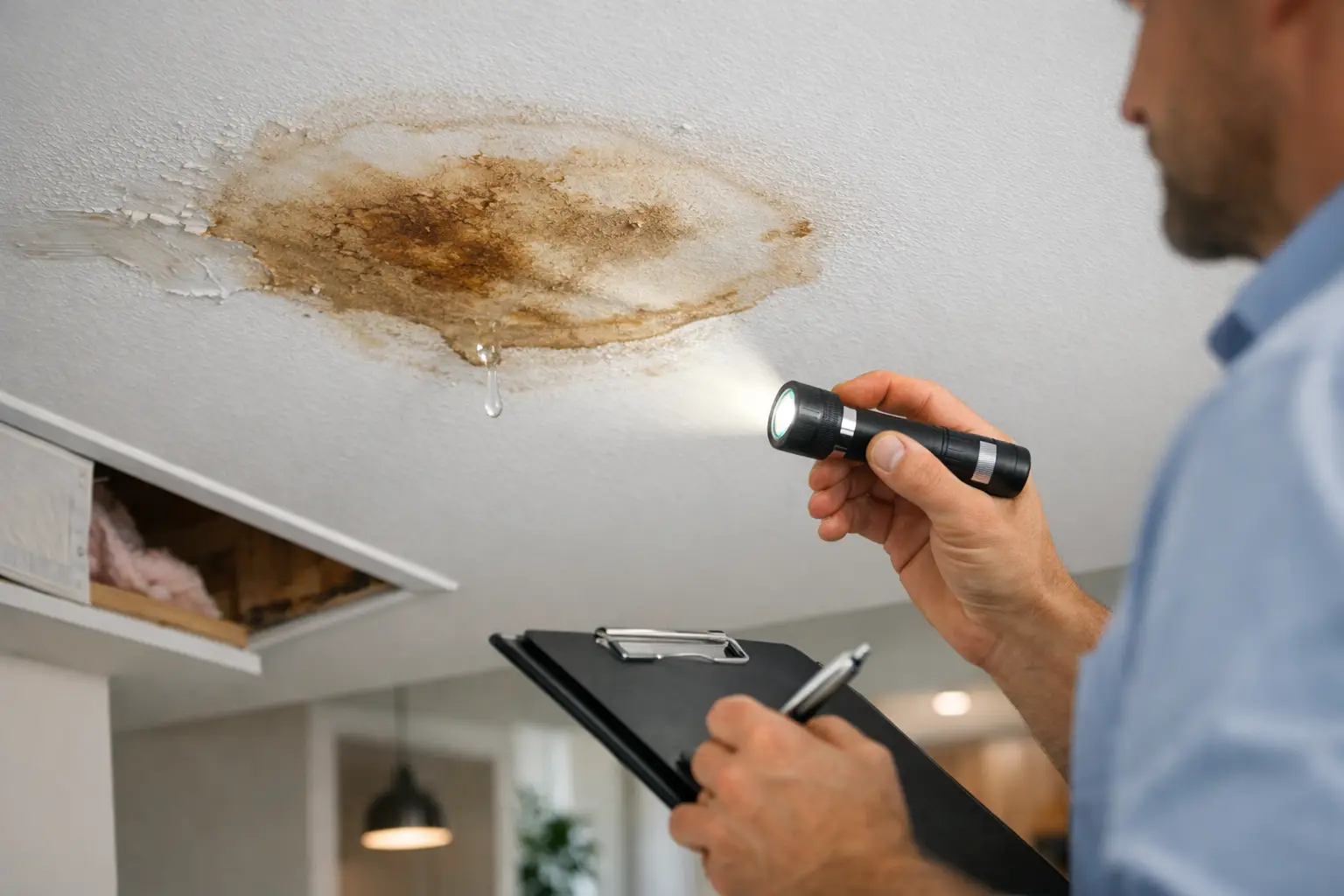
A brown ring over the living room, a yellow patch near a chimney, or paint that suddenly looks damp is not a cosmetic problem first. It is a clue. If you are asking what causes ceiling stains, the answer is usually water, but the place where that water entered may be several feet away from the stain itself.
That matters in the Red River Gorge region, where hard rain, wind-driven storms, wet leaves, shaded roofs, steep cabin rooflines, and long stretches between property visits can turn a small opening into a bigger repair. A ceiling stain does not automatically mean you need a new roof. It does mean the source needs to be found before the next storm gives it more time to work.
The most common cause is a roof leak
A roof leak is the first suspect when a stain appears after rain, snow, or a windy storm. Water can get past damaged shingles, loose metal roofing screws, cracked pipe boots, worn sealant, or lifted flashing. Once it gets under the roof covering, it follows framing, insulation, wiring, and drywall until it finds a place to show itself.
That is why the stain is often misleading. A leak entering near a ridge, valley, vent pipe, or chimney may show up ten feet away in the ceiling below. Water does not travel in a straight line just because the stain does.
On cabins and homes around Beattyville, Slade, Stanton, Campton, and the surrounding hills, roof valleys deserve special attention. Valleys full of leaves are how cabin roofs die. Debris holds moisture against the roof, slows drainage, and can force water under roofing materials during a hard downpour. A roof that looks fine from the driveway can still have a backed-up valley or failed flashing doing damage out of sight.
Flashing and roof penetrations are frequent trouble spots
The areas where a roof changes shape are often more vulnerable than the broad open sections. Chimneys, skylights, plumbing vents, exhaust vents, dormers, and wall-to-roof connections all rely on flashing and sealants to shed water properly.
A missing shingle can be obvious. Failed flashing is often not. It may leak only during wind-driven rain from one direction, which leads owners to think the problem has gone away between storms. It has not. It is simply waiting for the right weather.
Metal roofs have their own leak points. Loose or backed-out fasteners, deteriorated washers, open laps, failed ridge details, and penetrations that were sealed poorly can all let in water. Metal roofing can last a long time, but it still needs a close look when stains appear indoors.
What causes ceiling stains besides roof leaks?
Not every ceiling stain starts at the roof. The timing, location, and condition of the stain help narrow down the source.
Plumbing leaks often stain bathrooms and kitchens
If a stain is directly below an upstairs bathroom, laundry room, kitchen, or water line, plumbing is a strong possibility. A slow drain leak, loose toilet seal, failed supply line, sweating pipe, or shower pan issue can drip for weeks before the ceiling drywall gives it away.
These stains may get larger after showers, laundry cycles, or heavy water use instead of after rainfall. If the drywall feels soft, bulges, or drips, shut off water to the affected fixture if you can do so safely and get help quickly. A wet ceiling can collapse without much warning.
Condensation can create stains and mildew
Warm indoor air meeting a cold surface can cause condensation in attics, around bathroom fans, near ductwork, and on poorly insulated ceiling areas. This is especially common in cabins that sit vacant, homes with high indoor humidity, or properties where bath fans vent into the attic instead of outside.
Condensation stains are often accompanied by mildew spotting, a musty smell, or damp insulation. The fix may involve ventilation, insulation, a properly vented fan, or air-sealing work rather than roof repair. This is one reason a straight diagnosis matters. Replacing roof material will not solve moisture created inside the building.
Ice dams and snow melt can cause seasonal staining
During winter, heat escaping into an attic can melt snow higher up on the roof. That water runs down to colder roof edges and refreezes. When the ice blocks drainage, meltwater can back up beneath shingles and enter the structure.
This is more likely where attic insulation or ventilation is uneven. The stain may appear after a freeze-thaw cycle even if the roof does not leak during ordinary rain. It is a roof-and-attic system problem, not always a simple shingle problem.
HVAC and appliance problems can be the culprit
Air-conditioning condensate lines, attic HVAC equipment, refrigerator water lines, and water heaters can all create ceiling stains. A clogged AC drain line can send water into a ceiling fast during hot weather. If the stain is near an air handler or appears while the AC is running, do not overlook this possibility.
Read the stain, but do not trust it too much
The color and pattern can offer clues. Brown or yellow rings often come from water carrying tannins, rust, dirt, or old wood stains through drywall. A stain with several expanding rings may point to an intermittent leak. Dark speckling can indicate mildew from repeated moisture.
A stain that is dry today is not proof that the issue is resolved. Many roof leaks only show up under certain conditions: a heavy rain, wind from the west, melting snow, or a gutter overflow. A cabin owner may visit on a clear weekend and see only an old-looking mark while the roof leak continues every time a storm rolls through.
Location helps too. A stain around a chimney, exterior wall, skylight, or roof valley points the investigation one way. A stain under a bathroom or HVAC unit points another. But water travels, and guessing from the ceiling alone can waste money.
What to do when you notice a ceiling stain
Start by taking clear photos of the stain and noting when you first noticed it. If it is raining, check whether the spot grows, feels damp, or begins to drip. For remote cabin and rental owners, ask a guest, cleaner, or local contact for photos from directly below and a wider shot showing the room location.
If there is active dripping, place a container underneath and move furniture, electronics, bedding, and valuables out of the area. If the ceiling is sagging or ballooning, keep people out from under it. Do not poke a bulging ceiling unless you understand the risks and have taken proper safety precautions. The weight of trapped water can bring down a large section of drywall.
Then get the exterior and attic checked, if access is safe. A proper inspection looks at the roof covering, valleys, gutters, flashing, vents, chimney connections, attic insulation, visible plumbing, and signs of water travel on framing. The goal is not to sell the biggest job. The goal is to identify the first place water got in.
For a rental or short-term rental, speed matters beyond the repair itself. A small stain can become a guest complaint, a canceled booking, mold concern, or damaged furnishings if it is left until the next turnover. Before-and-after photos give remote owners a clear record of what was found and what was repaired.
Why fast repair protects more than the ceiling
Drywall is often the first visible casualty, not the most expensive one. Water that keeps entering can wet insulation, rot roof decking, damage framing, corrode electrical components, feed mold growth, and work its way down walls. The wood the weather gets to first is usually the wood that costs the least to save early.
There is also a trade-off in waiting for “one more storm” to confirm the problem. Sometimes a stain comes from one isolated overflow or plumbing accident. But if the cause is an active roof or flashing leak, every storm can enlarge the hidden damage. A focused repair and dry-in now may prevent a deck replacement, interior rebuild, or full roofing project later.
Central Property Services approaches these calls repair-first: inspect the likely source, document what is found, and recommend the work the property actually needs. If the roof is not the cause, that should be said plainly too.
A ceiling stain is your property telling you water has gotten where it does not belong. Take a photo, protect the room below, and have the source checked before a small mark becomes a bigger opening in your home, cabin, or rental budget.
Leave a Reply