
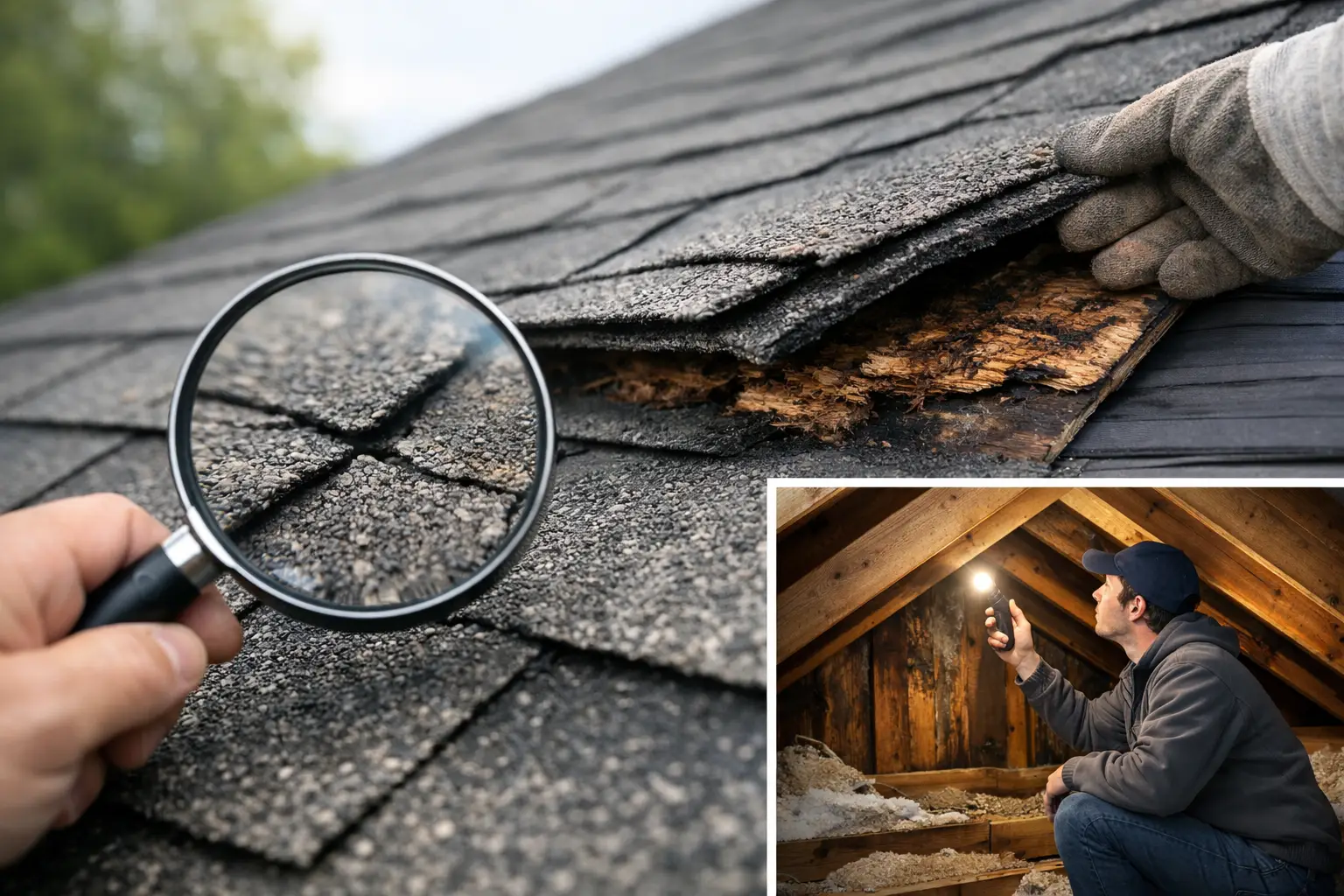
A roof does not have to be missing shingles to be in trouble. Around the Red River Gorge, a hard wind, a driving rain, or a valley packed with wet leaves can start damage that stays out of sight for months. Knowing the signs of hidden roof damage gives you a chance to fix the source before water reaches framing, insulation, drywall, furnishings, or a booked cabin weekend.
The frustrating part is that the spot where water shows up indoors is rarely the spot where it got in. Water follows roof decking, rafters, insulation, pipes, and wall framing. A brown ceiling ring may trace back to a lifted shingle, failed chimney flashing, a rusty screw on a metal roof, or a clogged gutter holding water where it does not belong.
1. Ceiling Stains That Grow After Rain
A yellow, brown, or gray stain on a ceiling is one of the clearest warnings, even when it feels dry to the touch. Watch it after a steady rain. If the stain darkens, spreads, or develops a soft edge, moisture is still getting in.
Do not paint over it and call it handled. Paint can hide the evidence while wet insulation and roof decking keep deteriorating above it. The repair may still be small, but only if the leak source is found before the wood stays wet long enough to rot.
On vaulted cabin ceilings, stains can be especially misleading because there may be little attic space to inspect. That calls for a careful exterior inspection of penetrations, valleys, ridge details, and transitions where the roof meets a wall or chimney.
2. A Musty Smell in the Attic or Upper Rooms
You may smell a roof problem before you see one. A musty odor in an attic, upstairs closet, loft, or closed-up cabin often means moisture has been hanging around. It does not automatically mean there is an active roof leak. Poor ventilation, plumbing condensation, and crawlspace moisture can create similar odors.
Still, the attic tells the truth when someone knows what to look for. Darkened roof decking, damp insulation, rusty nail tips, mildew, and water tracks on rafters all point to ongoing moisture. If the smell is stronger after rain or after a humid stretch, do not wait for a visible drip.
For remote owners, this is one reason a cleaning crew or guest report matters. A new odor in a cabin between turnovers deserves a look before the next reservation arrives.
3. Shingle Granules in Gutters or at Downspouts
A small amount of gritty material in a gutter is normal as an asphalt roof ages. A heavy buildup that looks like coarse black sand is different. Those granules protect shingles from sun and weather, and losing them faster than expected can leave the roof more vulnerable.
Granule loss alone does not always mean replacement. Sometimes damage is limited to one slope after wind, tree contact, or a bad runoff pattern. The question is whether shingles are also curling, cracking, thinning, blistering, or losing their seal.
Check the ground below downspouts after a heavy rain and look inside gutters during routine cleaning. Gutters full of shingle grit, leaves, and standing water are not just a gutter problem. They can be a clue that the roof is aging unevenly or shedding water poorly.
4. Raised, Missing, or Damaged Shingles
Wind damage can be quiet. A shingle does not need to blow into the yard to fail. It may lift just enough to break its seal, crease near the nail line, or expose the edge beneath it. From the ground, the roof can still look mostly normal.
Pay attention to uneven shingle lines, corners that look lifted, tabs that appear darker than surrounding shingles, and bare spots after a storm. These conditions let wind-driven rain get beneath the surface, where it can soak underlayment and decking.
Never climb a steep or wet roof to check it yourself. Binoculars from the ground can help spot obvious problems, but a close inspection is the safer way to determine whether a repair is needed.
5. Rusted Fasteners or Loose Panels on a Metal Roof
Metal roofs can last a long time, but they are not maintenance-free. A leak often starts at a fastener, flashing joint, panel overlap, or sealant failure rather than through the middle of a panel. Temperature swings expand and contract the metal, which can loosen screws and wear out washers over time.
Look for rust streaks below screws, fasteners sitting proud of the panel, separated seams, damaged pipe boots, or sealant that has cracked and pulled away. A small opening at one screw can drip into insulation for a long time before anyone sees a ceiling stain.
This is where repair-first work saves money. Replacing failed screws, resealing the right transitions, and correcting a localized flashing issue can be the right fix. A whole new roof is not the automatic answer.
6. Flashing Problems Around Chimneys, Pipes, and Walls
The roof is most likely to leak where materials change direction. Chimneys, plumbing vents, skylights, dormers, wall transitions, and valleys all need flashing to direct water safely away. When flashing lifts, rusts, cracks, or separates from masonry, rain finds the opening.
Chimney leaks are common because chimney masonry and roofing materials move differently through changing temperatures. Loose counterflashing, cracked mortar, and old sealant can all create a path for water. The stain may appear several feet away from the chimney because water travels along the roof structure first.
A repair should address the actual flashing detail, not just add a bead of caulk where water is visible. Caulk has a place, but it is not a substitute for correctly layered metal and roofing materials.
7. Sagging Gutters, Overflow, or Rot at the Eaves
Gutters are supposed to move water away from the roof edge and foundation. When they sag, overflow, pull loose, or stay packed with debris, water can back up against fascia boards and roof edges. That is the wood the weather gets to first.
Valleys full of leaves are how cabin roofs die. The debris traps moisture, slows runoff, and can force water under shingles or into low-slope transitions. Add a frozen winter cycle, and a simple cleanup issue can become rotten decking or damaged fascia.
Look for peeling paint at the eaves, dark wood, soft spots behind gutters, drips from gutter seams, or water pouring over the front during rain. The fix may involve gutter cleaning, re-pitching, repair, or drainage correction alongside roof work. It depends on why water is collecting there.
8. Soft Decking, Spongy Areas, or a Visible Roof Dip
A roof plane should look reasonably straight from the ground. A dip, wave, or sag can signal wet or weakened decking, undersized framing, long-term water intrusion, or the weight of debris and snow over time. This is not a symptom to ignore.
Inside, you may notice a ceiling that bows slightly or feels soft when gently pressed. Outside, shingles may look sunken in one area. Do not walk on a suspected soft section. It can be unsafe, and foot traffic can turn a localized repair into a larger opening.
Not every dip means the roof is about to fail, especially on older homes and cabins with framing that has settled. But a new change, or one that worsens after storms, needs prompt evaluation.
9. Higher Energy Bills and Uneven Room Temperatures
A roof leak can damage insulation long before it leaves a mark on drywall. Wet insulation loses effectiveness, and air gaps around failed roof penetrations can make upper rooms harder to heat or cool. If one bedroom, loft, or top-floor office suddenly feels different from the rest of the building, the roof assembly is worth checking.
Energy changes have other causes too, including HVAC problems, aging windows, and poor attic ventilation. That is why diagnosis matters. The goal is not to blame the roof for every draft. The goal is to find the actual source before paying for the wrong repair.
10. Interior Damage That Returns After You Fix It
Recurring peeling paint, bubbling drywall, cracked trim, or stains around a window can mean water is still entering from above or from an exterior wall detail. If the same repair keeps failing, the visible surface is probably not the real problem.
This comes up often in rentals and short-term stays. A cleaner notices a wet corner, someone patches the drywall, and the cabin looks fine for a while. Then the next hard rain brings it back. A proper inspection follows the water path and checks the roof, flashing, gutters, siding transitions, and drainage conditions instead of treating the wall as the whole issue.
What to Do When You Spot a Warning Sign
Take clear photos from a safe position, note when you first saw the issue, and pay attention to whether it changes after rain or wind. Move belongings away from active drips and place a container below them if needed. If water is near electrical fixtures, do not handle the fixture or try to open the ceiling yourself.
For storm damage or an active leak, fast temporary protection can prevent a manageable repair from becoming an interior rebuild. A tarp may be necessary, but it is a stopgap, not a diagnosis. The next step is locating the failed material or drainage issue and documenting what was repaired.
Central Property Services provides before-and-after photos because owners should not have to guess what happened on a roof they cannot safely see, especially when their cabin is hours away. A straight answer and proof of the work matter just as much as the repair itself.
A small stain, a musty loft, or a gutter that overflows may not look urgent on a dry afternoon. After the next storm, it may be the opening water needed. Catch it while the repair is still a repair.
Leave a Reply